Korea’s All-Conquering Carrots

15 February 2018

Happy Lunar New Year to all our readers – wishing you all many culinary adventures in the Year of the Dog!

With both South and North Korea back in the headlines with the Winter Olympics in full swing in Pyeongchang and the ongoing tensions on the Korean peninsula, this week Knidos Cookery Club will be making a dish that has become a hit in the former Soviet Union and beyond – spicy Korean carrots.

20180209_122129
Spicy Korean Carrots

It’s a dish that’s not really from Korea, north or south – largely unknown outside of the countries of the former Soviet Union until recently, this simple dish has now gone full circle and can now be found on tables in South Korea.

It originated with the Koryo-saram, Korean people, who were deported en masse from the borderlands of Russia’s far east to Central Asia in the late 1930s. Fearing a Japanese fifth column in the Soviet Union via this Korean community, Stalin ordered the mass deportations in 1937.
20171117_170001
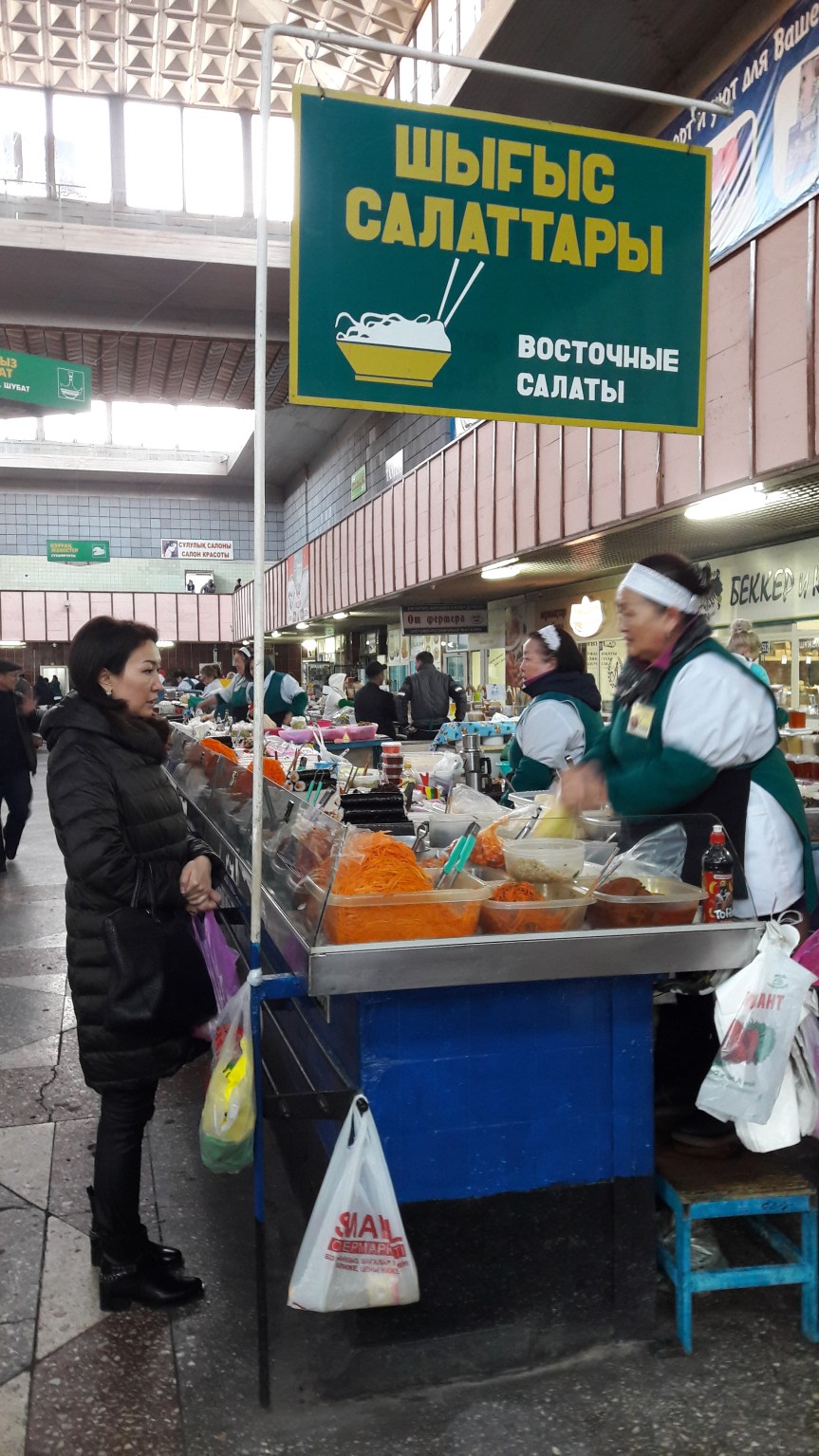
Korean carrots and other salads on sale in Almaty’s Green Bazaar, Kazakhstan

The deportees adapted their cuisine to local conditions and replaced traditional ingredients with carrots to create a spicy, coriander-rich side dish and it remains a popular choice on dinner tables in Central Asian countries such as Uzbekistan, Kazakhstan and Kyrgyzstan, which are still home to around 300,000 ethnic Koreans, descendants of the deportees from the 1930s.

There’s a Turkish connection with the Koreas as well. With Turkey on a war footing once again, wading into battle against the Kurds in northern Syria, a recent film has brought a mostly forgotten war involving Turkey from the 1950s back into the spotlight. Can Ulkay’s “Ayla: The Daughter of War” tells the story of a Turkish soldier who saves a young Korean girl during the Korean War of 1950-53.

Turkey sent troops as part of a United Nations led brigade to defend South Korea against North Korea in the war. The soldier finds himself unable to take the orphan back to Turkey so the pair lose touch after the war, but in a fairytale ending are reunited 60 years later. Put your feet up and enjoy the movie with a bowl of spicy Korean carrots!

Ingredients (serves around 4)

200 g carrots peeled into thin slices – use a julienne peeler or a sharp knife

One garlic clove minced

One small onion minced

One teaspoon crushed coriander seeds

Half teaspoon red chilli flakes

Dash of olive oil

Two teaspoons cider vinegar

Half teaspoon honey

Pinch of salt

One teaspoon sesame seeds

Method

Mix the julienned carrots with the garlic and leave to marinate in a container with a tight-fitting lid (this carrot salad can get quite pungent, so this is important!).

Heat the olive oil and fry the onion until just beginning to brown. Mix the vinegar with the honey and salt and then pour over the carrots, add the coriander and chilli and the fried onions and mix well.

Leave the carrots to marinate in the air tight container in the fridge for at least four hours, the longer the better, to allow the flavours to blend fully.

Sprinkle with sesame seeds and serve as a side dish with fritters such as our mücver.

Pumpkin, Pear and Pomegranate Potage

21 December 2017

Seasoned greetings to all our readers! To end the year on a high, we’ve come up with a thick and hearty pumpkin and pear soup sprinkled with pomegranate to add a colourful touch to your seasonal table.

Screen Shot 2017-11-16 at 15.56.41

Roasting pumpkin in the oven is a great way to prepare our favourite winter vegetable. After cubing the pumpkin, it’s just a matter of waiting about an hour or so for it all to cook leaving time to enjoy a few glasses of mulled wine or a snowball or 

Knidos Cookery Club would like to say a big thank you for all our readers who voted for us in the Saveur food blog awards – unfortunately we didn’t win this time round…

Wishing you all a creative and tasty 2018 in your kitchen. Have a great time with whatever tickles your festive fancy in what’s left of 2017. See you next year!

Ingredients (serves 3-4)

500 g pumpkin cubed

100 g pear

One small onion (around 75 g)

One teaspoon cumin seeds

Half teaspoon ground cinnamon

Pinch of black pepper

50 ml olive oil

250 ml vegetable stock

50 g pomegranate seeds

Method

Chop the pumpkin into 2 cm cubes, quarter and slice the pear into 1 cm cubes and put in a baking dish. Sprinkle the sliced onion, cumin seeds and cinnamon over the pumpkin and pear and then slosh the olive oil over the top. Bake for 40 minutes at 180 c in a pre-heated oven.

While this is baking, boil up some vegetable stock. Add the pumpkin and other ingredients to the stock, blend with a hand blender and serve immediately in a bowl with a smattering of pomegranate seeds over the soup.


Adjapsandali Adventures

20 July 2017

Knidos Cookery Club would like to say a big thank you to all its readers who voted for the site in the 2017 Saveur Food Blog awards!

This time round we’re looking once again to Turkey’s north-eastern neighbour Georgia for some culinary inspiration. Adjapsandali, a popular  dish in this mountainous former Soviet country, is Georgia’s spicier take on ratatouille.

20170613_220905
Adjapsandali with green beans and potato

This summer stew relies on a holy trinity of aubergine, tomato and peppers with whatever else is in season thrown into the mix.  We’ve added some green beans and some potato to give the dish a heartier edge, but these can be omitted and other seasonal veggies like courgettes and carrots can be used – there’s no hard and fast rules, it’s up to you!

20170613_185152
The adjapsandali ingredients in the raw

It can be served up  with all the veggies collapsing into a sublime sauce-rich stew or the veggies can be left on the firmer side, as in our example. Served with rice, it makes a meal on its own, but it is also great with salads and other Georgian staples such as pkhali.

Ingredients (makes 4 generous servings)

300 g potatoes

300 g aubergines

250 g tomatoes

2 red peppers

200 g green beans

1 onion

2 garlic cloves

50 ml olive oil

1 teaspoon coriander

1 teaspoon red chili flakes

2 teaspoons fresh basil

3 bayleaves

Method

Roughly chop up all the vegetables and throw them into a large, heavy-based pan. Pour the olive oil over the vegetables, add the herbs and spices and cook over a medium heat for 10 minutes or so stirring occasionally. Turn the heat down to low and cook for another 20-30 minutes until all the vegetables are cooked and beginning to break up.

Sprinkle with fresh basil and serve with crusty bread or rice and a selection of salads such as tomato, cucumber and onion with a walnut dressing and starters such as pkhali.

The Mücver Variations

29 June 2017

This time round on Knidos Cookery Club we’re revisiting an old favourite – mücver, Turkey’s tasty courgette fritter.

20170531_132309
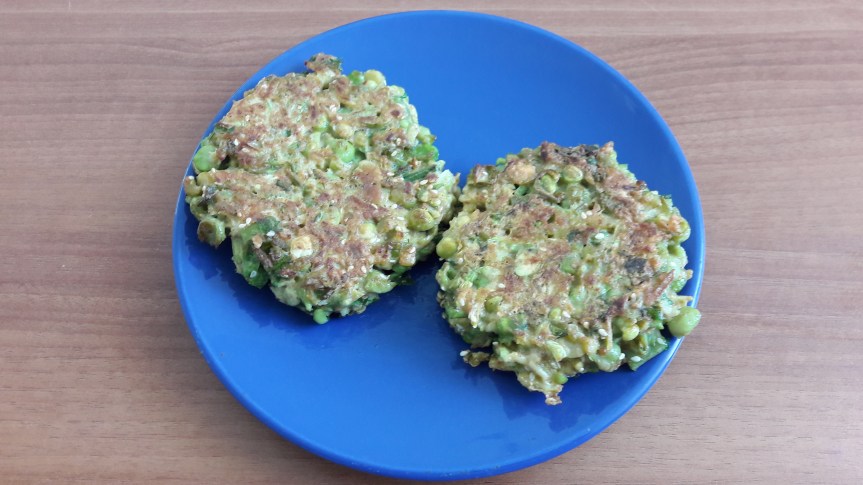
Could this be called a pea fritter?

The mücver usually served up in Turkish eateries are made from grated courgettes, so we’ve decided to spice up this old favourite by adding some other ingredients. Why not try them with fresh peas or grated carrot? Mushrooms work well, as do green beans.

20170609_133418
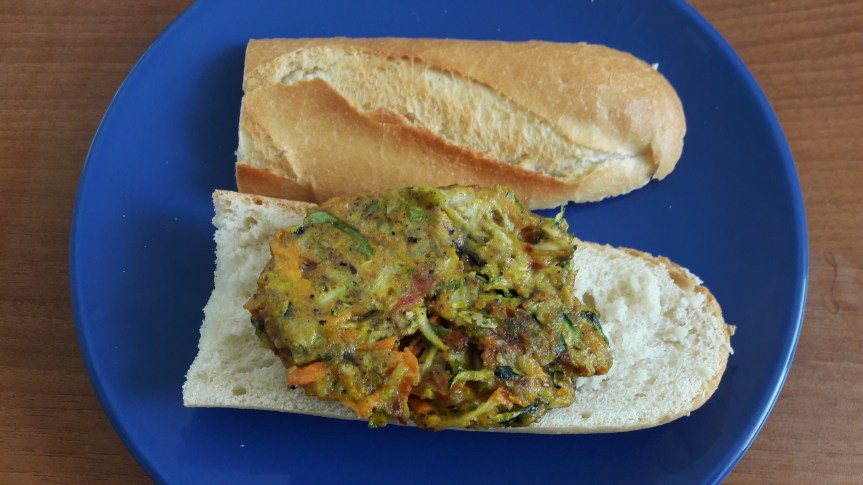
Putting some carrots in the mix

You can even add all these ingredients to the basic mix, chuck in a few chopped almonds or walnuts and, hey presto, you have a chunky veggie nut burger!

Serve the fritters in a pita, on a baguette, in a burger bun, rolled up in flat lavaş bread or just plain with a salad and condiments of your choice.

Ingredients (for around 8 fritters)

Two medium-sized courgettes

One small onion

One egg (or 15 ml of olive oil for vegan version)

Choose one or more from: 100 g chopped mushroom / grated carrot / peas (fresh if you have them, otherwise frozen or tinned) / sliced green beans (use 50 g of each if using more ingredients)

50 g of plain flour

Bunch of parsley, mint and/or dill (if you like that sort of thing)

Dried herbs to taste

A generous sprinkle of sesame seeds

An  optional dusting of chili flakes and grated cinnamon

Salt and pepper

A dash of olive oil for frying

Plain yogurt for serving

Method

Grate or chop up the courgettes and the extra of your choice (mushroom, carrot  peas, green beans or even all three) finely and mix with the chopped onion. Add fresh parsley, mint and/or dill, dried herbs, chili flakes, cinnamon, sesame seeds salt and pepper and blend well.

Make a well in the centre of the mix and break the egg into it. Sprinkle in the crumbled white cheese. Mix well. (Vegan readers should skip the egg and add 25 ml of olive oil instead)

Gradually add the plain flour and blend  until the mixture has quite a thick consistency – you don’t want it to be too wet and sloppy.

Drizzle some olive oil in a frying pan and put over a medium heat.

Place golf ball-sized scoops of the courgette mixture into the pan and flatten with a spatula or fork.

After a few minutes turn the fritter. Keep cooking until both sided are a golden-brown colour.

Serve hot with a dollop of yogurt on top.