A Passion for Purslane

19 May 2016

This week on Knidos Cookery Club we’ll be looking at some ways of using purslane, our favourite weed. This highly-nutritious plant is called semizotu and is widely cultivated in Turkey, where it also grows wild. It’s used in salads, soups and stews.

IMG_0796
Freshly-picked purslane

Purslane has a crunchy texture and a lemony taste and can be used as a substitute for spinach and watercress. This superweed is packed with vitamins – it has the highest concentration of vitamin E of any plant and also contains a useful essential omega-3 fatty acid called alpha-linolenic acid, reports motherearthnews.com.

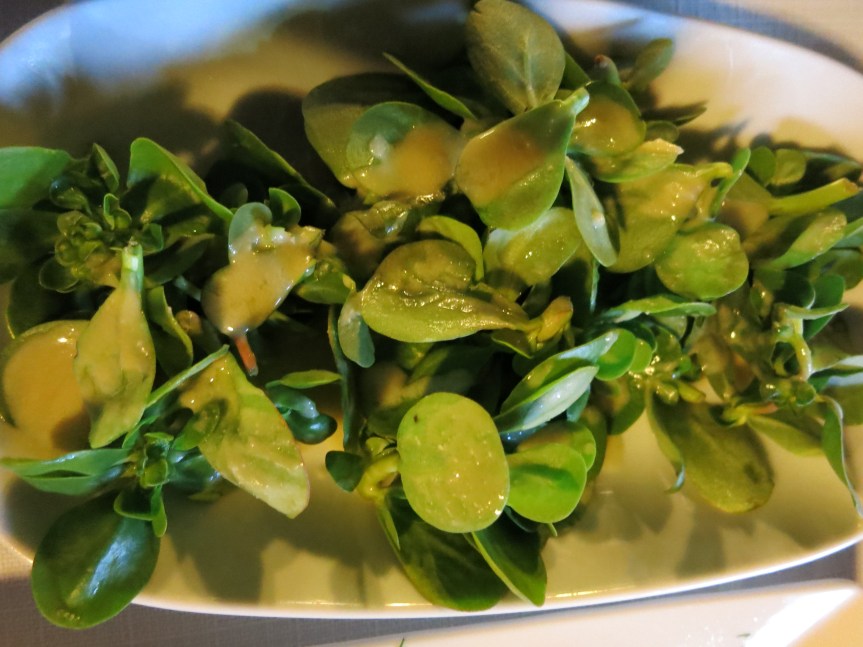
In the Knidos area, it’s a mainstay of meze, or starter, combos when served with yogurt and a hint of garlic. The leaves and stems are also good as a simple but tasty salad dressed with a tahini sauce.
IMG_0776
Purslane in a tahini dressing

We’ve opted for a vitamin-packed spring stew, Semizotu Nohutlu Bulgur Pilavı with purslane, chick peas (garbanzo beans), tomato. carrot and bulgur wheat. Here’s what the finished dish should look like:

IMG_0807

Ingredients (serves3-4)

One bunch of purslane

One medium-sized onion

Two carrots

Four medium-sized tomatoes

100 g coarse bulgur wheat

One can chick peas or 150 g dried chick peas soaked overnight and boiled for an hour or so

One bay leaf

Fresh herbs – parsley and mint

A pinch of cumin, cinnamon, black pepper, red chili flakes, thyme and salt

250 ml warm water

25 ml olive oil

Method

Heat the olive oil in a heavy-based pan and add the chopped onion, the bay leaf and a sprinkle of dried thyme.

Slice the carrot into 50 mm rounds then chop up the tomatoes. When the onions are translucent, add the carrots to the mix and after five minutes or so add the tomatoes.

Cook for another five minutes then add the chick peas, bulgur wheat and water and season with the fresh herbs and spices.

Stir well and bring to the boil. Then turn the heat down, add the purslane and cook over a low heat for 20-25 minutes until the bulgur wheat is cooked but still a bit chewy.

Allow to rest for 5-10 minutes then serve with yogurt and garnish with mint.

Afiyet olsun!


Red Green Bean Feast

12 May 2016

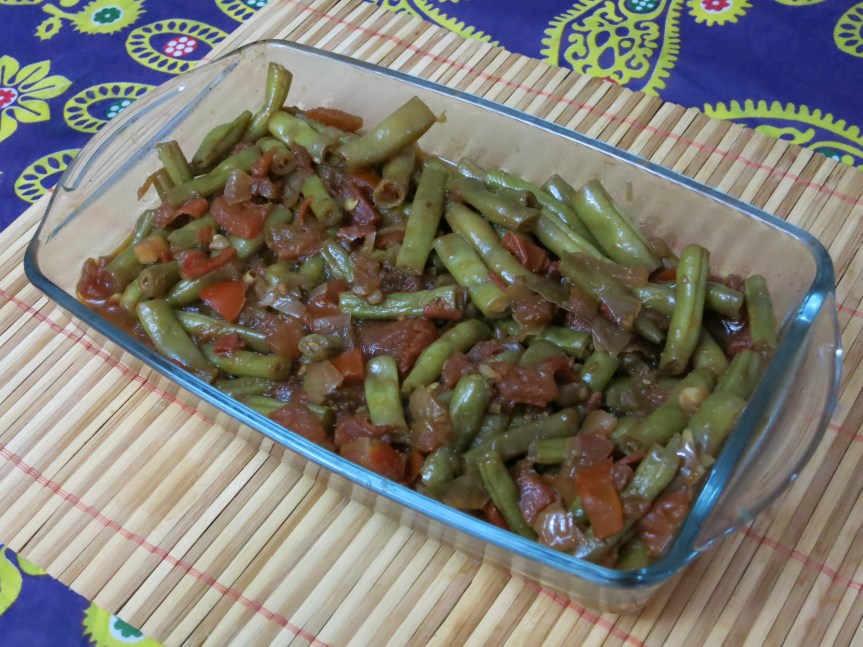
This week, Knidos Cookery Club is returning to the zeytinyağlı style of cooking to cook up a real bean feast with freshly-picked, tender green beans and juicy tomatoes.

Around this time of year, markets in Turkey are teeming with fresh beans in a variety of shapes and sizes. For a quick and easy meal, Knidos Cookery Club likes to chop the beans up and chuck them into a boiling pan of pasta and serve it all up with some generous dollops of pesto and shavings of parmesan.

For a traditional Turkish twist, combine your green beans with tomatoes to make zeytinyağlı taze fasulye and serve it as a side-dish alongside other seasonal, vegetable dishes. Serving this dish on top of a bowl of steamed rice makes for a more substantial main meal.

IMG_0500

Recipes for this bean feast often call for the addition of some sugar, but you can replace this with honey. For a richer sauce, I found some pekmez, molasses (usually made from crushed grapes), in the store cupboard and poured a bountiful slug of this into the mix, giving the onions in the finished dish a deep burgundy hue.

Another use for pekmez is to mix it with tahini, sesame seed paste, and this fabulous combination frequently features in a full-on Turkish breakfast; more on this in a later edition of Knidos Cookery Club.

Ingredients (Serves 3-4)

500 g fresh green beans

One medium-sized onion

One or two garlic cloves

Four medium-sized tomatoes

50 ml Olive oil

One teaspoon of honey or pekmez

 Juice of one lemon

Pinches of salt, pepper and cumin

One bay leaf

250 ml warm water

Method

 Heat the oil in a heavy-based pan and add the finely chopped onion and garlic when the oil’s sizzling.

When the onions are looking translucent, add the green beans,  topped and tailed and sliced into 3-5 cm lengths, the chopped tomatoes and the bay leaf, salt, pepper and cumin and mix well.

Pour in the lemon juice, water and a dollop of pekmez or honey. Bring to the boil and then put the lid on the pan and cook over a low heat for 30 minutes or so until the beans are tender.

Serve with other vegetable dishes, bread and/or steamed rice.


Much Ado about Courgettes

28 April 2016

Last time round, Knidos Cookery Club looked at stuffed courgettes and tomatoes and this week we’re going to find a use for some of the leftovers scooped out from the courgettes (zucchini to our North American friends!)

IMG_0350

Courgette fritters, Mücver in Turkish, offer a quick and easy solution as to what to do with the courgette middles. Mücver are a great comfort food that can be knocked up in no time and can be served as breakfast, as a burger for lunch, as part of a more substantial main meal or as an easy supper.

These versatile fritters take a few minutes to prepare and can be seasoned with whatever is to hand. They can be fried in next to no time or, for a healthier alternative, can be baked in the oven or even grilled on the barbecue for a smokier flavour.

IMG_0411

Afiyet olsun! (as they say in Turkish)

For a vegan version, omit the egg and yogurt topping. For more of a protein kick add some salty cheese such as feta or halloumi (hellim in Turkish) to the mix. For a more substantial veggie burger add one grated carrot and 100g of your preferred chopped nuts to the mix before frying.

Ingredients (for around 8 fried courgette fritters)

Two medium-sized courgettes

One small onion

One egg

50 g white cheese (feta, halloumi or similar)

Four-five dessert spoons of plain flour

Bunch of parsley, mint and/or dill (if you like that sort of thing)

Dried herbs to taste

A generous sprinkle of sesame seeds

An  optional dusting of chili flakes and grated cinnamon

Salt and pepper

A dash of olive oil for frying

Plain yogurt for serving

Method

Grate or chop up the courgettes finely and mix with the chopped onion. Add fresh parsley, mint and/or dill, dried herbs, chili flakes, cinnamon, sesame seeds salt and pepper and blend well.

Make a well in the centre of the mix and break the egg into it. Sprinkle in the crumbled white cheese. Mix well. (Vegan readers should skip the egg and cheese and jump straight to the adding flour phase!)

Gradually add  the dessert spoons of plain flour and blend  until the mixture has quite a thick consistency – you don’t want it to be too wet and sloppy.

Drizzle some olive oil in a frying pan and put over a medium heat.

Place golf ball-sized scoops of the courgette mixture into the pan and flatten with a spatula or fork.

After a few minutes turn the fritter. Keep cooking until both sided are a golden-brown colour.

Serve hot with a dollop of yogurt on top.


A Taste of Spring

31 March 2016

Welcome to Knidos Cookery Club, a new blog that will explore the culinary culture around the point where the Aegean Sea meets the Mediterranean Sea in south-west Turkey. The blog is inspired by the ancient port city of Knidos, the ruins of which can be seen on the tip of the Turkey’s Datça peninsula, and the amazing array of locally-sourced ingredients used in the region’s kitchens.

Every Friday evening the small town of Datça springs into life with farmers from all over the peninsula driving in by pick-up, tractor or even on horseback to sell their produce at the weekly market that stays in town until Saturday evening.

IMG_0087
Datça market in full swing on Saturday

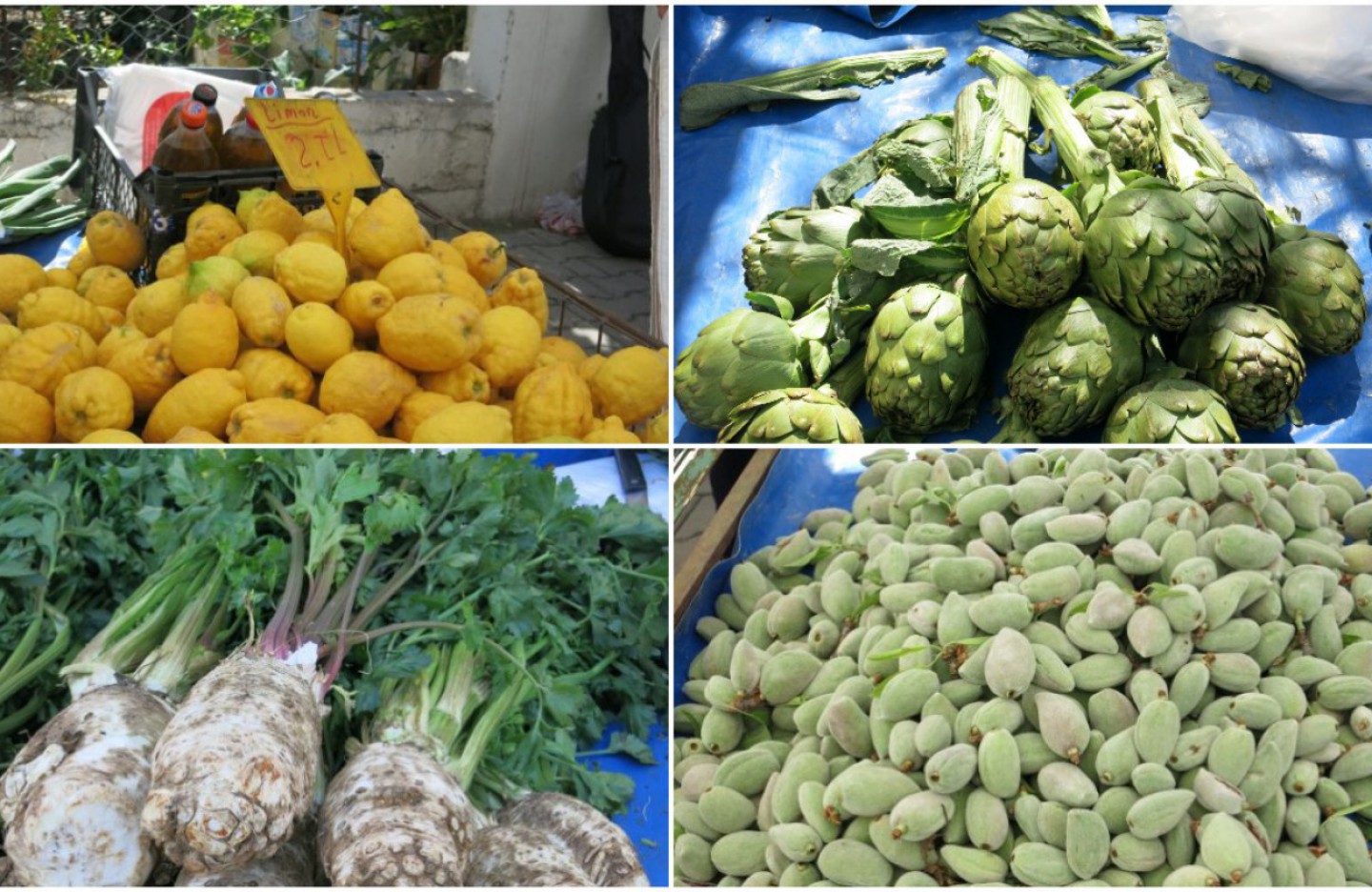
Spring is in the air and vegetables like asparagus and artichokes are making an appearance alongside the staple root vegetables of the winter months.

Stalls are piled high with the last of the season’s citrus fruits – luscious lemons and juicy oranges; alongside enormous leeks, bulbous celeriac roots and the year’s first green almonds.

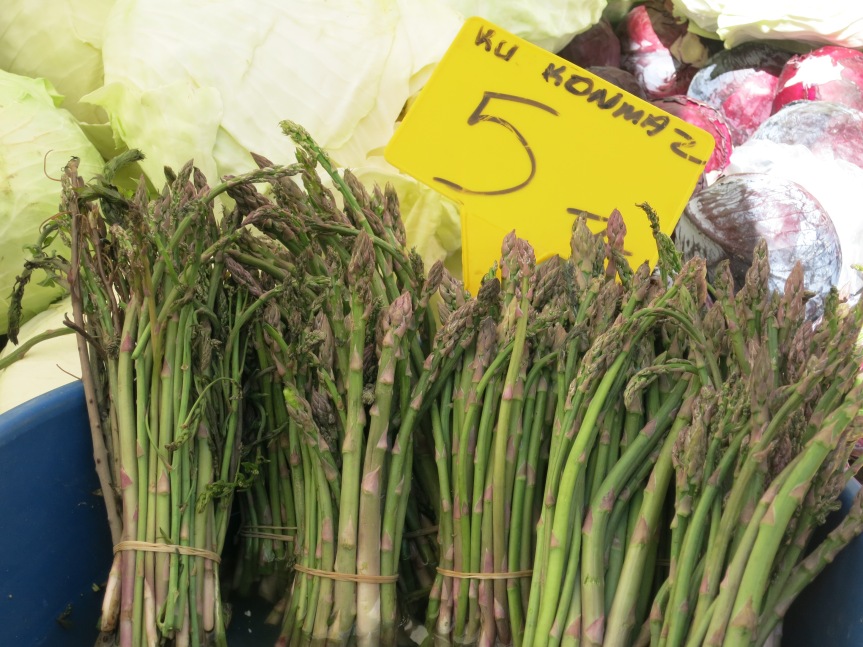
Some purple-tinged asparagus tips caught my eye, and the idea for the culinary club’s first recipe began to take shape – a risotto based around these flavour-packed spears of goodness.

IMG_0123
Asparagus on sale in the market

Asparagus, known in Turkish as kuşkonmaz, or ‘birds don’t land on it’, grows all around the Mediterranean region in springtime, with the first tips  ready for harvest shortly after the ground temperature hits 10°C.

To give the risotto a Turkish twist, I’ve used bulgur wheat, a parboiled grain which is a favourite in Turkey, in place of the usual Arborio rice.

IMG_0177
The finished product

Ingredients: (3-4 servings)

Bunch of asparagus spears

One medium onion

A smattering of garlic

One cup (100 g approx) of bulgur wheat (coarse not fine ground)

A generous sprinkle of fresh or dried herbs (oregano, mint, parsley, thyme)

Salt and pepper to taste

One 175 ml glass of white wine

750 ml vegetable stock

Two generous splashes of olive oil

Optional: Add fresh Parmesan or your preferred cheese to the finished risotto.

Method:

Arrange the asparagus spears on a baking tray and drizzle with olive oil. Oven bake at 180 °C (gas mark 5) for 30 minutes or so until tender.

While the asparagus is cooking, start the risotto. Fry the diced onion and garlic in olive oil until translucent, then add mixed herbs and season with salt and pepper if needed.

Add the bulgur wheat and stir to coat the grains. Pour the glass of wine into the mix and keep stirring until all the liquid has been absorbed.

Introduce a ladleful of stock at a time and keep stirring until it’s all soaked up. Continue until the risotto reaches the creamy consistency you prefer.

Chop the roasted asparagus into 2cm lengths and stir into the risotto.

Take the risotto off the heat and allow to stand for five minutes or so and then mix in cheese and herbs to taste and serve with a green salad.