Adjapsandali Adventures

20 July 2017

Knidos Cookery Club would like to say a big thank you to all its readers who voted for the site in the 2017 Saveur Food Blog awards!

This time round we’re looking once again to Turkey’s north-eastern neighbour Georgia for some culinary inspiration. Adjapsandali, a popular  dish in this mountainous former Soviet country, is Georgia’s spicier take on ratatouille.

20170613_220905
Adjapsandali with green beans and potato

This summer stew relies on a holy trinity of aubergine, tomato and peppers with whatever else is in season thrown into the mix.  We’ve added some green beans and some potato to give the dish a heartier edge, but these can be omitted and other seasonal veggies like courgettes and carrots can be used – there’s no hard and fast rules, it’s up to you!

20170613_185152
The adjapsandali ingredients in the raw

It can be served up  with all the veggies collapsing into a sublime sauce-rich stew or the veggies can be left on the firmer side, as in our example. Served with rice, it makes a meal on its own, but it is also great with salads and other Georgian staples such as pkhali.

Ingredients (makes 4 generous servings)

300 g potatoes

300 g aubergines

250 g tomatoes

2 red peppers

200 g green beans

1 onion

2 garlic cloves

50 ml olive oil

1 teaspoon coriander

1 teaspoon red chili flakes

2 teaspoons fresh basil

3 bayleaves

Method

Roughly chop up all the vegetables and throw them into a large, heavy-based pan. Pour the olive oil over the vegetables, add the herbs and spices and cook over a medium heat for 10 minutes or so stirring occasionally. Turn the heat down to low and cook for another 20-30 minutes until all the vegetables are cooked and beginning to break up.

Sprinkle with fresh basil and serve with crusty bread or rice and a selection of salads such as tomato, cucumber and onion with a walnut dressing and starters such as pkhali.

The Mücver Variations

29 June 2017

This time round on Knidos Cookery Club we’re revisiting an old favourite – mücver, Turkey’s tasty courgette fritter.

20170531_132309
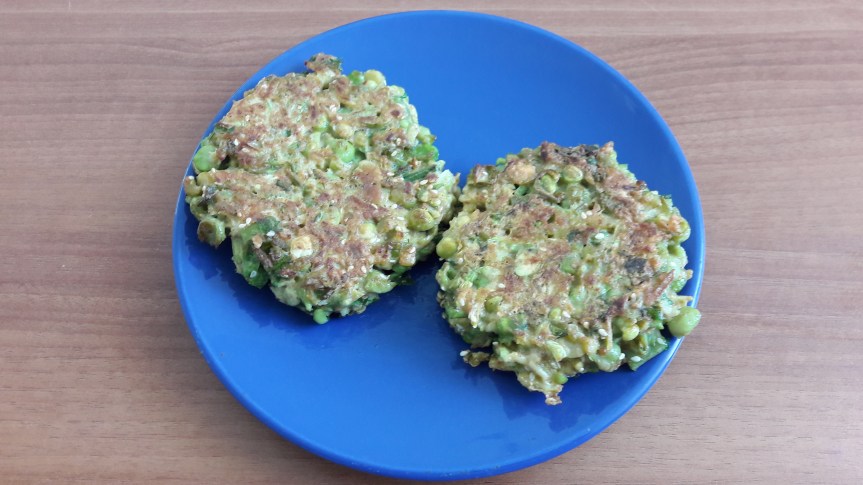
Could this be called a pea fritter?

The mücver usually served up in Turkish eateries are made from grated courgettes, so we’ve decided to spice up this old favourite by adding some other ingredients. Why not try them with fresh peas or grated carrot? Mushrooms work well, as do green beans.

20170609_133418
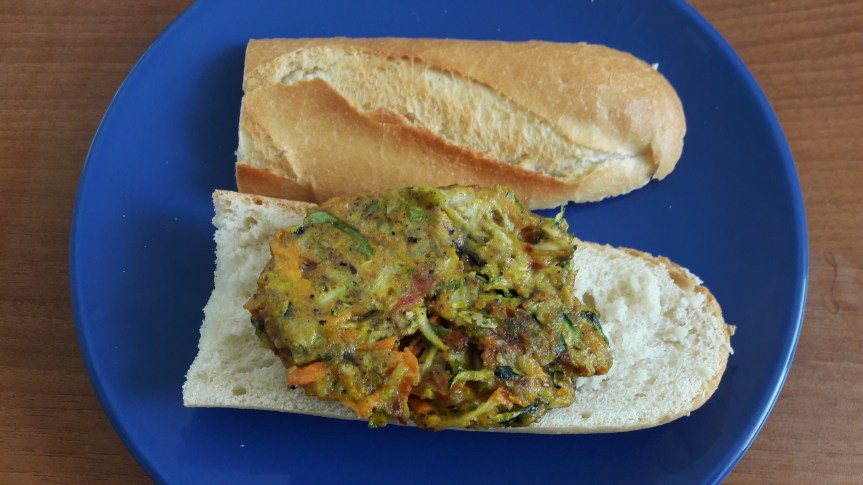
Putting some carrots in the mix

You can even add all these ingredients to the basic mix, chuck in a few chopped almonds or walnuts and, hey presto, you have a chunky veggie nut burger!

Serve the fritters in a pita, on a baguette, in a burger bun, rolled up in flat lavaş bread or just plain with a salad and condiments of your choice.

Ingredients (for around 8 fritters)

Two medium-sized courgettes

One small onion

One egg (or 15 ml of olive oil for vegan version)

Choose one or more from: 100 g chopped mushroom / grated carrot / peas (fresh if you have them, otherwise frozen or tinned) / sliced green beans (use 50 g of each if using more ingredients)

50 g of plain flour

Bunch of parsley, mint and/or dill (if you like that sort of thing)

Dried herbs to taste

A generous sprinkle of sesame seeds

An  optional dusting of chili flakes and grated cinnamon

Salt and pepper

A dash of olive oil for frying

Plain yogurt for serving

Method

Grate or chop up the courgettes and the extra of your choice (mushroom, carrot  peas, green beans or even all three) finely and mix with the chopped onion. Add fresh parsley, mint and/or dill, dried herbs, chili flakes, cinnamon, sesame seeds salt and pepper and blend well.

Make a well in the centre of the mix and break the egg into it. Sprinkle in the crumbled white cheese. Mix well. (Vegan readers should skip the egg and add 25 ml of olive oil instead)

Gradually add the plain flour and blend  until the mixture has quite a thick consistency – you don’t want it to be too wet and sloppy.

Drizzle some olive oil in a frying pan and put over a medium heat.

Place golf ball-sized scoops of the courgette mixture into the pan and flatten with a spatula or fork.

After a few minutes turn the fritter. Keep cooking until both sided are a golden-brown colour.

Serve hot with a dollop of yogurt on top.

Moussaka Mania

8 June 2017

As the UK continues its downward plunge to become the latest contender for the mantle of Europe’s most basket case economy, we’re turning our attention to the current holder of that title, Greece, for culinary inspiration this week in the form of moussaka, a great comfort food. We’ll be needing lots of comfort in the coming months as the lucky winner of today’s UK election navigates a course through the choppy waters of Brexit.
20170531_131610

Summer is here, and with Datça market overflowing with an array of fresh produce, Knidos Cookery Club is moving back to weekly posts for the foreseeable future. The aubergine is a vegetable that has had surprisingly little coverage in these pages, so it’s high time that was rectified.
20170530_221006

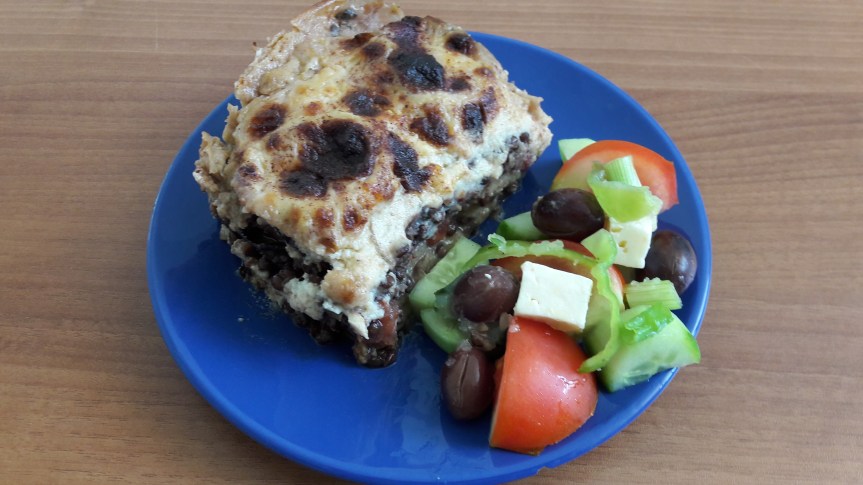
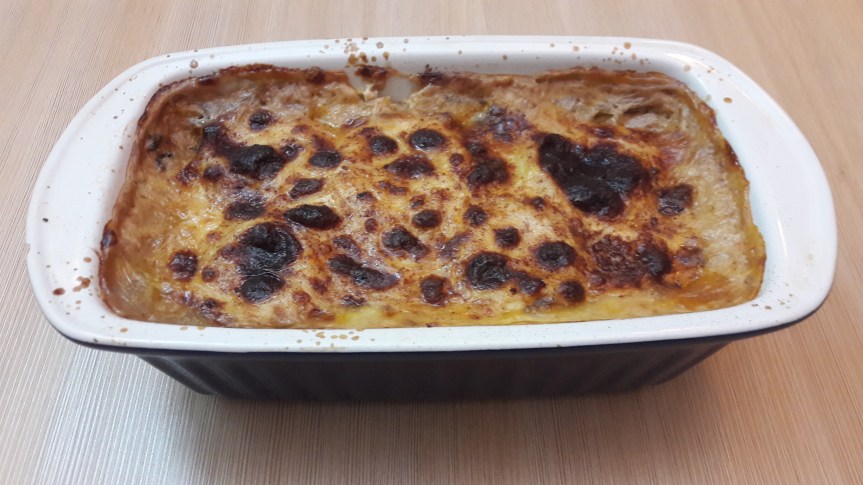
Moussaka is a perennial Greek favourite that is great fresh from the oven or eaten cooled down, allowing the flavours some time to collide. It combines layers of fluffy  potato and silky aubergine covered with a tomato-rich ragù, all topped with a creamy white béchamel sauce.

We’ve used black lentils in place of minced lamb to make our veggie take on moussaka, although any lentils should work well in this dish. It pairs excellently with a classic Greek salad of tomato, cucumber, onion, green pepper, olives and white cheese.

Ingredients (for 3-4 servings)

300 g aubergines

300 g potatoes

250 g tomatoes

100 g black lentils (or any other lentil)

3 spring onions

1 garlic clove

400 ml vegetable stock

100 ml red wine

1 teaspoon of cinnamon

1 teaspoon of dried sage

1 bayleaf

Pinch of black pepper

Pinch of red chili flakes

50 ml olive oil

For the white sauce:

50 ml olive oil

50 g flour

500 ml milk

5 peppercorns

1 bayleaf

75 g cheese (feta or  any crumbly white cheese)

Method

Heat 20 ml of olive oil in a heavy-based pan, chop the spring onions and garlic clove and add to the pan. Cook for five minutes then add the washed lentils and stir. Add the stock, bring to the boil then simmer for 20 minutes or so until most of the liquid is absorbed.

Pre-heat the oven to 200 c / gas mark 6. Cut the potatoes into one cm slices and boil for five minutes in a pan of water. Drain immediately and allow to cool. While the potatoes are boiling, chop the aubergine into 1 cm slices. If you like, you can coat the aubergine slices with a little salt, leave to stand for 10 minutes and then rinse. This should make them less bitter and remove excess moisture.

Place the potato slices in an oven dish and coat with 15 ml olive oil and stir to coat thoroughly. Place the aubergine slices into a separate oven dish and pour 15 ml of olive oil over them. Put both the dishes into the oven and bake for 30-40 minutes or until the potatoes are a golden brown colour and the aubergine slices beginning to char.

Add the peeled, chopped tomatoes, 100 ml red wine, bayleaf, cinnamon, sage and pepper to the lentils and cook over a low heat for 45 minutes until the sauce has reduced by about half.

While this is cooking, make the white sauce. Heat the oil in a heavy-based pan and stir in the flour to make a roux of a runny consistency. Slowly stir in the milk and add the peppercorns and bayleaf, stirring constantly with a wooden spatula or spoon or a whisk over a low heat. When the sauce begins to thicken, add the grated cheese and continue stirring until the sauce sets.

Now it’s time to assemble the moussaka. Pour half the lentil ragù over the potatoes to coat, add a layer of aubergines and pour over the rest of the ragù. Place the remaining aubergine slices over this and then pour the white sauce over these.

Sprinkle with red chili flakes and place in the oven and bake at 180 c /gas mark 5 for an hour or so – the top should be going a nice spotted brown colour as in the photo above.

Allow to cool and serve with a classic Greek salad made from tomato, cucumber, onion, green pepper, olives and white cheese, liberally dressed with olive oil and thyme.
A Fiendishly Figgish Chutney

22 September 2016

As another summer slips into the history books with the autumn equinox almost upon us, there’s a tang of vinegar in the air. The days are getting shorter and the nights cooler, and thoughts have started turning towards using the autumnal abundance of fruit and vegetables to make pickles and chutneys for the winter months.

In Turkey at this time of year people are busy preserving vegetables such as peppers, cucumbers, carrot, tomatoes, garlic, cauliflower and cabbage in vinegar and salt to make tursu, the ubiquitous pickle plate that adorns the dinner table.

img_1396

When Lord Venal was visiting Knidos in August he was very taken with the local fig crop and was inspired to knock up a jar or two of his Fiendish Fig Chutney.

He helpfully explained the difference between a pickle and a chutney; a pickle involves raw vegetables preserved in a liquid such as brine, oil or vinegar, whilst chutney cooks vegetables or fruits in a sugary vinegar base.

IMG_1149

Lord Venal hopes you’ll enjoy his spicy chutney with all types of cheeses and crackers.

Ingredients (Makes around 1.5 kg of chutney)

1 kg fresh figs

250 g raisins or currants

250 g onions

300 ml cider vinegar

200 g brown sugar

2 cloves of garlic

5 cm fresh ginger

one teaspoon coriander seeds

one cinnamon stick

one teaspoon cloves

one teaspoon turmeric

one teaspoon chili flakes

Assorted jam jars

Method

Chop the figs roughly and remove any stems. Throw them into a large stainless steel pan and add the vinegar, chopped onions, garlic and spices (remember to grind the coriander seeds, break up the cinnamon stick and peel and finely chop the ginger).

Bring to the boil and then allow the mix to simmer, stirring occasionally, for half an hour or so until the figs are softening. Now add the sugar and keep stirring until it’s dissolved. Cook for another 15 minutes or so until the mix starts to thicken. Unlike jam, as soon as you turn the chutney off it stops thickening, so turn the heat off when you reach your desired consistency.

While the chutney is bubbling away, sterilise the jam jars in the oven at 50°c for thirty minutes. Spoon the chutney into the jars while still hot and put a lid on when it’s cooled down a bit. It’s ready to eat straight away, but, like most things in life, it improves with age.


A Spicy Finger in Every Pie

18 August 2016

This week, Knidos Cookery Club is cooking with okra, another vegetable that arouses strong emotions in the love it or hate it camps.

IMG_1103
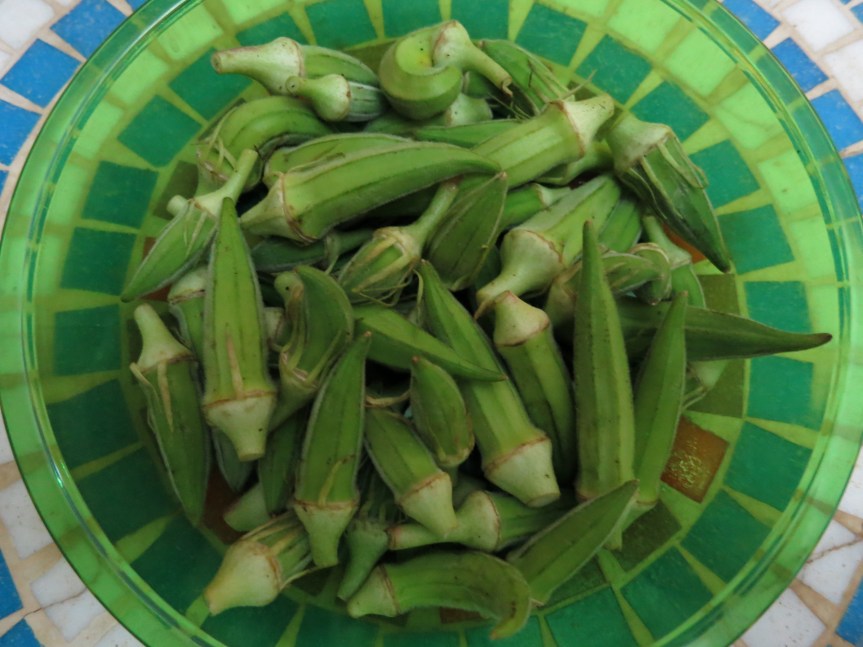
Okra – washed, dried and ready for action

Many are put off this green pod, also known as lady’s fingers, for its tendency to taste a bit slimy at times. This sliminess can be avoided by making sure that after washing, the pods are thoroughly dried before being cooked. Stir frying can also help retain okra’s natural crunchiness.

The origins of okra are unclear – South Asia, West Africa and Ethiopia all make claims to be the home of this vegetable. Okra was brought to Turkey by Arab merchants and is known by its Arabic name, bamya.  It’s often cooked with olive oil and tomatoes and served as a side dish in Turkey.

IMG_1111
Bhindi bhaji – dry okra curry

Our favourite recipe for okra is to prepare it Indian-style, stir fried with spices to make a dry bhindi bhaji, which works as a standalone dish or can be accompanied with a lentil dhal and rice combo.

Ingredients (serves 3-4)

500 g okra washed and dried

250 g tomatoes

One medium-sized onion

One clove of garlic

1 cm fresh ginger

One teaspoon mustard seeds

One teaspoon cumin

One teaspoon dried coriander

One teaspoon cinnamon

One teaspoon turmeric

One teaspoon chili flakes

50 ml olive oil

Method 

Heat the olive oil in a frying pan and tip in the mustard seeds. When the seeds begin to pop, add the diced onion and garlic and cook for five minutes or so until just starting to brown. Add the spices (ginger, cumin, coriander, cinnamon, turmeric and chili flakes) and stir well.

Throw the tomatoes into the spicy onion mix and cook for another five minutes or so until the tomatoes begin to break up. Now add the okra and stir fry for ten minutes, making sure the okra are well-coated with the curry sauce.

Serve immediately with a lentil dhal and basmati rice or chapatis, or both if you’re feeling famished.