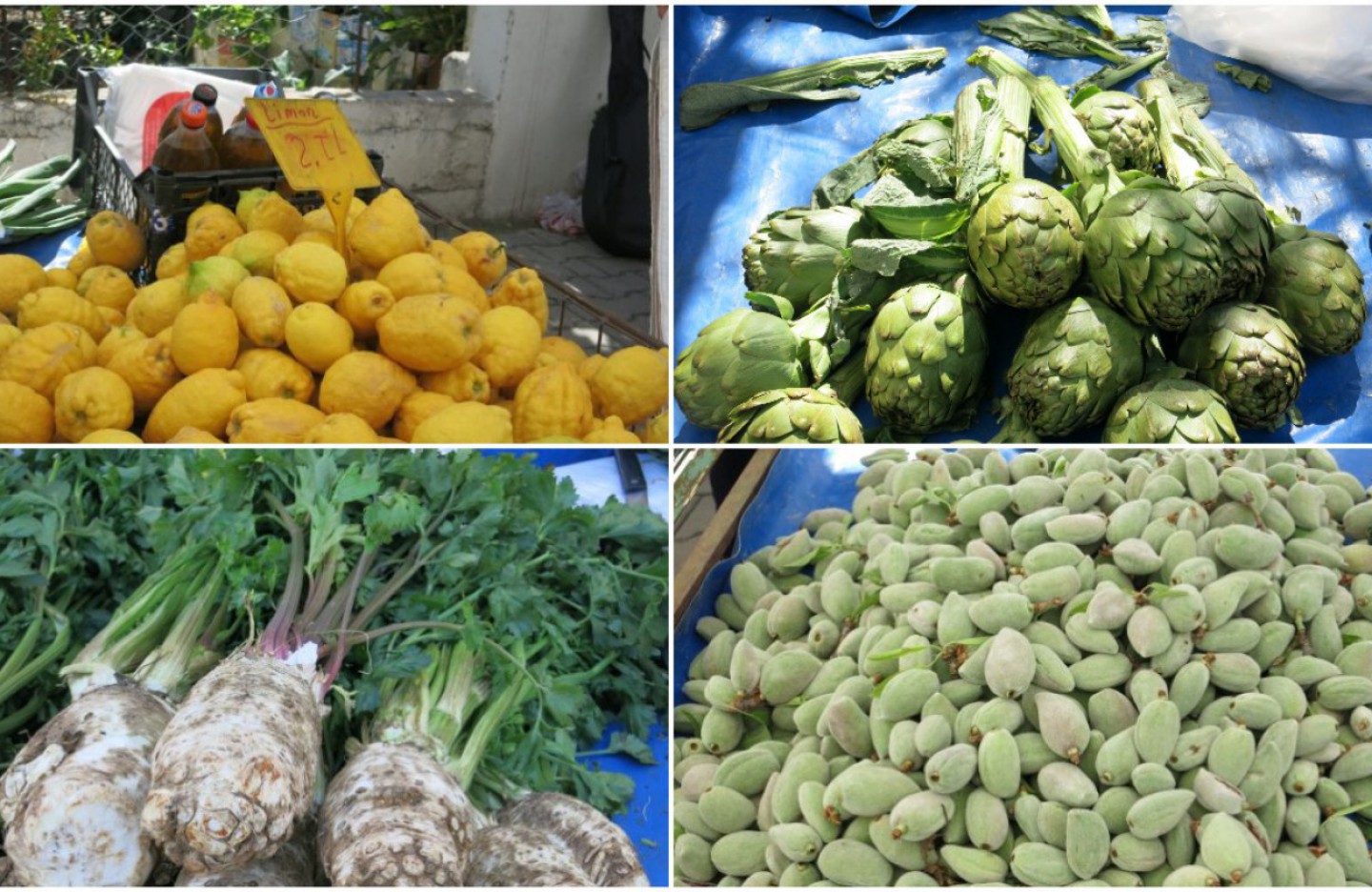
Getting Back to our Roots

25 April 2024

Recently, Knidos Cookery Club was back in its spiritual home on the Datça peninsula in Turkey, getting back to its roots in the place where its culinary journey began eight years ago.
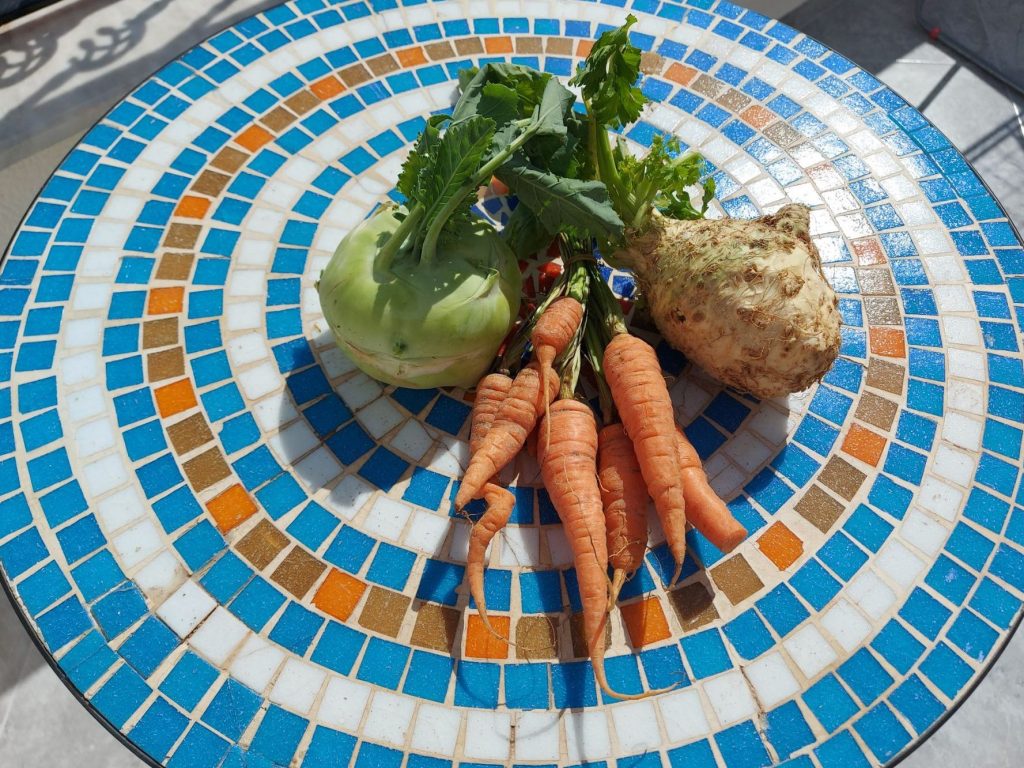
Getting back to our roots… carrots, celeriac and kohlrabi

This blog was named after the ancient Greek city of Knidos, the ruins of which are located on the tip of the peninsula. KCC started out exploring the veggie and vegan dishes eaten around this point where the Aegean Sea meets the Mediterranean Sea.

Since 2016, it has expanded its exploration to Central Asia and many other corners of the globe, seeking out new dishes to tickle your tastebuds!

Now, in addition to its WordPress blog, KCC is making its debut on Substack, where a regular newsletter will keep you up to speed with KCC’s latest culinary adventures, along with updated posts from the archive.
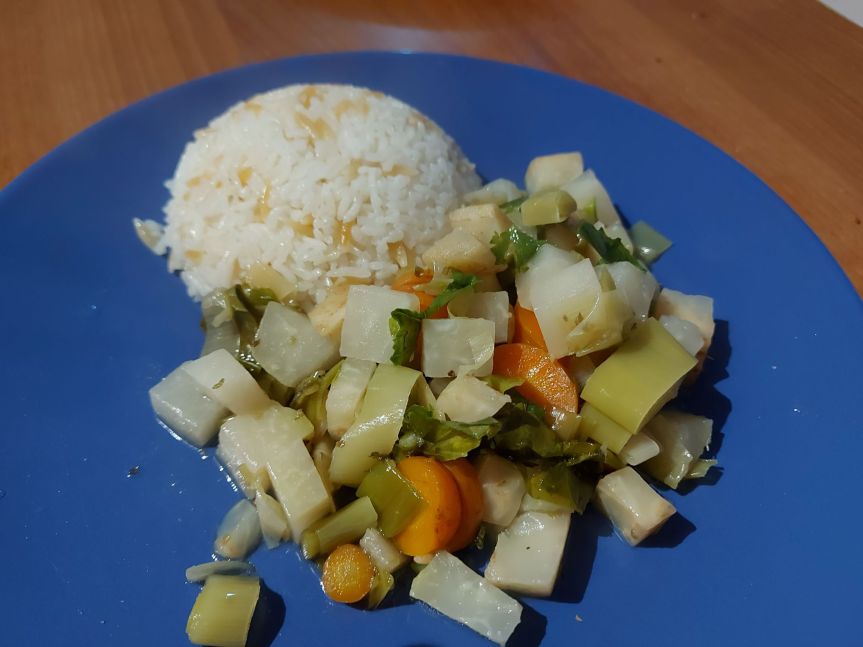
Zeytinyağlı carrot, celeriac, kohlrabi and leek with rice

After spending the winter in Kazakhstan, it was a treat to get back to Turkey with its wider choice of ingredients – it was time to move on from the winter staples, such as pumpkin and potatoes, and dig up some root vegetables that are less seen in Central Asia.

The local market turned up trumps with celeriac, kohlrabi and leeks on sale, perfect for making a zeytinyağlı (with olive oil) dish, so-called as these dishes are prepared with lashings of olive oil.

Standards include green beans (taze fasulye), artichoke (enginar) and leek (pırası). They are a staple of ev yemekleri (home-cooked food) restaurants, lokanta in Turkish, cheap and cheerful canteen-style eateries.
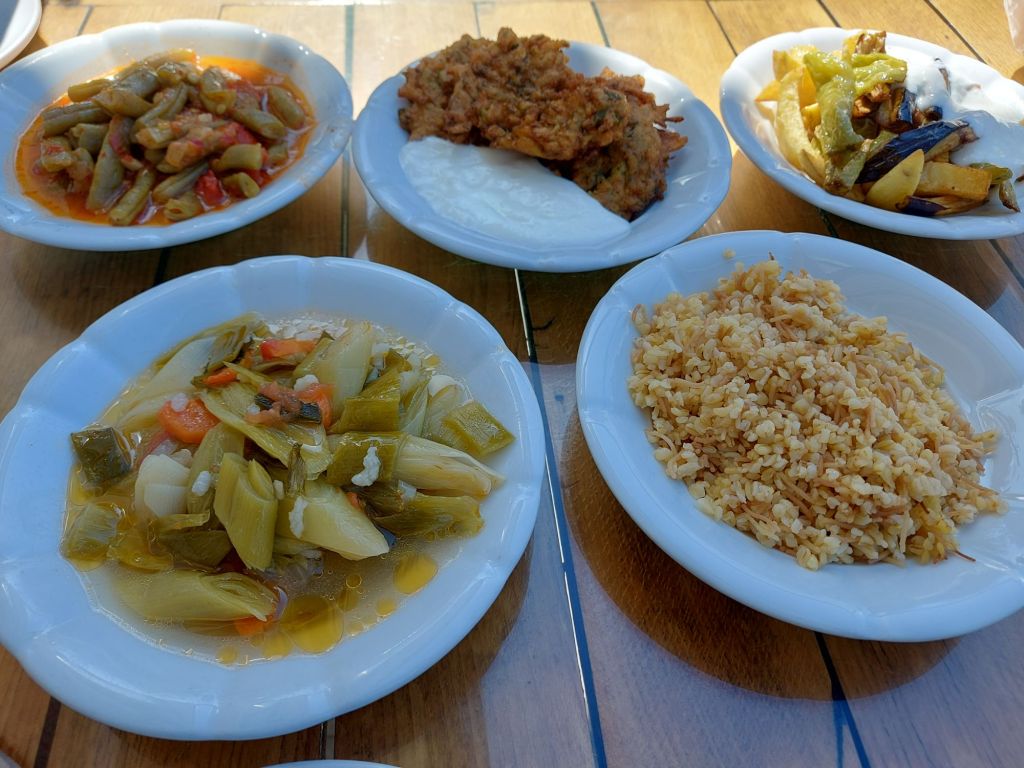
A selection of zeytinyağlı dishes – green beans, leeks and aubergines, green peppers and potatoes – from Datça’s Korsar/Erkin’nin yeri restaurant, located by the harbour

The last few years have seen the price of the key ingredient, olive oil, soar. This is due to numerous factors, including unexpectedly cold and wet conditions at the start of the growing season and drought and forest fires in the summer, that have led to poor harvests in the main olive-producing regions.

Global olive oil production has dropped by a third in just two years, which in turn has led to higher prices for consumers. However, we think it’s still worth shelling out that bit more for a bottle of extra virgin olive oil, as its fruity, peppery flavour adds so much to a cornucopia of delicious dishes, such as this carrot, celeriac, kohlrabi and leek zeytinyağlı  one:

Ingredients (makes 3-4 servings)

  • One medium-sized kohlrabi (approx 200 g)
  • One medium-sized celeriac (approx 200 g)
  • One bunch of baby carrots (approx 200 g)
  • One leek (approx 200 g)
  • One small lemon
  • 75 ml extra virgin olive oil
  • 100 ml vegetable stock
  • Two teaspoons dried oregano
  • One teaspoon sumac

Method

  • Wash the leek well and then cut it into 2 cm slices. Top and tail the carrots, kohlrabi and celeriac, put the leaves and stems to one side, and then peel off the hard outer skin of the kohlrabi and celeriac and chop both into 1 cm cubes. Slice the washed carrots into 2 mm rounds. Roughly chop the leaves and stems from the carrots, kohlrabi and celeriac.
  • Heat 50 ml of olive oil in a heavy-based pan over a low heat and then add the leeks. Stir fry for five minutes and then add the carrots, kohlrabi and celeriac and cook for another five minutes, stirring occasionally. Add the chopped leaves and stems and cook for another five minutes, continuing to stir every now and then.
  • Add the vegetable stock, the juice of the lemon and oregano and cook over a low heat for 15 minutes until all the vegetables are soft but still holding their shape. Stir in 25 ml of olive oil, garnish with sumac and serve with rice and some crusty bread to mop up the juices.

Winter Warmer: Cauliflower, Spinach and Tahini Soup

15 February 2024

It’s been a crazy winter here in Almaty, Kazakhstan. It didn’t really get going until after New Year and has seen short cold snaps interspersed with rapid thaws as the temperature creeps into positive territory. This has made it particularly dicey when walking by buildings, as chunks of ice have a tendency to fall from roofs as the temperature rises. Usually, this is a once in a winter event, but this year it seems to be every few days.

A tahini-infused cauliflower and spinach soup

We’ve been getting through a lot of tahini recently, using it as a salad dressing, a pasta/noodle sauce, in variations on hummus, and, in this case, as an earthy, nutty base for a thick soup – he intermittent cold snaps call for a comforting bowl of hearty, seasonal goodness.

Crazy Almaty weather for 15 Feb 2024 onwards

Tahini is easy to make if you can’t find it in your local Middle eastern store – you just need some white sesame seeds, some olive oil and a good blender. Here’s a link to our tahini recipe from a few years ago.

Ingredients (serves 3-4)

  • 500 g cauliflower
  • 150 g spinach
  • 100 g celery
  • 5 g fresh coriander
  • 500 ml vegetable stock
  • 50 ml tahini
  • 25 ml olive oil
  • one teaspoon soy sauce
  • one teaspoon caraway seeds
  • one teaspoon dried oregano

Method

  • Heat the olive oil and then fry the chopped celery and caraway seeds in a large pan. Cook over a medium heat for five minutes and then add the cauliflower, broken into small florets, and the oregano. Stir fry over a medium heat for five minutes and then add the vegetable stock. Bring to a boil and simmer for ten minutes.
  • Put half the soup in a blender, add the soy sauce and tahini and blend until smooth. Add to the other soup in the pan, stir well and add the spinach leaves and cook until the spinach wilts. Garnish with chopped coriander and serve piping hot.

Spicy Spinach and Pumpkin Fritters

30 November 2023

With Halloween and Thanksgiving, the two times in the year when pumpkins take centre stage, now behind us, we’ve got a simple idea to use up any leftover pumpkin you may have with this quick and easy spinach and pumpkin fritter recipe.

Spicy Spinach and Pumpkin Fritters

These fritters are totally vegan – there’s no need to add an egg to bind them together as chickpea flour and rolled oats do a great job of soaking up any extra moisture from the spinach and pumpkin and help the fritters hold their shape. They can be shallow fried on both sides in a little oil or baked in the oven for 30 minutes at 180 c. These spicy fritters taste good served with a side salad and chips or in a burger bun or pita with your choice of toppings.

Ingredients (Makes 6-8 fritters)

  • 175 g grated pumpkin
  • 50 g chopped spinach
  • 50 g chickpea flour
  • 25 g rolled oats
  • One teaspoon each of cumin seeds, coriander seeds, oregano, sumac and turmeric.
  • Half a teaspoon cinnamon
  • 25 ml oil for frying

Method

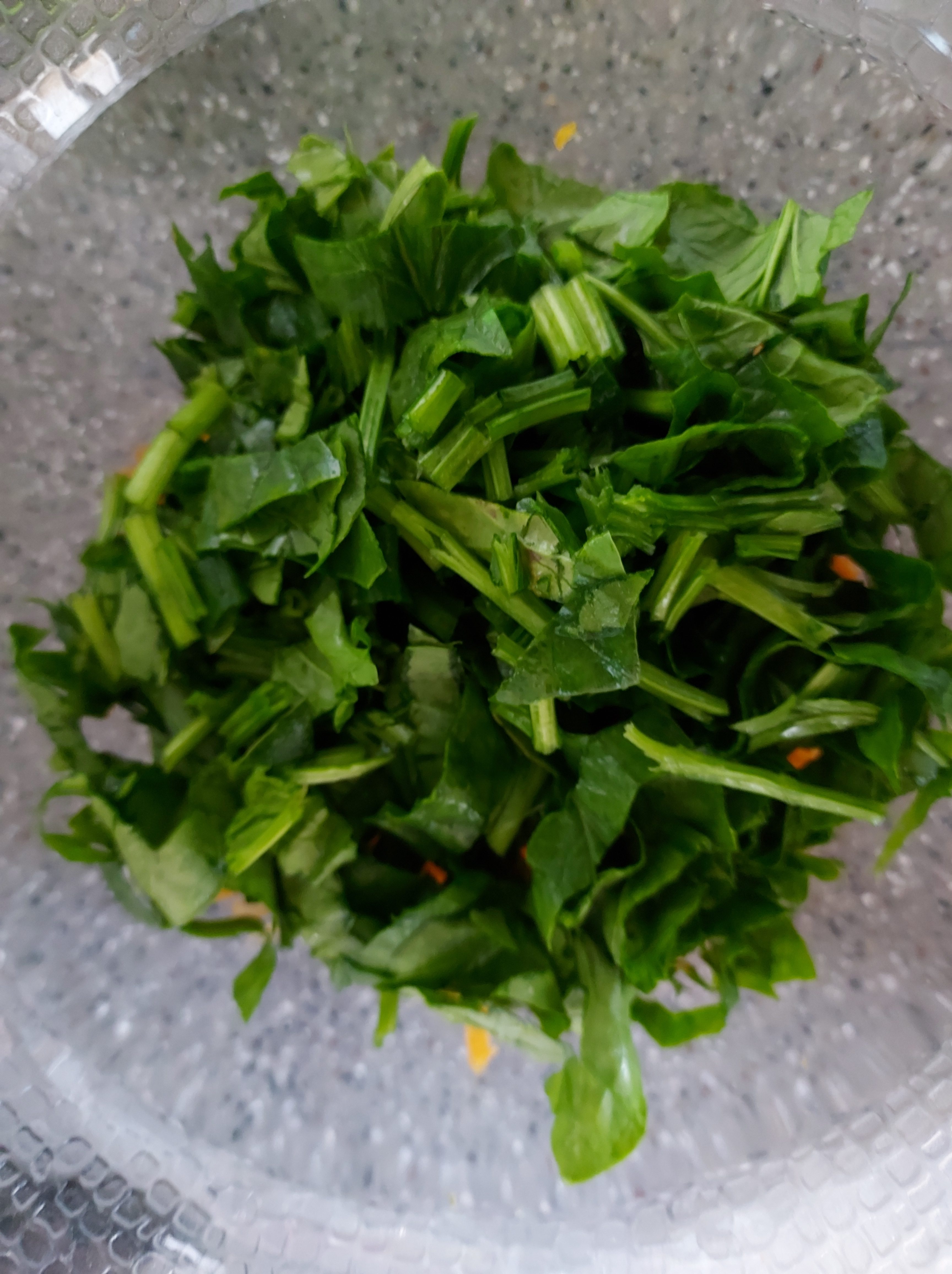
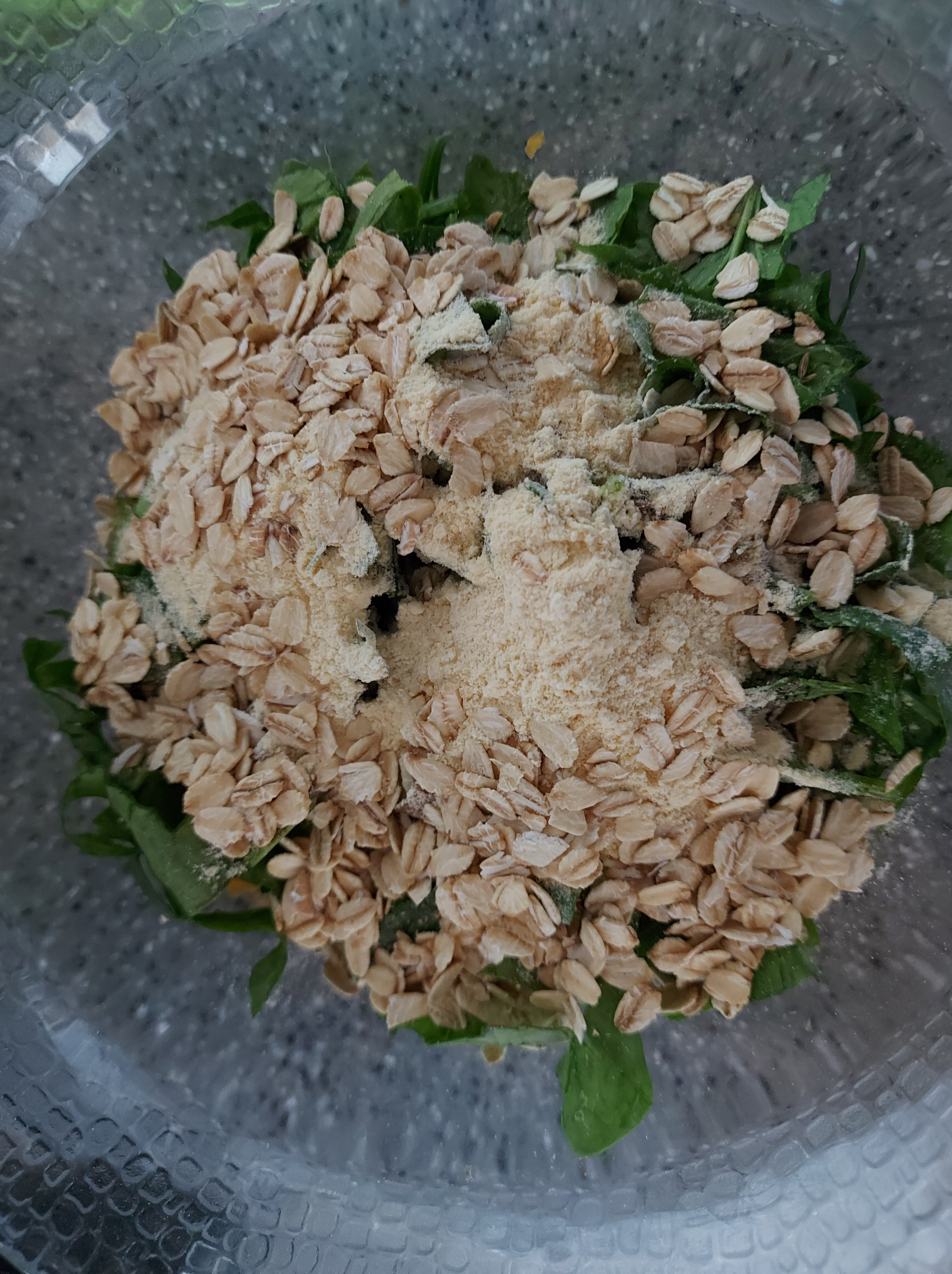
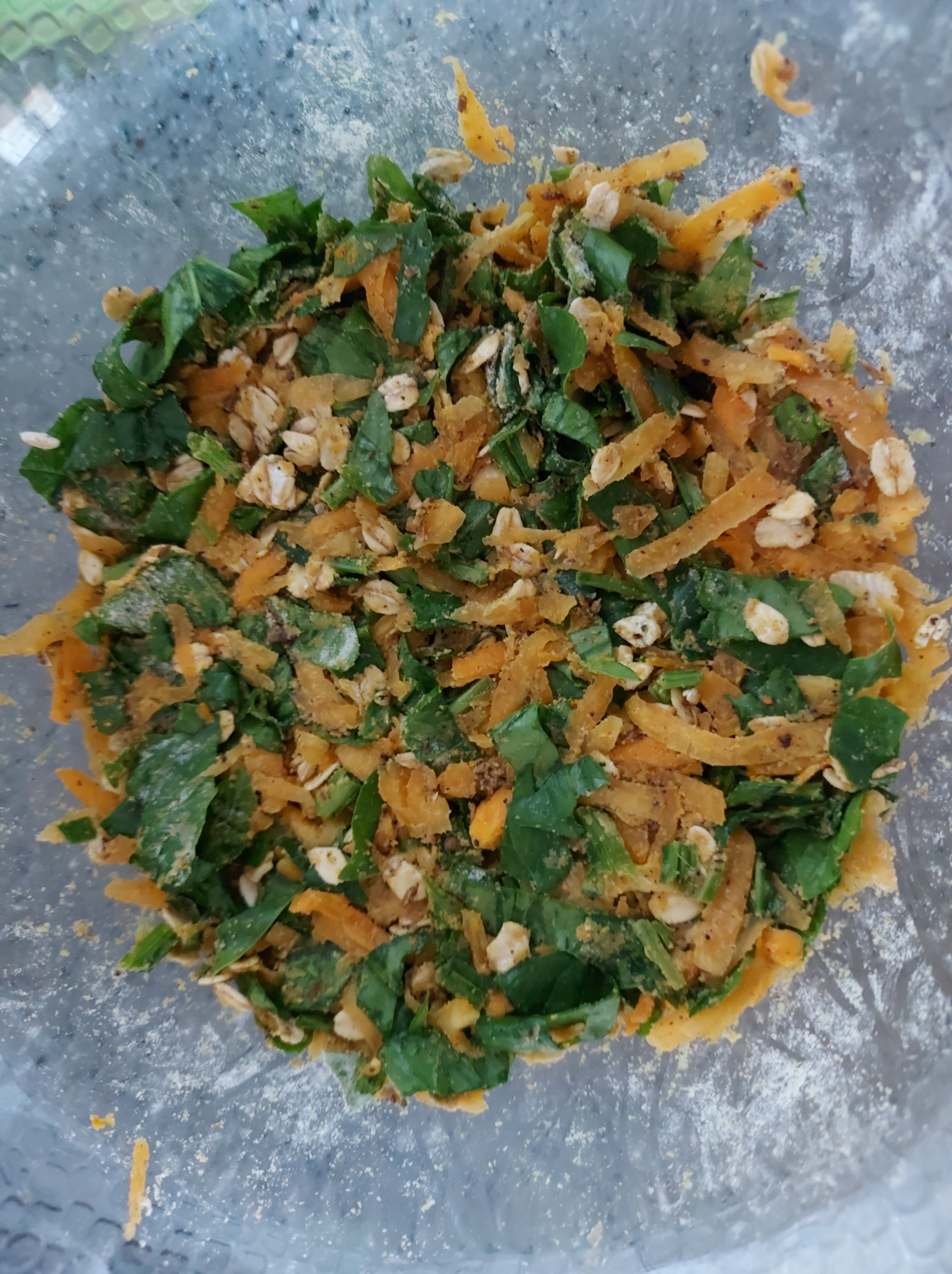
  • Grate the pumpkin into a large bowl, add the chopped spinach and herbs and spices and combine all the ingredients. Now add the rolled oats and chickpea flour and mix well. Leave the mixture to rest for two hours in the fridge, so that any excess moisture is absorbed.
  • Form the mixture into small balls (about the size of a golf ball) in your hands. Heat the oil in a frying pan then turn the heat down low and add as many of the balls as will fit in the pan. Flatten them with a fish slice and after a few minutes turn them over. Cook until golden brown on both sides and then serve straight away.

Asparagus in the Ascendency

3 June 2022

It’s that asparagus time of year, a herald of early summer, although you wouldn’t know it in Sweden, where the weather remains distinctly chilly.

Spears of destiny – stir fried with broccoli and red onions

We wrote about asparagus in our very first post, a bulgur risotto, back in 2016. Already this summer we’ve come across locally grown varieties in Kazakhstan and Sweden.

These tasty spears are great in a vegan stir fry served with rice or noodles, or if you eat eggs, then you can turn it into an omelette or a quiche.

Continue reading “Asparagus in the Ascendency”

Amorgos, mon Amour!


31 August 2017

Knidos Cookery Club is just back from a fact-finding mission to the Greek Islands and is bursting with new recipe ideas. Our main port of call was the island of Amorgos, the most easterly of the Cyclades group – a six-hour ferry trip from Piraeus, near Athens.

Our visit coincided with the Psimeni Raki festival, held annually on 26 July, a wild night of drinking and dancing (click here for video) fuelled by a local grappa-like spirit tempered with sugar, honey and herbs from the island to produce a drink that is around 20% alcohol by volume.

IMG_3444
Dancing the night away in Amorgos

The drink is based on Rakomelo, which is served by monks to people visiting the amazing Panagia Hozoviotissa Monastery – a spectacular white building carved high onto the side of an imposing cliff face.

20170727_002930
Working hard to keep the Psimeni raki flowing at the festival in Amorgos

For a small island Amorgos produces a significant quantity of alcoholic beverages – check out the site of this local producer, Amorgion, to see what’s on offer. As well as Psimeni Raki and Rakomelo, they also make an interesting local version of tequila, known as Mekila, from prickly pears.

Another interesting place to visit on the island is the Amorgos Botanical Park, a great project that is reviving a traditional garden that had been left derelict for decades. Here’s a link to their Instagram page.

A group of volunteers are aiming to bring the garden, complete with its own cistern fed by a spring, back to life by cultivating herbs endemic to Amorgos. The project is funded by grants and by the proceeds from the sale of herbs such as their intensely-flavoured oregano, teas such as rockrose, and tinctures made from produce grown on the island and dried and processed by the volunteers.

20170819_212721
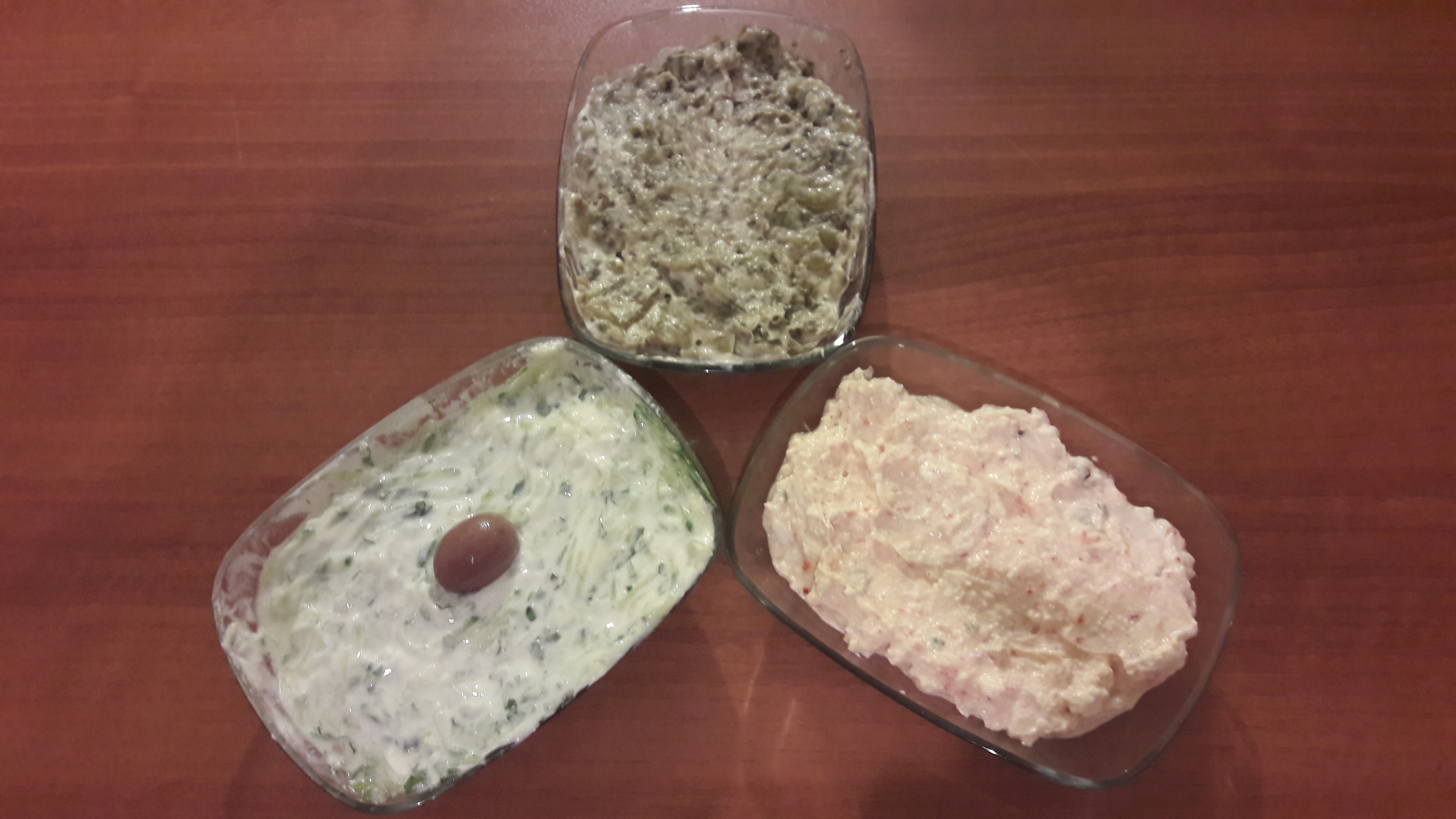
Knidos Cookery Club’s Greek trio with (clockwise from the top) smoky aubergine dip, Psimeni Raki and feta dip and tsatsiki, yogurt and cucumber.

One of the delicacies eaten during the Psimeni Raki festival to help soak up the booze are anevates, cheese pies baked with the aforementioned beverage. Unfortunately, Knidos Cookery Club couldn’t track down any of these pies but the use of Psimeni Raki has inspired us to make a boozy take on Greece’s spicy tirokefteri cheese dip.

Ingredients (serves 4-6 as part of a dip platter)

100 g feta cheese

100 ml Greek-style yogurt

25 ml Psimeni Raki

One teaspoon dried oregano

One teaspoon red chili flakes

Method

Crumble the feta with a fork, add the yogurt, psimeni raki (use sherry or vermouth if you don’t have access to psimeni raki!)and herbs and spices. Mix all the ingredients together thoroughly with the fork and chill for a couple of hours before serving with other dips such as tsatsiki (yogurt, cucumber and garlic) and a dip of roasted aubergines served with yogurt.