Barbunya Bean Therapy

22 June 2017

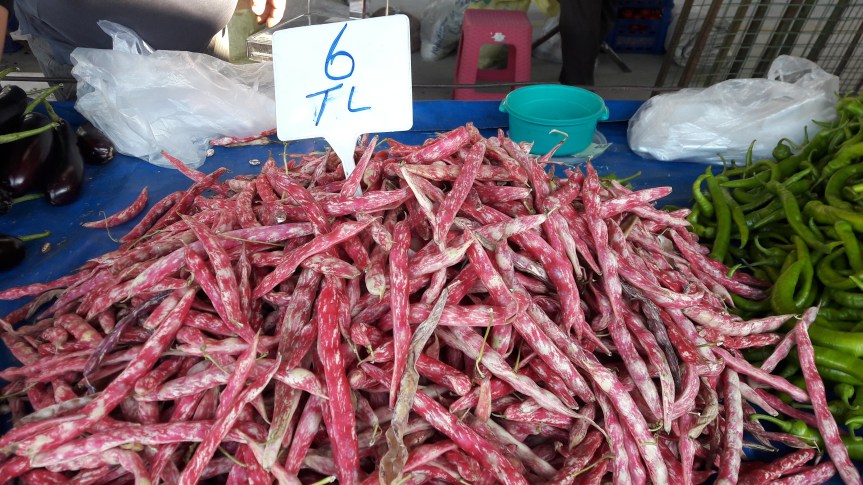
Last week in Datça market piles of psychedelic pink-podded barbunya beans arrayed against their green-podded cousins caught our eye. In Turkey these distinctive beans, also known as borlotti or cranberry beans, are made into a starter called barbunya pilaki, which is always high on our list when ordering a spread of mezeler.
20170616_183758
Psychedelic pink barbunya beans piled high in Datça market

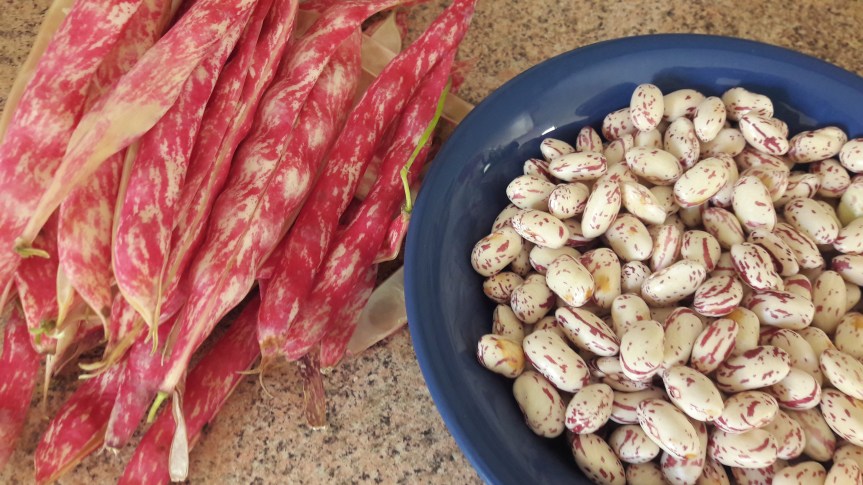
There’s something very therapeutic about podding these beans, like a beanish mindfulness moment!  Our kilo of beans in their pods yielded around 600 g of pink-marbled white beans.
20170616_194034
Bean therapy!

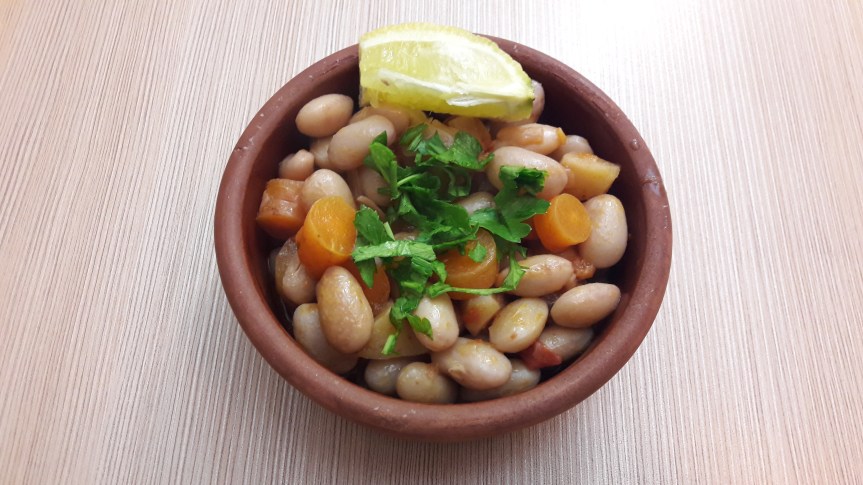
When cooked and allowed to cool, the pink colour leaches out and the beans take on a delicate brown hue. They’re delicious stewed with olive oil, onion, carrot, potato and lemon juice, served with a sprinkling of fresh parsley and a chunk of lemon. Some recipes omit the potato, but we think this gives the dish more oomph and means you don’t need to cook up any additional carbs.
20170616_220421
Barbunya pilaki all ready to go

They can be served hot as a less sugary take on baked beans, or served cold as part of the aforementioned selection of starters – Knidos Cookery Club recommends its carrot and walnut tarator, creamy almond and courgette dip, peppery muhammara and stuffed courgette flowers for a scrumptious feast of Turkish mezeler.

Ingredients (for 4-6 servings)

600 g shelled barbunya beans (or dried borlotti beans soaked overnight)

1 onion (around 100 g)

100 g carrot

100 g potato

100 g tomato

1 garlic clove

1 lemon

1 teaspoon honey

1 teaspoon red chili flakes

Fresh parsley to garnish

50 g olive oil

400 ml hot water

Method

Heat the olive oil into a heavy-based pan, chop the onion and garlic finely and fry over a medium heat for five minutes or so. Add the chopped tomatoes, lower the heat and cook for another five minutes.

Dice the carrot and potato into small cubes and then add these along with the beans, the juice of half a lemon, the honey, chili flakes and hot water to the pan and bring to a boil. Simmer for 30-45 minutes, stirring occasionally, until the beans are cooked but not going mushy.

Serve hot or allow to cool and garnish with fresh parsley and lemon slices.
Fill Yer Lentil Welly Boots!

15 June 2017

Next week should see the start of negotiations on the UK’s future relationship with the European Union as talks are scheduled to get underway on 19 June to hammer out the ultimate shape of Brexit.

In the lead up to this momentous day, this weekend also marks another seminal event in Britain’s troubled relationship with continental Europe – 18 June is the anniversary of the Battle of Waterloo, a battle which saw forces under the command of the Duke of Wellington deliver a fatal blow to Napoleon Bonaparte’s ambitions in 1815.

20170610_214951
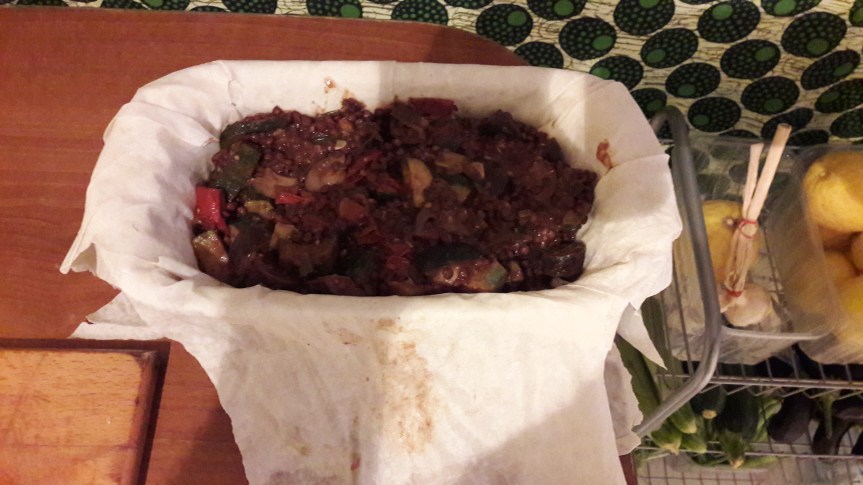
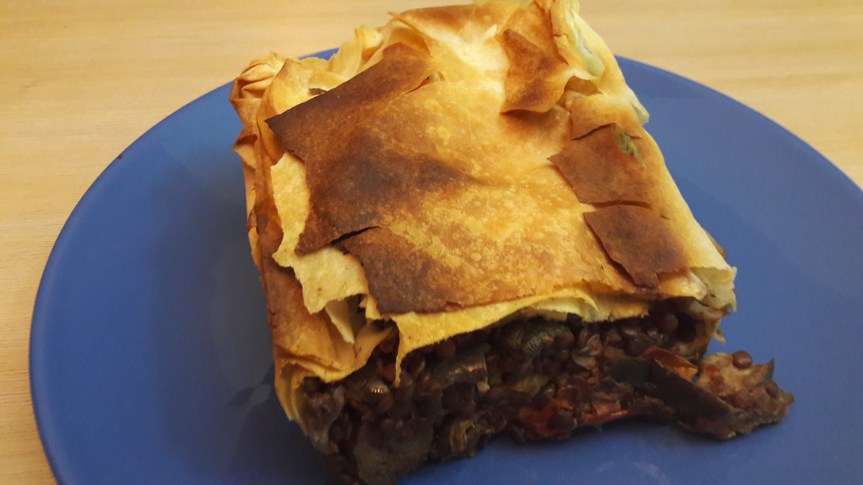
KCC’s Lentil Wellington ready for action

Only time will tell if the Maybot, in cahoots with the Rev Ian Paisely’s successors in the DUP, can produce a victory as decisive as Wellington’s – one thing is clear, some major sustenance is called for and what better than a hearty Lentil Wellington, our veggie take on Beef Wellington, a dish supposedly named after the duke.

Yes, besides giving his name to the wellington boot, the duke is also linked with this dish, which has a rich filling encased in pastry. Leah Hyslop suggests that the name was a patriotic makeover for a popular French dish:

The dish’s clear resemblance to that French specialty, filet de bœuf en croûte, could suggest the name was a timely patriotic rebranding of a trendy continental dish.

In our own era, food-patriotism was to the fore in 2003 when France refused to go along with the invasion of Saddam Hussein’s Iraq, causing some in the USA to call for ‘french fries’ to be rebranded ‘freedom fries’.

20170609_205035
KCC’s Lentil Wellington ready for final assembly before baking

For a Turkish twist, we’ve used layers of yufka, the local version of filo pastry, to cover our rich lentil and vegetable sauce. Make sure you leave on overlap of pastry of about 8-10 cm around the edges of your dish in order to create a top to encase the filling.

Ingredients (serves 4)

250 g aubergines

250 g courgettes

250 g tomatoes

75 g black lentils

2 spring onions

1 garlic clove

1 bayleaf

1 teaspoon cinnamon, cumin, red chili flakes and coriander seeds

Pinches of black pepper and salt

250 ml vegetable stock

100 ml red wine

100 ml olive oil

Filo pastry (around 300 g)

Method

Wash the lentils until the water runs clear, and then cook in a heavy-based pan with the vegetable stock and bayleaf. Bring to the boil and then simmer over a low heat for 20 minutes or so until the liquid is absorbed.

While the lentils are cooking, prepare the vegetables: finely chop the spring onions and garlic, cut the aubergine and courgette into one cm thick slices and then cut into four. Place the vegetables into a heavy-based pan, add the herbs and spices and pour 50 ml olive oil over the veg and then cook over a medium heat for ten minutes, stirring occasionally.

Chop the tomatoes and add to the vegetables and cook for another five minutes, continue stirring every now and then. Now add the cooked lentils and the red wine and cook for another ten minutes or so until the liquid is absorbed.

While this is cooking, prepare the pie case. Grease a large pie dish with olive oil and layer leaves of filo pastry, brushing each layer with olive oil. Make sure you leave a pastry overlap of around 8-10 cm around the edges of the pie dish.

Pour the filling into the pie case and fold over the overlapping filo pastry, brushing with more olive oil to help seal the top of the case. Bake in an oven pre-heated to 180 c /gas mark 5 for 30 minutes or so until the top of the pie begins to turn a golden-brown colour.

Allow to cool for ten minutes and then serve slices of the pie with a crisp green salad and roasted new potatoes.


Mr Alan’s Top Tips

18 May 2017

Knidos Cookery Club is just back from a flying visit to Uzbekistan where we met up with dilettante chef Mr Alan, who invited us round to sample his take on asparagus tips.

He’d tracked down some sizeable spears in Tashkent’s Alay, or Alaysky, bazaar and we added some first cold press Datça olive oil and some sun-dried tomatoes from the peninsula, which, with the addition of some toasted pine nuts and a smattering of grated pecorino cheese, made for quite a feast.

20170512_213305
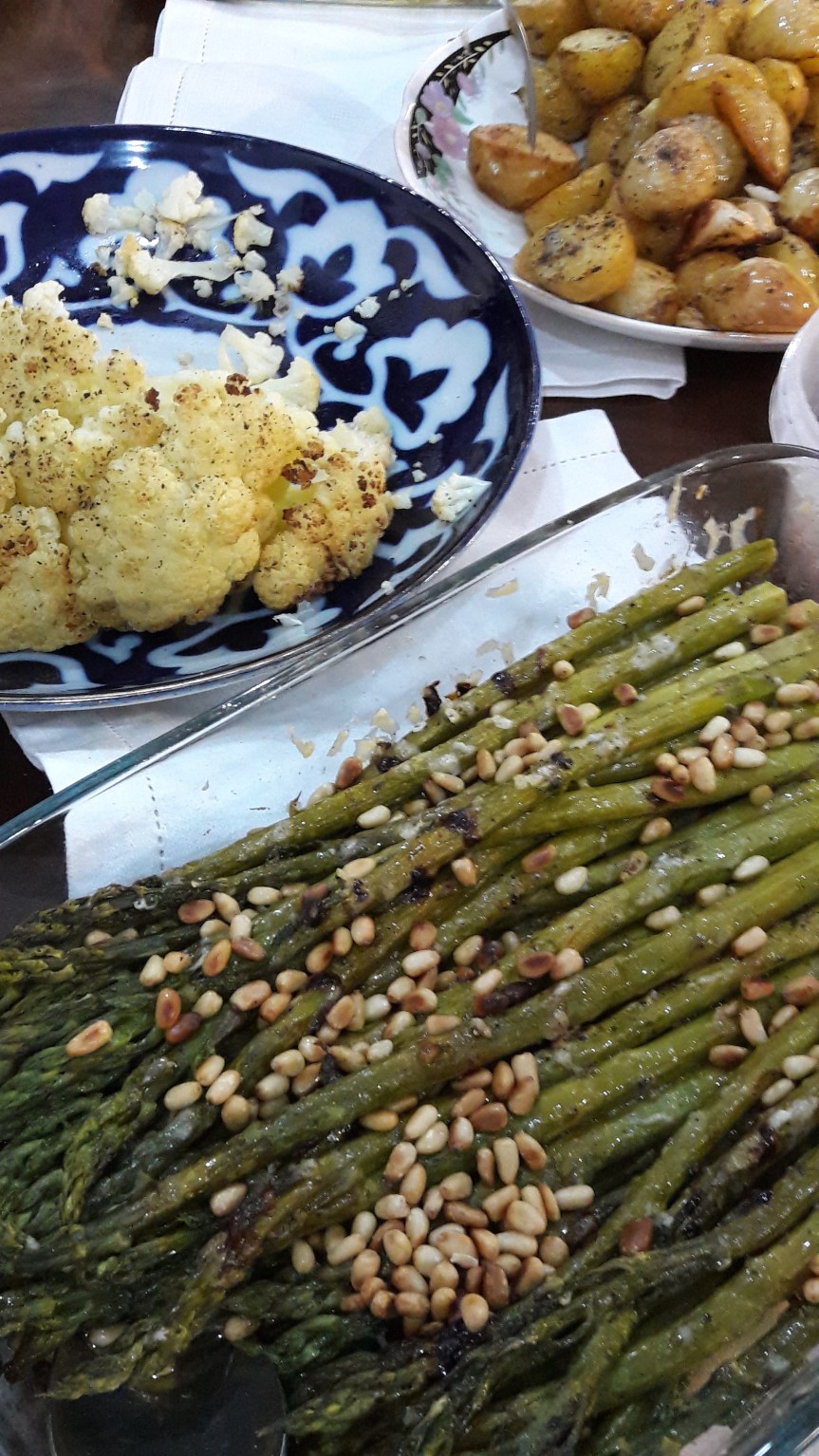
Mr Alan’s way with asparagus


The asparagus tips, which are easy to bake and go well with potatoes, rice or pasta, were served up with a head of roasted cauliflower drizzled with truffle oil and roast new potatoes. Oh, and there was a duck and some fish for the carnivores, along with lashings of wine from Mr Alan’s cellar!

Ingredients (easily serves 6-8)

1 kg asparagus spears

200 g sun-dried tomatoes

50 ml olive oil

100 g pine nuts

50 g pecorino or similar hard cheese

One cauliflower, leaves removed

Truffle oil

Mixed dried herbs such as thyme or oregano

Method

Place a layer of sun-dried tomatoes on the bottom of a large baking dish. Arrange the spears over the top of the tomatoes, pour the olive oil on top, sprinkle some mixed herbs over the spears and grate the cheese over everything.

Bake in a hot, pre-heated oven at 200 c /gas mark 6 for twenty minutes or so until the spears are just beginning to char. Sprinkle the cauliflower with truffle oil and olive oil and cook for 30 minutes for so in the hot oven along with the asparagus tips. While the tips are baking, toast the pine nuts over a medium heat.

Serve the asparagus tips with the pine nuts alongside the cauliflower and potatoes and a bottle or two of your favourite wine.


Avocado + Egg = Brunch Heaven

9 February 2017

This week at Knidos Cookery Club we have a guest post that combines two of our all-time fave foods: avocado and egg, dished up with olives, beetroot with walnuts and halloumi cheese.

20170115_143020

Avocados love the mild winters of the Knidos region as the shores of the Mediterranean Sea provide ideal growing conditions for this large green fruit that’s packed with nutritious vitamins and healthy fats.

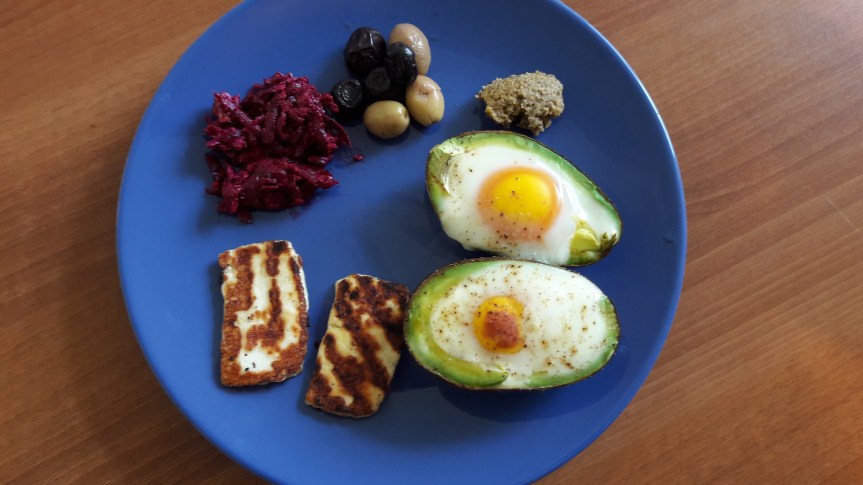
Our guest chef Jasha, who has worked in the hospitality industry in the UK, has kindly agreed to share her favourite way of combining eggs with avocado. Served up with pan-seared halloumi, olives and grated beetroot with walnut, this great dish sent us into brunch heaven!

Ingredients 

One avocado per person

Two eggs per person

250 g pack halloumi cheese cut into four slices (enough for two people)

Black and green olives

A few scoops of olive paste

One grated large beetroot (raw or cooked) mixed with 50 g crushed walnuts and two teaspoons of sour cream or natural yogurt

Black pepper and red chili flakes

Method

Slice the avocados in half and remove the stone. Be careful not to stab yourself in the hand as I once did – it’s apparently quite a common kitchen injury. Scoop out some of the flesh to leave a hollow space for the egg.

Place the avocado halves in a baking dish, round side down, and pour an egg into the scooped out shell. Grind some black pepper over each egg and bake the avocados in an oven pre-heated to to 200 c /gas mark 6 for 20 minutes or until the underside of the eggs are cooked. Finish the eggs off under a grill and then season with some red chili flakes and a grind of black pepper.

While the eggs are cooking, fry the halloumi slices in a non-stick or heavy-based frying pan until browned on both sides.

Serve the avocados immediately with the pan-seared halloumi, beetroot and walnuts, olive paste and olives and some doorsteps of fresh bread.


Riding the Bread Bowl Zeitgeist

3 November 2016

Ok, so we’ve all heard of dunking bread into a wholesome bowl of soup, but, until last week, Knidos Cookery Club had not come across soup being served in a bread bowl. It’s a craze that had seemed to pass us by.

On a chilly night during a recent trip to Reykjavik, Iceland, we found a restaurant that was serving just two dishes – asparagus soup or a thick, meaty broth, both served in a bread bowl. We were instant converts.

20161030_160310A few days after this, a restaurant was spotted in Pendik, a district of Istanbul in Turkey, that had a poster for Ekmekte Çorba, yes, that’s right, soup in a bread bowl. Looks like there could be a craze starting here so let’s chase the zeitgeist and try and recreate this in the Knidos Cookery Club kitchen.

Wondering what to do with all that pumpkin left over from Halloween? Why not turn it into a hearty soup that should pass the bread bowl test – you don’t want your soup to be too liquid as there’s a danger of ending up with a soggy mess of soup and bread. We’ve thickened ours with red lentils and bulgur wheat, so combined with the bread, this one’s going to be a real winter warmer.

Ingredients: (serves 3-4)

four medium-sized round brown loaves

300 g pumpkin (save the seeds for roasting)

50 g red lentils

50 g coarse bulgur wheat

one medium-sized pear

one medium-sized onion

one garlic clove

750 ml vegetable stock

sprinkle of dried sage

one teaspoon of dried thyme

two bay leaves

one teaspoon of cumin seeds

one cinnamon stick

half a teaspoon of turmeric

Method:

Cut the pumpkin in half and remove the seeds, retain them to use later. Peel the pumpkin and dice into 1 cm cubes. Place the pumpkin cubes in a baking dish, pour in 50 ml of olive oil and sprinkle the sage and thyme over the pumpkin and mix well.

Bake in a pre-heated oven (220 c /gas mark 7) for 45 minutes or until the pumpkin mashes easily with a fork. While the pumpkin mix is cooking, put the seeds on some tin foil and roast in the oven until starting to char a little bit.

Finely chop the onion and garlic and fry in 50 ml olive oil over a medium heat. As they’re cooking add the cumin seeds, turmeric and cinnamon stick and bay leaves. Cook until the onions are starting to brown.

Chop up the pear finely and add with the roasted, mashed pumpkin to the onion mix and pour the stock over the top. Bring to the boil and then reduce the heat and add the bulgur wheat and red lentils. Cook over a medium heat for thirty minutes or so until the bulgur and lentils are beginning to go a bit mushy.

Slice the top off the loaf and scoop out the contents, leaving around 1 cm of bread as a lining for the bowl. Pour the soup into the bread bowl, garnish with roasted pumpkin seeds and serve immediately. Use the top of the bread to dip in the soup and eat the bowl as you go, depending on how hungry you are!


Ezo the Bride’s Soup

20 October 2016

Knidos Cookery Club is off to a wedding soon so we did a quick google to see what Turkey has in the way of wedding-related foodstuffs and chanced upon this soup with a great backstory.

One wedding day tradition in Turkey is to the feed up the bride-to-be with a hearty soup, Ezogelin Çorbası, to help her prepare for the rigours of her wedding day and the subsequent move into the groom’s household.

img_2061

The name translates as ‘Ezo the Bride’s Soup’ and the recipe comes from the tale of a woman, Ezo, short for Zöhre, who was born in 1909 in a village near Gaziantep, now in south-eastern Turkey on the border with Syria.

She became famed in the region for her her looks and was highly sought after as a bride. Eventually, she married a man from a neighbouring village but unfortunately the marriage didn’t work out. One version of the tale, that has inspired short stories, folk songs, a film and a TV series in Turkey, as well as the soup, has it that her husband loved another so Ezo left him.

In 1936, Ezo married again and moved with her husband over the border to the town of Jarabulus in Syria. She pined for her homeland and to quell her homesickness she would cook a soup that reminded her of Turkey – a filling combination of red lentils, bulgur wheat, rice, tomato paste, herbs and spices. She also used the soup to win over her mother-in-law, a move crucial to finding happiness in her new home.

Ezo had nine children with her second husband, but she only lived to her mid-40s, dying in 1956 in Jarabulus. Her last wish was to be buried on a hillside overlooking her beloved homeland. Her memory lives on in this soup and in the legends that have grown up around her life story.

Ingredients (Makes four servings)

150 g red lentils

50 g coarse bulgur wheat

25 g rice

one medium-sized onion

one or two cloves of garlic

one lemon

25 ml olive oil

1.2 l warm water

3-4 tablespoons of tomato paste (a more liquid form of tomato purée – if using purée then two tablespoons should suffice)

two teaspoons of dried mint

black pepper

two teaspoons of chili flakes

sprig of fresh mint

Method

Wash the red lentils, bulgur wheat and rice and soak for two hours in cold water.

Finely chop the onion and garlic and fry for five minutes in the olive oil in a heavy-based pan. Add the red lentils, bulgur wheat and rice, pour in one litre of water and simmer over a low to medium heat for 30 minutes or until everything is cooked.

Add the tomato paste, the dried mint, chili flakes and some black pepper and 200 ml of water and the juice of one lemon and stir well. Simmer for ten or fifteen minutes until the soup is taking on a creamy texture.

Ladle the soup into bowls and garnish with a sprig of fresh mint and sprinkle more chili flakes over the top. Serve with a slice of lemon and some crusty bread.

Mungo Pumpkin Patties

6 October 2016

Knidos Cookery Club’s autumnal vibe continues apace with the re-appearance of pumpkins of all shapes and sizes in the market. This is one vegetable that acts as a surefire marker of the onset of longer and chillier nights, with thoughts turning towards the comforting pumpkin-rich soups and stews of winter.

img_2044

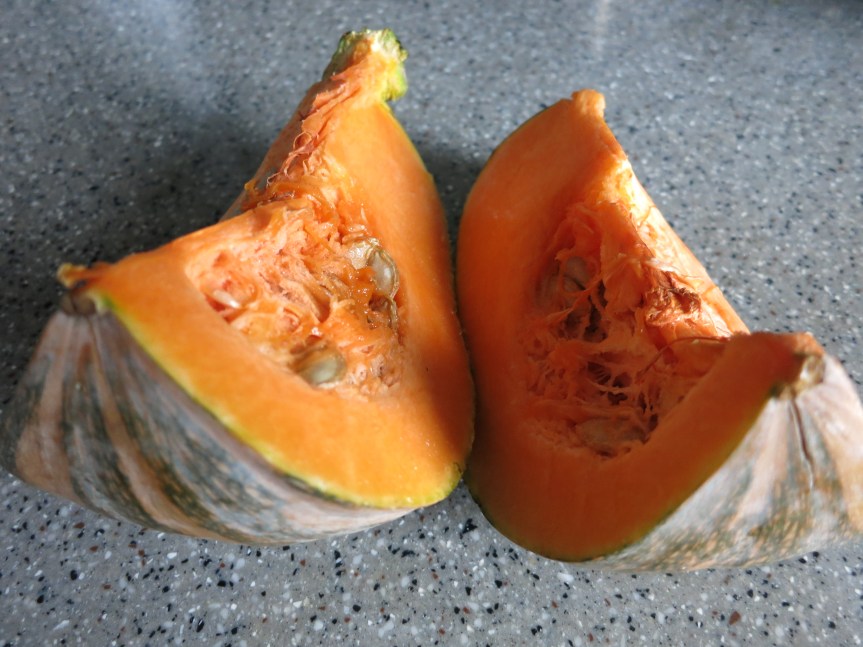
In Turkey, pumpkin is often served as a desert – kabak tatlısı , that coats the orange-coloured slices in sugar syrup. Here at Knidos Cookery Club we prefer the savoury approach to pumpkin and have come up with some mung bean, bulgur wheat and mashed pumpkin patties.

pumpkin-patties

The mung beans add a nutty, earthy flavour that compliments the natural sweetness of pumpkin, while the bulgur wheat helps to hold it all together so the patty can be fried or oven-baked. Roast the seeds and use them to decorate the patties and give tham a bit of crunch.

Ingredients (makes 6-8 patties)

300 g pumpkin

75 g mung beans

50 g fine bulgur wheat

one medium-sized onion

one garlic clove

one teaspoon cumin seeds

one teaspoon dried thyme

black pepper

one teaspoon turmeric powder

25 ml olive oil

250 ml water

Method

Wash and soak the mung beans in cold water for two hours. Then cook in 250 ml water for 45 minutes or until the beans are just starting to go mushy – add more water if necessary.

Cut the pumpkin in half and remove the seeds, retain them to use later. Peel the pumpkin and dice into 1 cm cubes. Finely chop the onion and garlic. Place the pumpkin cubes, onion and garlic in a baking dish and pour 25 ml of olive oil over them. Add the cumin seeds, dried thyme and black pepper and mix well to coat the cubes.

Bake in a pre-heated oven (220 c /gas mark 7) for 45 minutes or until the pumpkin mashes easily with a fork. While the pumpkin mix is cooking, put the seeds on some tin foil and roast in the oven until starting to char a little bit.

Mash the pumpkin mix with a fork or a potato masher and then add the cooked mung beans and blend well. Stir in the turmeric powder and then add the bulgur wheat. Mix well and allow to stand for 30 minutes.

Tak a golf-ball sized portion of the mix and flatten to a round shape. Decorate with pumpkin seeds and shallow fry in oil or oven-bake for 30 minutes at 220 c (gas mark 7).

Serve with roast potatoes or chips and a mixed salad or in a burger bun with toppings of your choice.


Roman Lor … and Chips

29 September 2016

This week on Knidos Cookery Club we’ll be looking at a recipe that uses up the rest of the lor cheese, Turkey’s answer to ricotta, that we used a few weeks ago in a stuffed aubergine in a spicy tomato sauce dish.

While surfing the net looking for inspiration, Knidos Cookery Club came across the following piece on a dish that is a summertime feature in Rome – baked stuffed tomatoes with potatoes.

img_1418
An autumn carbfeast – stuffed tomatoes with potato wedges

To our mind, the double-carbo dose seems more suited to cooler autumn nights than the heat of summer. We’ve put our own spin on the recipe by substituting bulgur wheat for the rice and adding a healthy dollop of lor to the filling.

Ingredients (Serves 4)

Four medium-sized tomatoes

One medium-sized onion

Three large potatoes

One garlic clove

100 g bulgur wheat (coarse ground) (use rice if this is not available)

50 g  lor cheese (use ricotta or cottage cheese if this is not available)

50 ml olive oil

200 ml hot water

One teaspoon dried thyme

Pinches of salt and black pepper to taste

Method

Slice the top off the tomatoes and leave to one side. Scoop out the flesh with a teaspoon used in a circular, drilling motion. Put the tomato flesh to one side. Turn the hollowed-out tomatoes upside down on kitchen paper to remove excess moisture.

Finely chop the onion and garlic and fry in 25 ml of olive oil until softening. Add the leftover tomato flesh, half a teaspoon of thyme and some salt and black pepper and stir. Cook for five minutes then add the bulgur wheat, stirring to coat the grains. Pour the hot water over the mixture and cook over a low heat until all the moisture is absorbed.

Slice the potatoes in half lengthways and then cut into wedges about 1 cm in width at their thickest point. Pour 25 ml of olive oil into a baking dish and throw in the potato wedges. Sprinkle thyme over the potatoes and coat them liberally with the olive oil – use your hands or a fork for this.

Allow the bulgur to cool and then stir in the lor cheese. Stuff the tomatoes with the bulgur mix and place the tops back on and arrange on top of the potato wedges. Bake in a pre-heated oven at 220 c (gas mark 7) for 45 minutes or so until the wedges are golden and the tomatoes are beginning to shrivel and go a bit black on top.

Serve with a green salad to balance out the carbfeast.