Hitting the Sweet (Potato) Spot

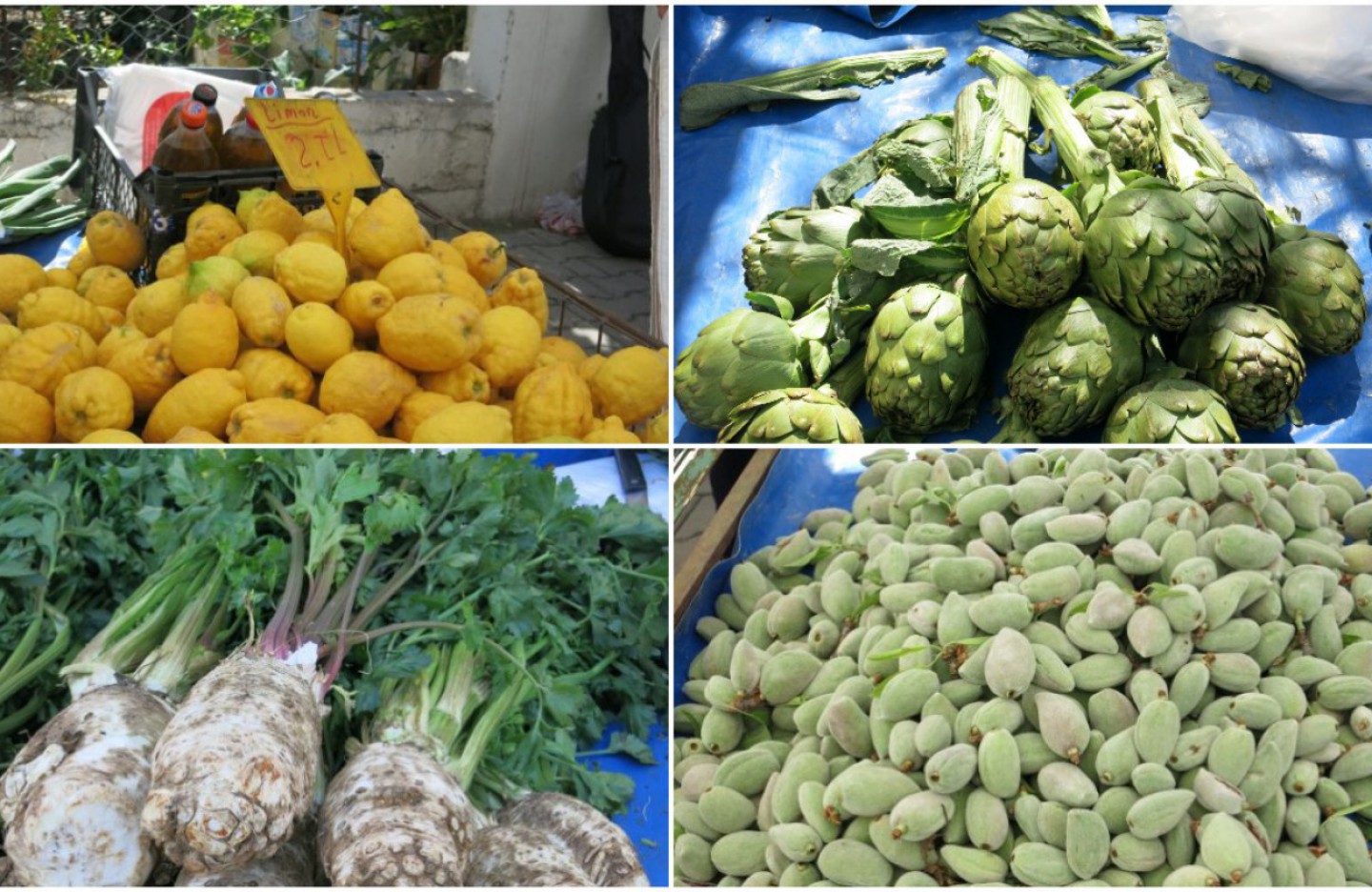
On a visit to Datça’s Saturday market a few months ago I was surprised to come across a table filled with sweet potatoes, a new crop on the block in this part of the world. Usually found as an expensive import in select supermarkets in Turkey, these tubers, or more accurately roots, were locally-grown on the Datça Peninsula. The price was affordable and competitive with the price of potatoes on sale in the market.

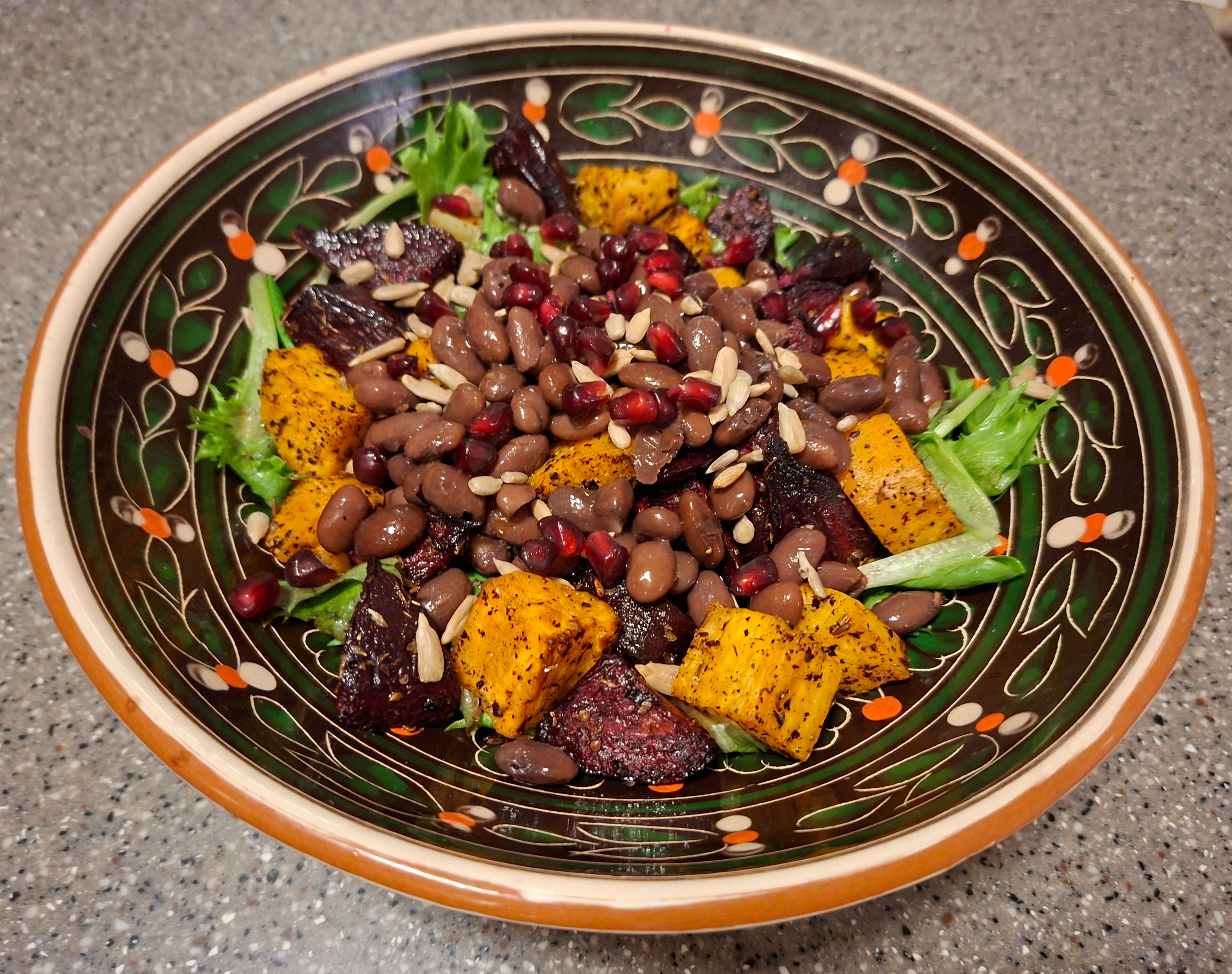
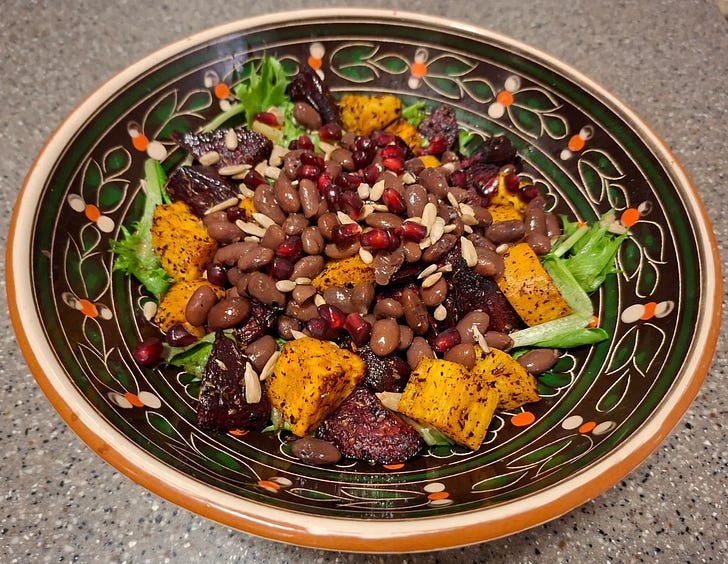
Getting back to our roots with a red bean, sweet potato and beetroot salad

In recent years, farmers in Turkey have been experimenting with the cultivation of some less familiar fruits and vegetables, such as mangoes, papaya, avocadoes and bitter gourds.

Antalya, already famous for its homegrown bananas, is getting a name for sweet potatoes, which are also grown in the south-east around Hatay and Mersin, on the Aegean coast near Izmir, around Tokat on the way to the Black Sea from Ankara and, now, on the Datça Peninsula.

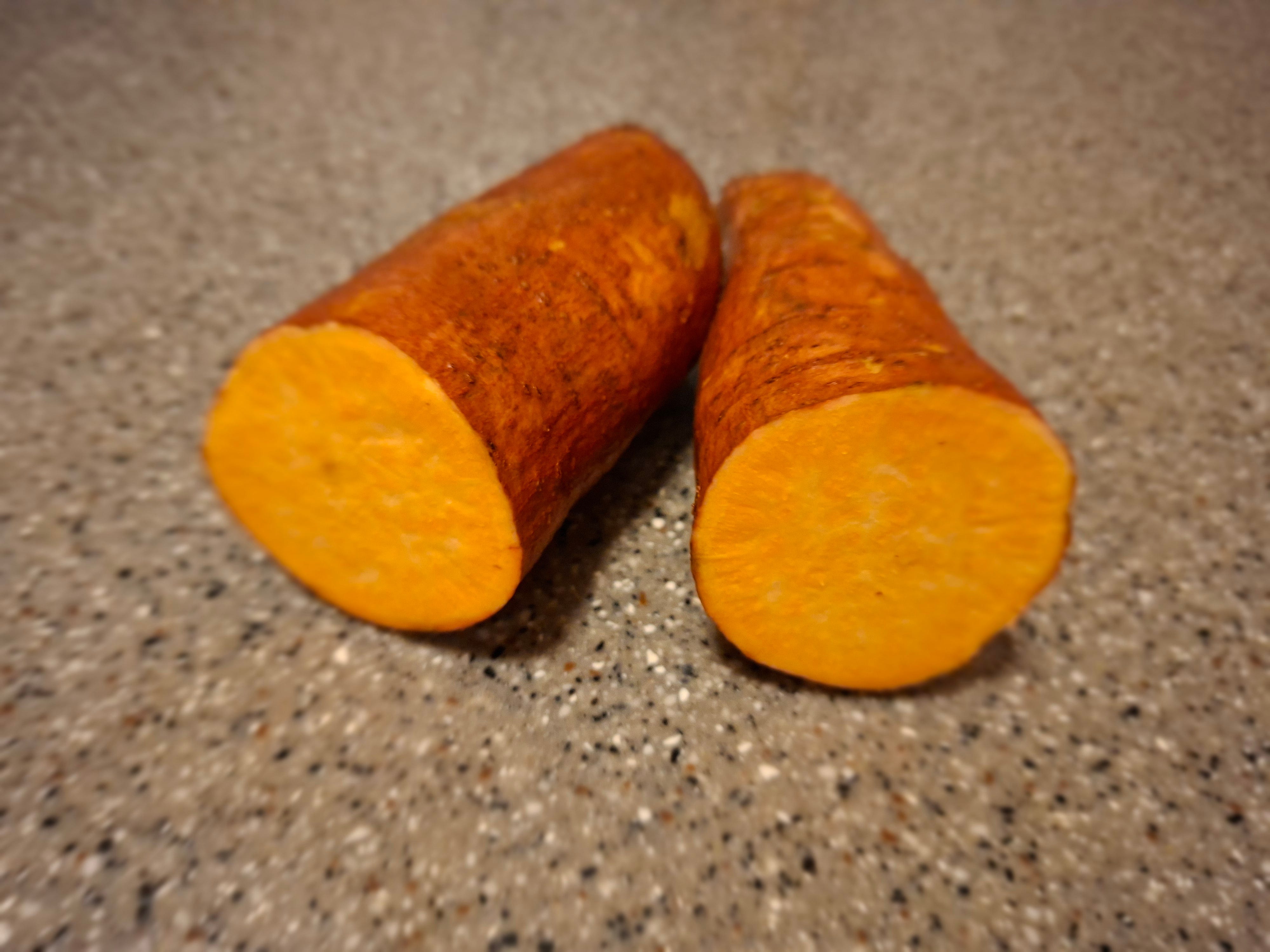
Sweet potato – fresh from the market

The sweet potatoes on sale in Datça market were of the reddish brown variety with an orange-yellow flesh. As a fairly recent arrival to the Turkish kitchen, there aren’t too many traditional recipes using the sweet potato, so KCC has come up with a salad that pairs them with beetroot, red beans, salad leaves and, to add a Turkish twist, a tahini and pomegranate dressing.

Sweet Potato Salad

KCC’s sweet potato salad combiness beetroot, red beans and salad leaves and, to add a Turkish twist, a tahini and pomegranate dressing.


Prep time

30 min

Cook time

20 min

Total time

50 min

Serves

3-4


Equipment

A salad bowl, a small bowl, an air fryer


Ingredients

  • 150g roasted sweet potato
  • 150g roasted beetroot
  • 100g cooked red beans
  • 50g mixed salad leaves
  • 2teaspoons sunflower seeds
  • 2teaspoons pomegranate seeds
  • 20ml tahini
  • 30ml olive oil
  • 10ml apple vinegar
  • 10ml pomegranate syrup
  • 2teaspoons dried rosemary
  • 2teaspoons sumac

Preparation

Peel and dice the sweet potato into 2 cm cubes. Put in a bowl and dress with 10 ml olive oil, one teaspoon rosemary and one teaspoon sumac. Mix well to cover the chunks.

Peel and slice the beetroot into quarters. Slice again lengthwise and then cut in half. Put in a bowl and dress with 10 ml olive oil, one teaspoon rosemary and one teaspoon sumac. Mix well to cover the chunks.

Cook the sweet potato in an air fryer at 200 c for 10 minutes, give the basket a shake after 5 minutes. If cooking in an oven, cook for 20 minutes at 200 c.

Cook the beetroot in an air fryer at 200 c for 20 minutes, give the basket a shake after 10 minutes. If cooking in an oven, cook for 30 minutes at 200 c.

Put the mixed salad leaves in a bowl and add the roasted sweet potato and beetroot. Add the cooked red beans and then sprinkle the sunflower and pomegranate seeds over tha salad.Make the dressing by combining 20 ml tahini with 10 ml olive oil, 10 ml apple vinegar and 10 ml pomegranate syrup in a small bowl. Whisk with a fork and add water to bring the dressing to a pourable consistency.

Pour the dressing over the salad, mix well and serve.

    Nutty Chickpea and Pumpkin Fritters

    2 October 2025

    With autumn upon us once again, it’s time for pumpkin to make a return to the table. This versatile memeber of the squash family makes for perfect comfort food for the longer, chillier nights. KCC’s back catalogue features a number of pumpkin dishes – try this cousin of lasagne made with chickpeas and mixed greens and this roasted pumpkin with halloumi for starters.

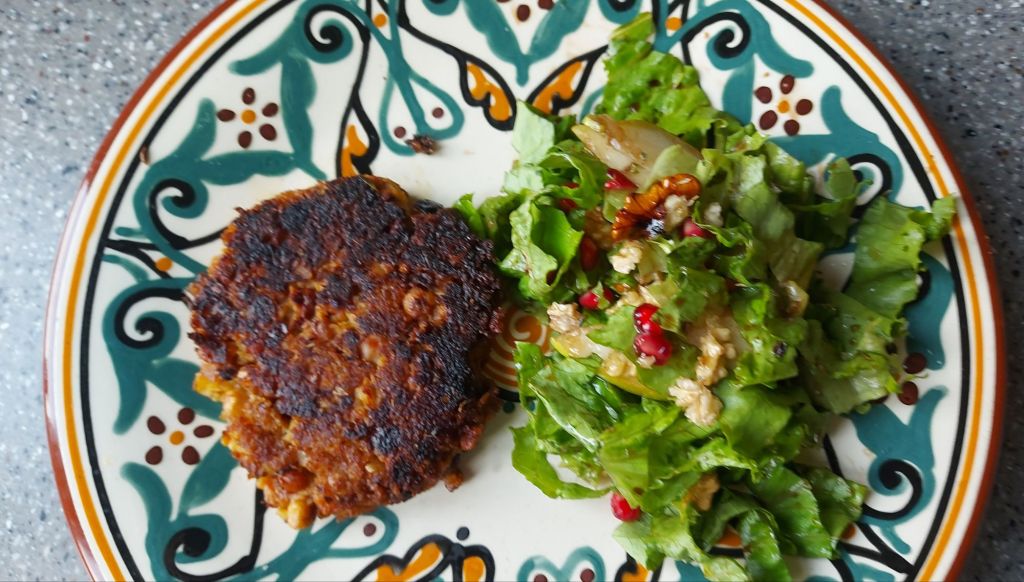
    A nutty chickpea and pumpkin fritter served with a lettuce, pear, pomegranate and walnut salad

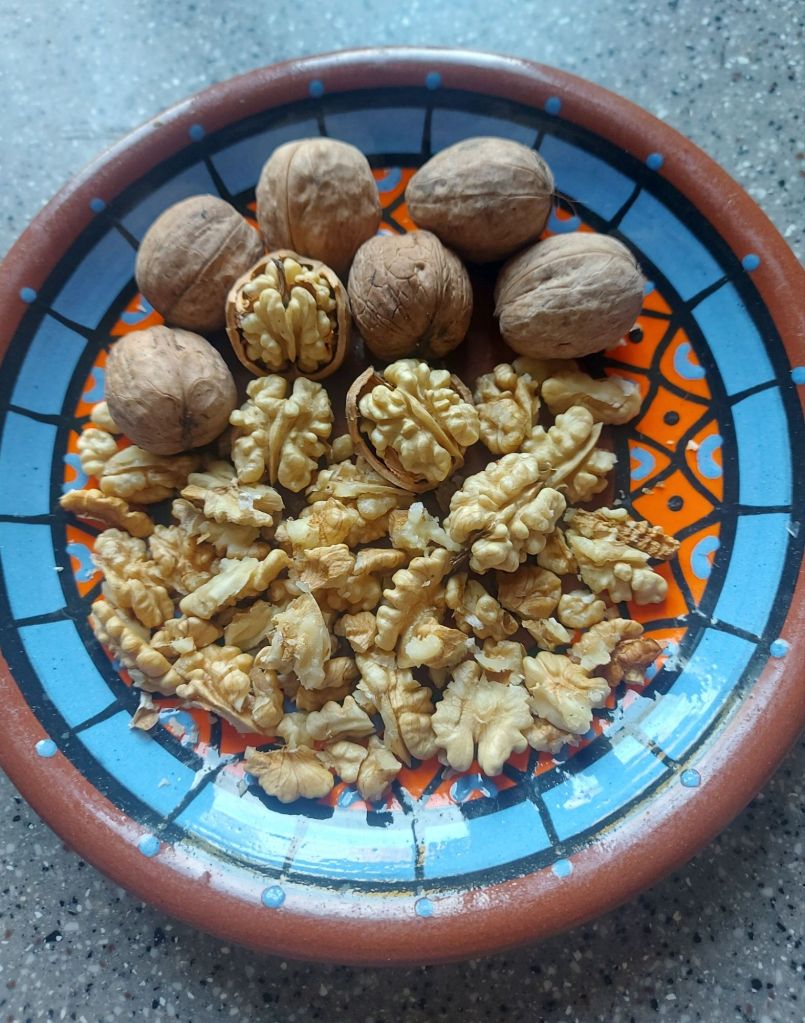
    This time, we’re using the pumpkin in a fritter made with chickpeas and fine bulgur wheat. Recently, we recieved some walnuts from a friend of a friend’s dacha outside Almaty, here in Kazakhstan, which are ideal for adding a nutty edge to these chickpea and pumpkin fritters. We also added some walnuts to a fruity salad made with lettuce, pear and pomegranate seeds to accompany the fritters. Dress it with equal parts of balsamic vinegar and extra virgin olive oil.

    This year’s walnuts fresh from the dacha in Almaty, Kazakhstan

    Ingredients (Makes 4 fritters)

    • 200 g pumpkin
    • 150 g chickpeas
    • 25 g oats
    • 20 g fine bulgur wheat
    • 25 g walnuts
    • One teaspoon dried oregano
    • One teaspoon dried thyme
    • One teaspoon cumin seeds

    Method

    Continue reading “Nutty Chickpea and Pumpkin Fritters”

    Summertime Veggies with Yogurt and Mint

    26 June 2025

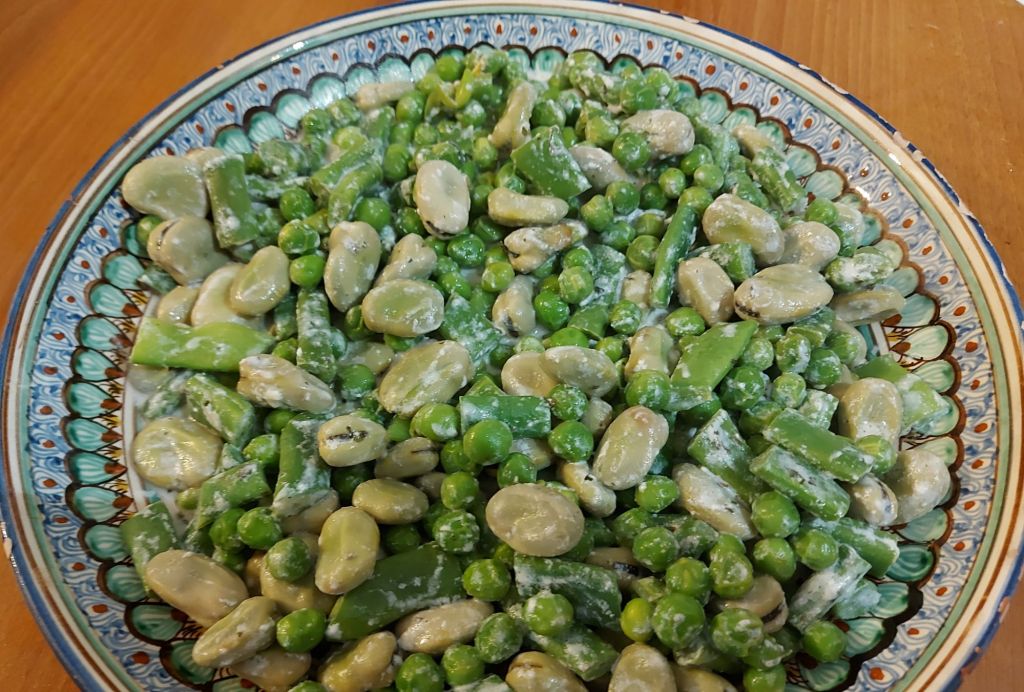
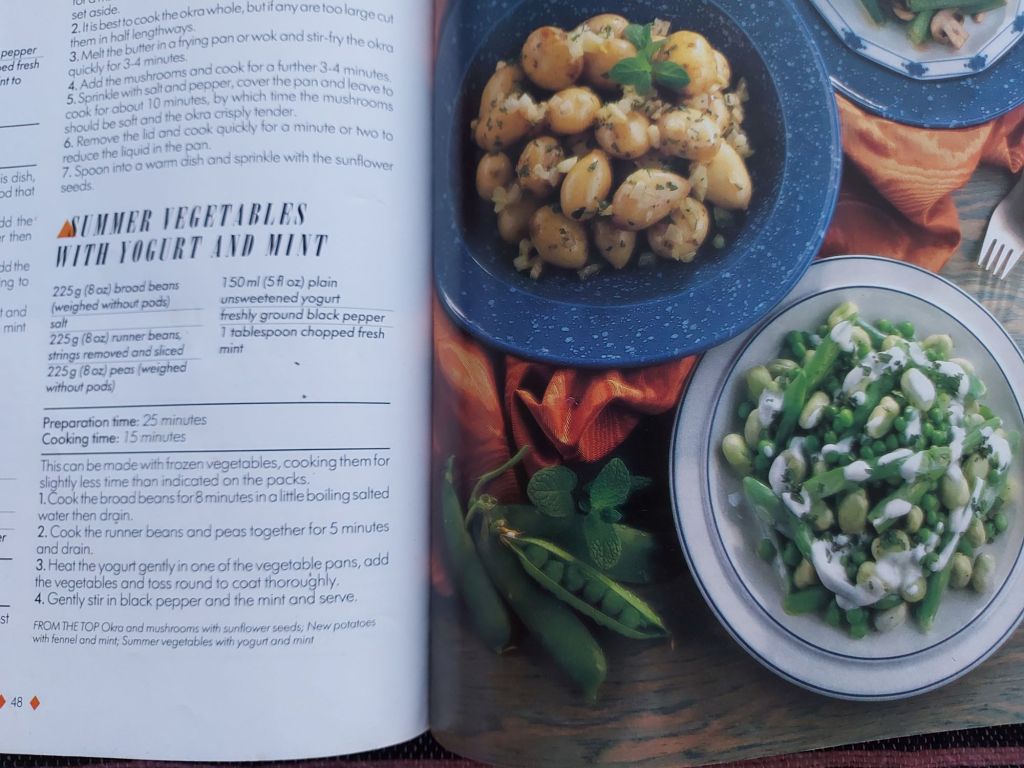
    Summer is in full flow so it’s time for some lighter dishes that bring to the fore fresh seasonal ingredients at their best. I found this on-trend recipe that uses fresh peas, broad beans and runner beans while going through some old stuff in the UK recently.

    A taste of summer

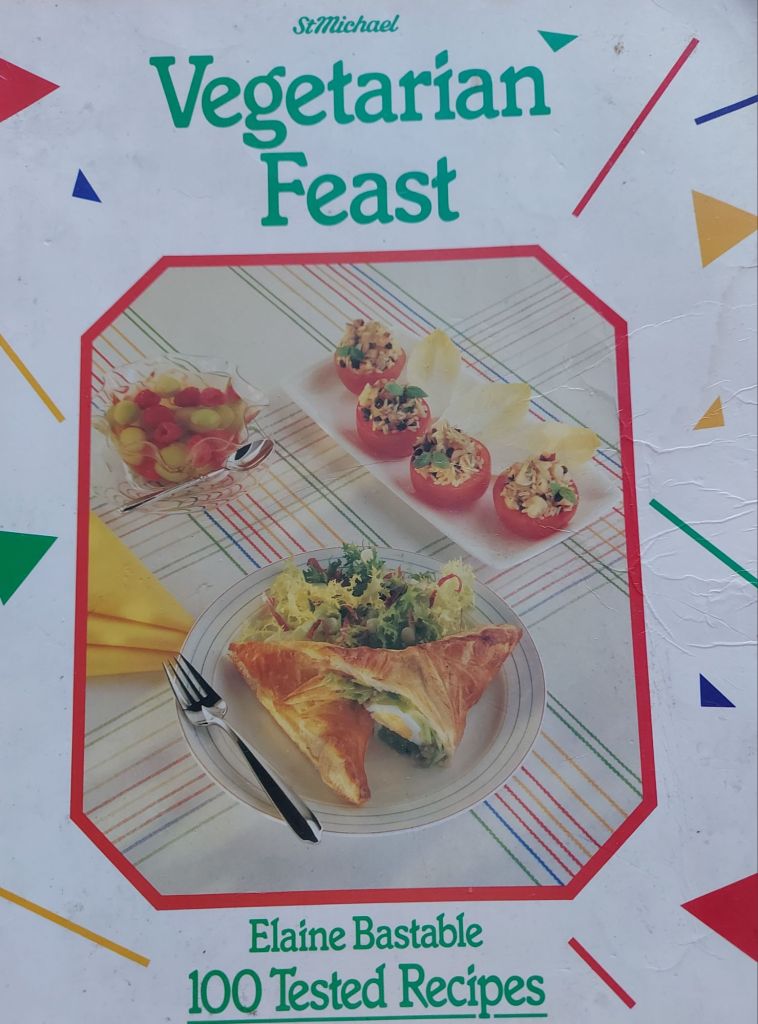
    I was at my late parents’ old place and during the archaeological dig I found a copy of the first vegetarian cookbook that I owned – Elaine Bastable’s Vegetarian Feast, a Christmas present from way back in 1985. It was sold by Marks & Spencer under its StMichael guise.

    Vegetarian Feast was quite advanced for its time with a recipe for Avocado (and Stilton) on Toast, a Felafel recipe and other dishes that were very exotic for Margaret Thatcher’s meat-heavy Britain of the 80s. The cookbook’s over-reliance on butter comes across in the 2025 filter as a bit dated, but it still stands the test of time in many respects.

    A blast from the past

    1985 was the year I finally took the plunge and went vegetarian. It had been coming for a while. As an impoverished student the meat that I could afford was of the type that had featured in documentaries of the time looking at the meat industry.

    Affordable processed products such as burgers and sausages were shown to contain all parts of an animal – mashed up eyelids, lips, bollocks and toes, to be precise.

    Although there are now many more vegans and vegetarians, not much has changed in the meat industry – as I write the Guardian is carrying this article on the shocking rise of factory farms across Europe and the UK.

    Here’s the recipe

    In the summer of 1985 I had just finished uni and I was travelling through Yugoslavia, as was, to Greece via Bulgaria and Turkey. Bulgaria was a veggie turning point. Cafe menus featured a wide selection but when asking for a particular dish a frosty niama (approx: We don’t have it) was the usual responseBaked meat (of dodgy provenance) was the only option other than abundant salads. Who needed meat, especially baked meat of unknown origin, with all those veggies on offer?

    Moving on into Greece, after the vegetarian heaven of Turkey’s ev yemekleri cafes, I finally started eating tomatoes, which I’d hated with a vengeance since my childhood. The tomato breakthrough opened up many new veggie avenues. From that point on I stopped eating meat and haven’t looked back since.

    So, turning back to Vegetarian Feast, I found the recipe for this side dish of summer vegetables and Datça market came up trumps with fresh peas, broad beans and runner beans. Check out the recipe in the picture above.

    Almond Party Time in Datça

    12 February 2025

    Almonds are on the agenda in KCC’s spiritual home of the Datça Peninsula this weekend as the Turkish seaside town hosts its annual Almond Blossom Festival.

    The festival, which celebrates the blossoming of the peninsula’s almond trees, takes place between 13-16 February. Alongside live entertainment, with local faves Rampapa performing on Thursday and Anatolian psych rock legends Moğollar headlining on Saturday, there are cookery competitions, sports events and a speedy almond cracking contest.

    Datça’s tasty almonds, badem in Turkish, are rightly famous all over Turkey – I remember sitting on a terrace in Istanbul’s Beyoğlu district, back in the days when it still had tables on the street, when a guy came round selling ice-chilled Datça almonds.

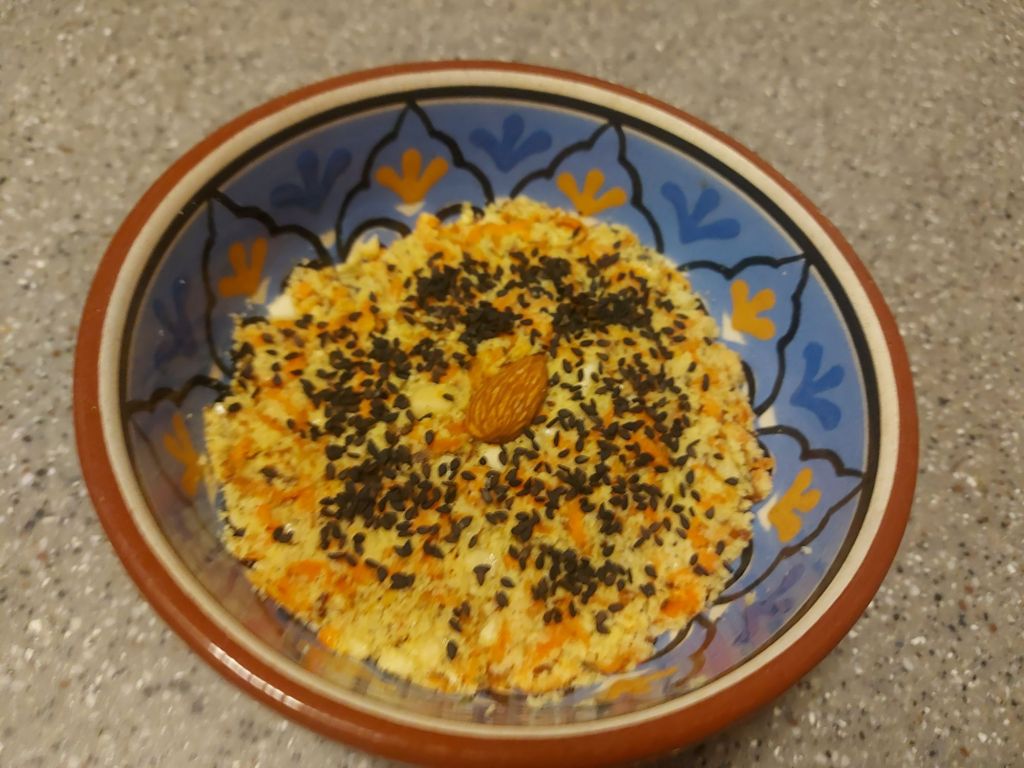
    Bademli havuç tarator (carrot and almond tarator)

    In Istanbul and along the Aegean coast tarator is a yogurt-infused meze made with carrots or courgettes and walnuts (recipe link here). Tarator started life in the eastern Mediterranean as a tahini-based dipping sauce for falafel. In Ottoman times it referred to a sauce made from walnuts, breadcrumbs and lemon juice (often served with kalimari), before it took on its yogurt iteration in the modern day. In Bulgaria, Tarator is the name of a yogurt-based, cold soup.

    We adapted the recipe to make it vegan by replacing the yogurt with almond cream and gave it more of a Datça vibe by using almonds instead of walnuts and throwing in some local capers to give it an umami kick. The resulting dip had a thicker consistency than the yogurt version – it came out more like a savoury carrot halwa, but was still delicious.

    Ingredients

    • 100 g blanched almonds
    • 50 ml cold water
    • Two teaspoons apple cider vinegar
    • 20 capers (with brine)
    • 150 g carrot
    • One or two garlic cloves (optional)
    • Pinches of herbs and spices of your choice (e.g. oregano, black pepper, salt, sumac, red chili flakes)
    • One teaspoon nigella (black cumin) seeds

    Method

    • If your almonds have skins on, then pour hot water over the almonds and leave for a minute or two. Drain off the water and peel the nuts between your fingers. Set aside 20 g of the nuts. Cover the remaining almonds with cold water and leave to soak overnight.
    • Drain the almonds and put in a blender bowl. add the vinegar, capers and water and blitz to a smooth cream. Add more water if needed (10 ml at a time) to get the required creamy consistency.
    • Heat the oil in a heavy-based pan, grate the carrot and saute it in the oil for ten minutes over a medium heat. Add diced garlic (if using), the remaining almonds (crushed with a rolling pin or wooden spoon) and pinches of herbs and spices (as needed).
    • Allow the carrot mix to cool and then blend with the almond cream. Garnish with nigella seeds and some unblanched almonds. Serve as part of a meze set or as a dip.