Summertime Veggies with Yogurt and Mint

26 June 2025

Summer is in full flow so it’s time for some lighter dishes that bring to the fore fresh seasonal ingredients at their best. I found this on-trend recipe that uses fresh peas, broad beans and runner beans while going through some old stuff in the UK recently.
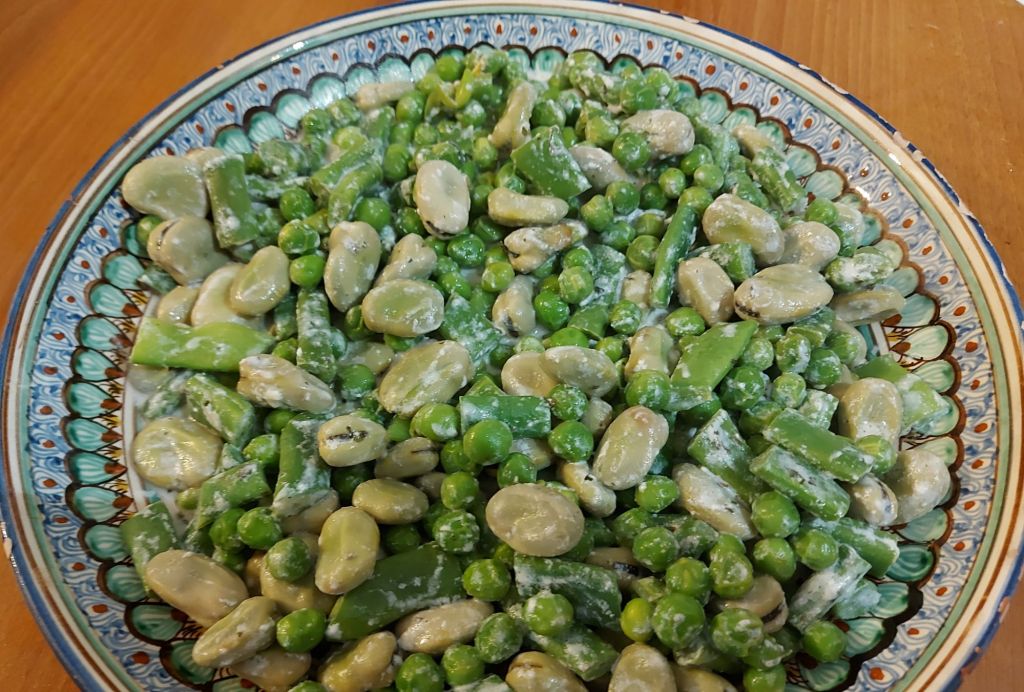
A taste of summer

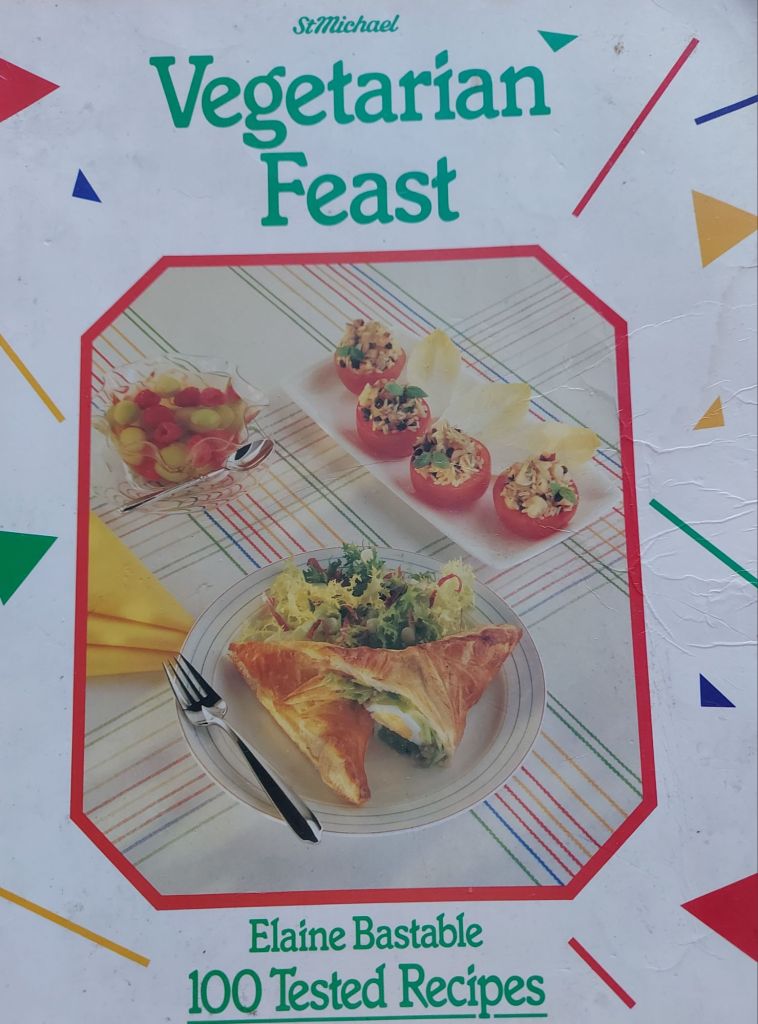
I was at my late parents’ old place and during the archaeological dig I found a copy of the first vegetarian cookbook that I owned – Elaine Bastable’s Vegetarian Feast, a Christmas present from way back in 1985. It was sold by Marks & Spencer under its StMichael guise.

Vegetarian Feast was quite advanced for its time with a recipe for Avocado (and Stilton) on Toast, a Felafel recipe and other dishes that were very exotic for Margaret Thatcher’s meat-heavy Britain of the 80s. The cookbook’s over-reliance on butter comes across in the 2025 filter as a bit dated, but it still stands the test of time in many respects.
A blast from the past

1985 was the year I finally took the plunge and went vegetarian. It had been coming for a while. As an impoverished student the meat that I could afford was of the type that had featured in documentaries of the time looking at the meat industry.

Affordable processed products such as burgers and sausages were shown to contain all parts of an animal – mashed up eyelids, lips, bollocks and toes, to be precise.

Although there are now many more vegans and vegetarians, not much has changed in the meat industry – as I write the Guardian is carrying this article on the shocking rise of factory farms across Europe and the UK.
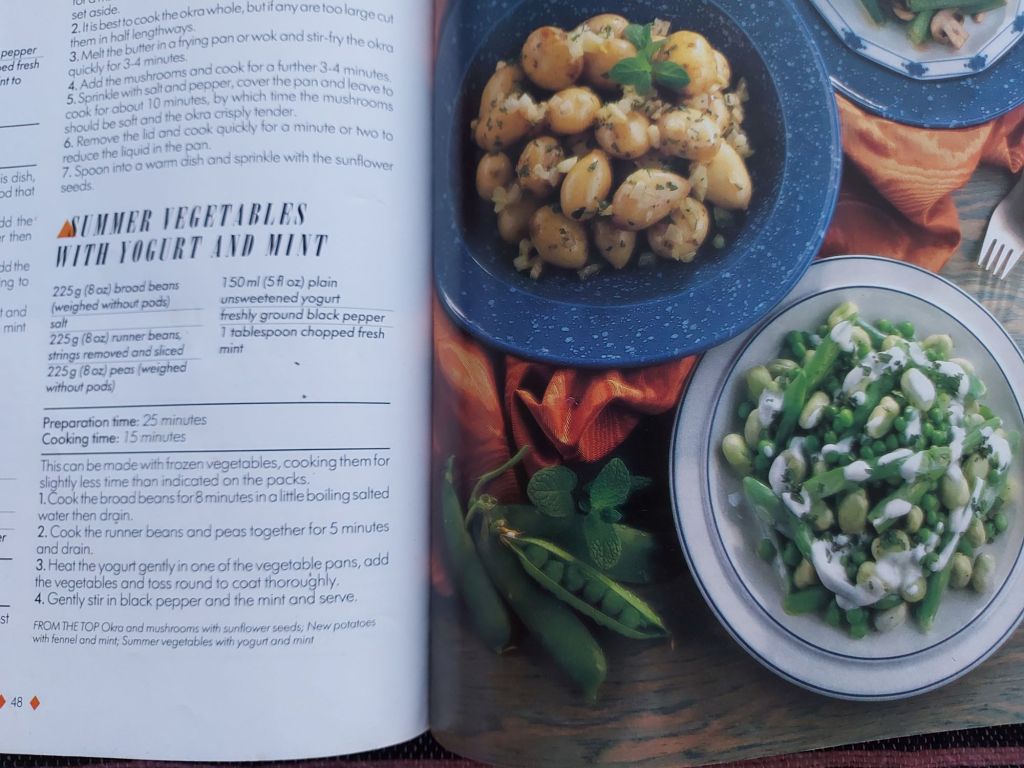
Here’s the recipe

In the summer of 1985 I had just finished uni and I was travelling through Yugoslavia, as was, to Greece via Bulgaria and Turkey. Bulgaria was a veggie turning point. Cafe menus featured a wide selection but when asking for a particular dish a frosty niama (approx: We don’t have it) was the usual responseBaked meat (of dodgy provenance) was the only option other than abundant salads. Who needed meat, especially baked meat of unknown origin, with all those veggies on offer?

Moving on into Greece, after the vegetarian heaven of Turkey’s ev yemekleri cafes, I finally started eating tomatoes, which I’d hated with a vengeance since my childhood. The tomato breakthrough opened up many new veggie avenues. From that point on I stopped eating meat and haven’t looked back since.

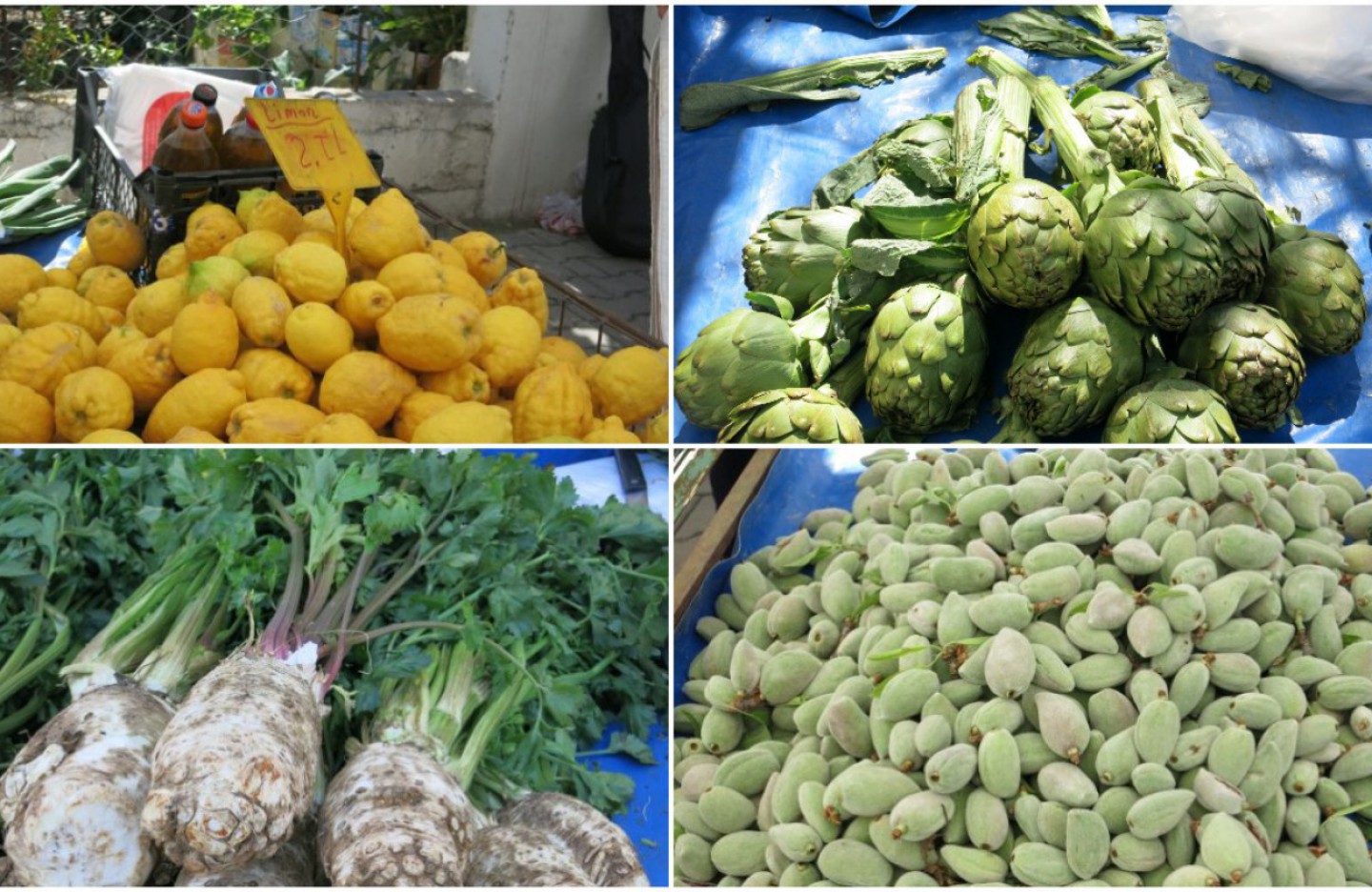
So, turning back to Vegetarian Feast, I found the recipe for this side dish of summer vegetables and Datça market came up trumps with fresh peas, broad beans and runner beans. Check out the recipe in the picture above.
Fava à la Grecque

12 October 2017

There are a lot of similarities between Turkish and Greek cuisine with both claiming baklava as their own and many other shared dishes, but there are also some striking differences. One variation we’ve noticed on our travels around Turkey and Greece has been with the dish known as fava in both countries.

20171006_134319
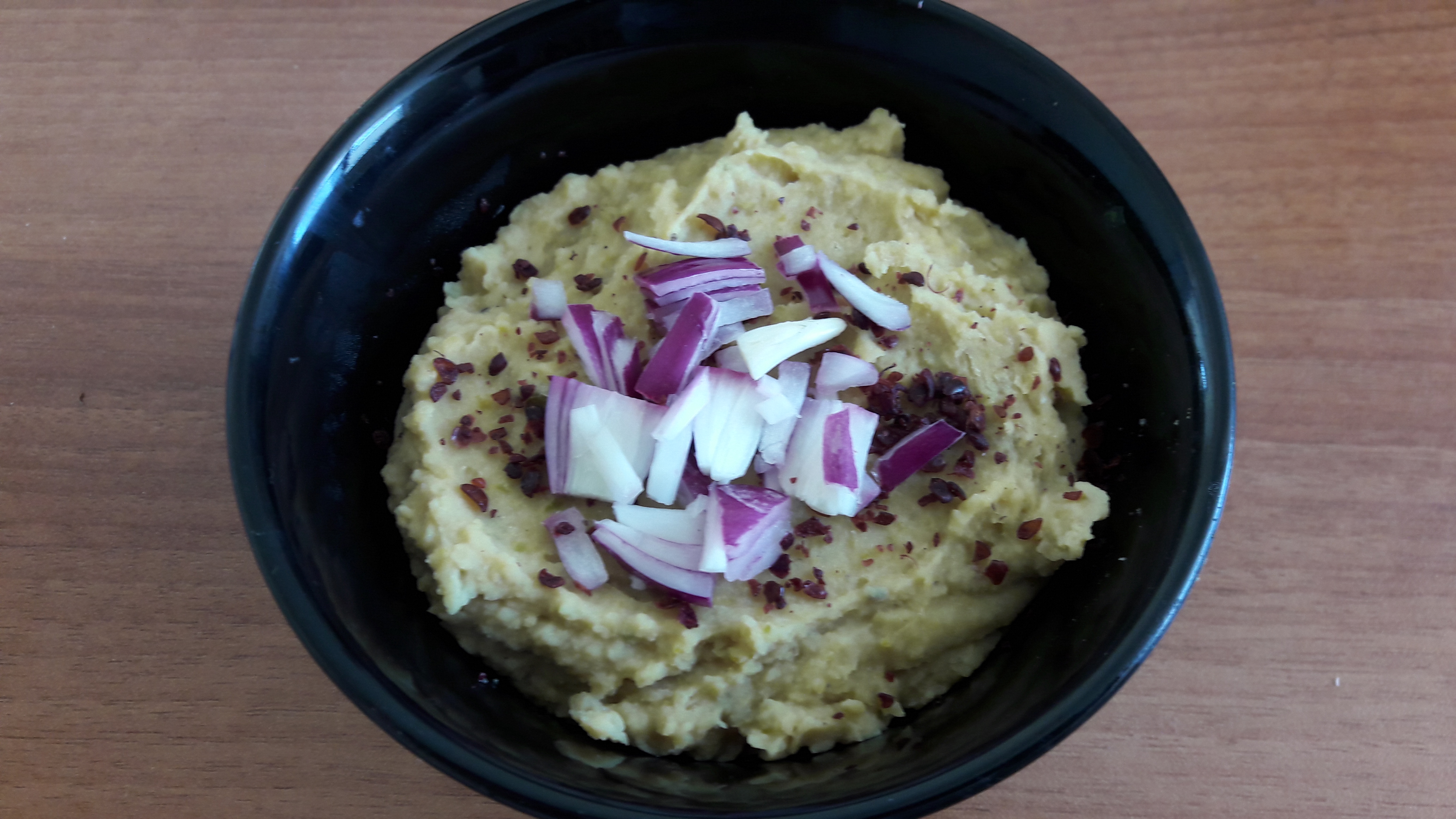
Fava à la Grecque

Last week we featured Turkey’s take on fava, made with broad beans, so this week we’re going to balance things up and have a look at Greece’s take on this dish, which is made with yellow split peas.

20171006_131423
Ingredients for fava à la Grecque

These dried peas proved quite hard to track down in Turkey – most supermarkets don’t stock them, but we eventually found them on sale in Datça market, mixed in with a few lentils and whole grains for good measure!

Greece’s version of this dish is runnier than Turkey’s, more like a hummus consistency, so it’s more suitable to use as a dip or spread. We’ve added some sumac to bring together these two esteemed cuisines in a spirit of gastronomic entente cordiale!

Ingredients (makes 6-8 healthy servings)

250 g yellow split peas, soaked in cold water for 1-2 hours

One medium red onion

One garlic clove

One teaspoon dried thyme

25 ml olive oil

500 ml water

Juice of one lemon

Pinches of salt and black pepper

Use a pinch of sumac, slices of red onion and a squeeze of lemon juice to garnish the fava

Method

Fry the finely chopped onion and garlic in the olive oil over a medium to high heat until the onions start to caramelise. Add the split peas and thyme, season with salt and pepper and stir well. Pour in the water, bring to the boil and then reduce the heat and simmer for 30 minutes or so until all the liquid is absorbed.

Allow the cooked mixture to cool for ten minutes and then use a hand blender to make it into a smooth paste. As you’re blending the mix, add the lemon juice to give it a creamier consistency.

Use a pinch of sumac, slices of red onion and a squeeze of lemon juice to garnish the fava and then serve warm with crusty bread and a green salad.


Fava a la Turca

5 October 2017

This time on Knidos Cookery Club we’ll be looking at fava, a popular Turkish meze made from broad beans (we’ve used dried but use fresh if you have them). Greece also has a dish called fava, but its version uses split peas and is an all-together different beast to Turkey’s variant which is left in the fridge to firm up into a spread that can be sliced into chunks (more on the Greek variation next time round).

20170929_122236.jpg
Knidos Cookery Club’s take on fava served with mint

Our variation on the Turkish fava theme turned out a bit less smooth than the one served up in Turkish cafes but it still tasted great! Having cooked up the beans into a mush, we went for a swim while it cooled down. Apparently, it should have been pushed through a sieve while still warm, but no worries – it turned out all right on the night albeit a bit lumpier than expected!

20171005_114611
Fava served with … dill in a restaurant in Akyaka, Turkey’s slow food capital

In Turkey fava comes adorned with sprigs of dill (some recipes even put dill in the bean mix itself). Knidos Cookery Club is not a big fan of dill, so we’ve used some fresh mint leaves to adorn our take on this Turkish classic.

Ingredients (makes around 8-10 individual servings)

200 g dried broad beans (soaked overnight in cold water)

One small red onion

400 ml water

One teaspoon honey

25 ml olive oil

Pinch of salt

Mint leaves to garnish

Method

Put the drained beans into a heavy-based pan with the finely chopped onion, olive oil, honey and salt and pour the water over the top. Bring to the boil and simmer over a low heat for an hour or so until all the water is absorbed and the beans are breaking up to form a thick paste.

Allow the mix to cool and while still warm press through a metal sieve with a wooden spoon to remove any excess liquid. Oil a glass serving dish and pile the bean mix into the dish. Cover with clingfilm (clear plastic wrap) and leave overnight in the fridge.

Serve in cubes or diamond shapes, cutting the solid mass with a wet knife (to avoid it sticking). Garnish with mint leaves and a drizzle of lemon juice and olive oil and serve with crusty bread as part of a meze platter.