Summer is that time of the year when you just want to kickback and enjoy a sundowner or two. As the heat of the day begins to recede, there’s nothing better than a refreshing fizzy cocktail.
Start by stepping peach slices in vodka in a glass jar – leave in a cool, dark place for a least two weeks. Brew a pot of your favourite green tea, let it cool, and then add 100 ml to 25 ml of peach vodka in an ice-filled glass. Top up with tonic or soda water, kickback and relax!
We’re almost two weeks into 2024, but in some parts of the world the new year is marked according to the Julian calendar rather than the Gregorian, which means that Old New Year’s Eve is celebrated on 13 January. This date is still marked in many parts of Eastern Europe. It’s also celebrated in parts of Wales, where it’s calledHen Galan(old new year), and some parts of Scotland, on 12 January .
Cheers, and Happy Old New Year, with an Almaty Apple Spritz!
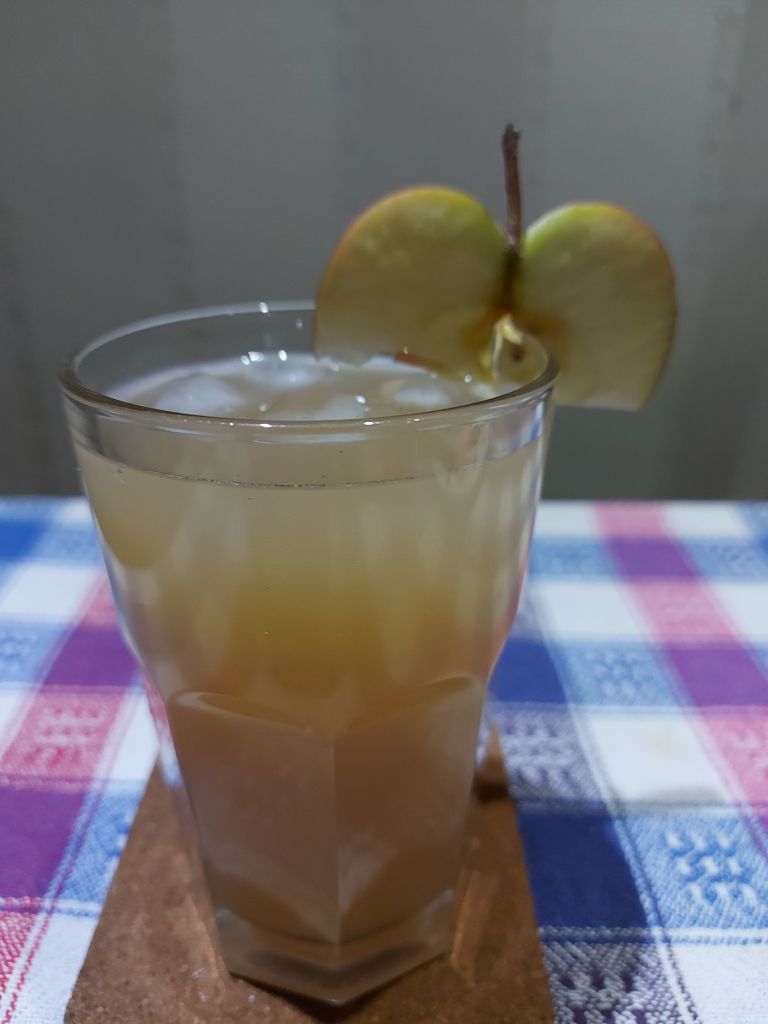
Here at KCC, we regard old new year as the end of the holiday season, allowing a few weeks of respite before Chinese New Year! To mark the occasion, this cocktail combines cloudy apple juice with a cinnamon-infused cold brew. To see off the old year with a kick, add some shots of vodka to this apple spritz.
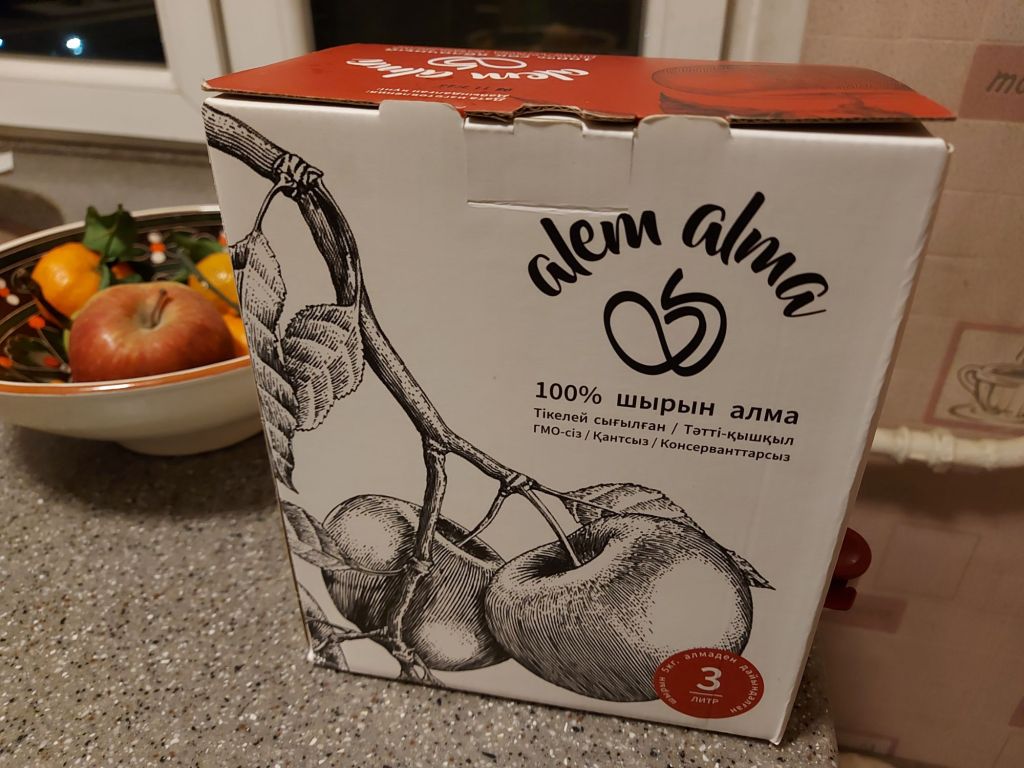
Any apple juice can be used – we used a local one from Almaty, Kazakhstan that’s free from extra sugar and other additives and is naturally cloudy. Almaty, whose name translates as “place of apples”, is where the antecedents of today’s apples evolved.
Apples are from Almaty!
To make the cold brew, add a cinnamon stick, or a teaspoon of powdered cinnamon, five cloves, two teaspoons of fresh ginger and a pinch of nutmeg to a litre of cold water. Shake well and leave overnight in the fridge.
For one serving of the the Almaty Apple Spritz, put some ice cubes into a tall glass, pour in 25 ml of any vodka of your choice (or 50 ml if you want to get a jag on, if you’re doing dry January, just omit the vodka!). Add 75 ml of the cinnamon cold brew, 50 ml of apple juice and top up with fizzy water, garnish with a slice of apple and stir before drinking.
This cocktail also works well warmed up (you don’t need the ice or fizzy water).The spices and apple juice evoke a cosy mulled cider vibe. Simply heat until it’s just about to boil and serve asap. A recommended food pairing is with KCC’s coleslaw variation or a traditional new year Olivier salad.
As the July heat builds up here in Almaty, where daytime temperatures are heading for the high 30s, we’ve been looking around for some cold drinks to chill down a bit.
Hibiscus Heat Haze
We’re not fans of overly sweet drinks here at KCC so this tart hibiscus and cinnamon cold brew really hits the spot. It’s a refreshing brew that will help you keep your cool in the heatwave.
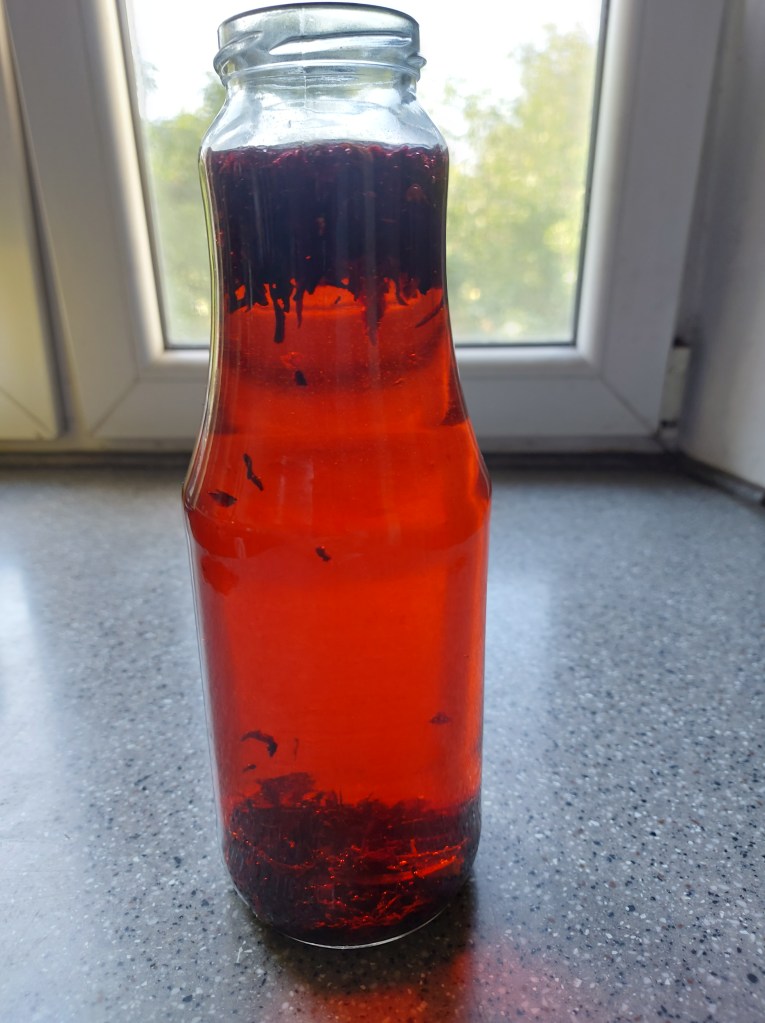
Hibiscus and cinnamon cold brew
It’s easy to make – put 15g of hibiscus flowers and a cinnamon stick in a 1 litre glass jar. Add cold water to the top of the jar and leave overnight in the fridge. Strain off the leaves and cinnamon stick and serve with ice. Add more water or some sugar or honey if you find it tastes too tart.
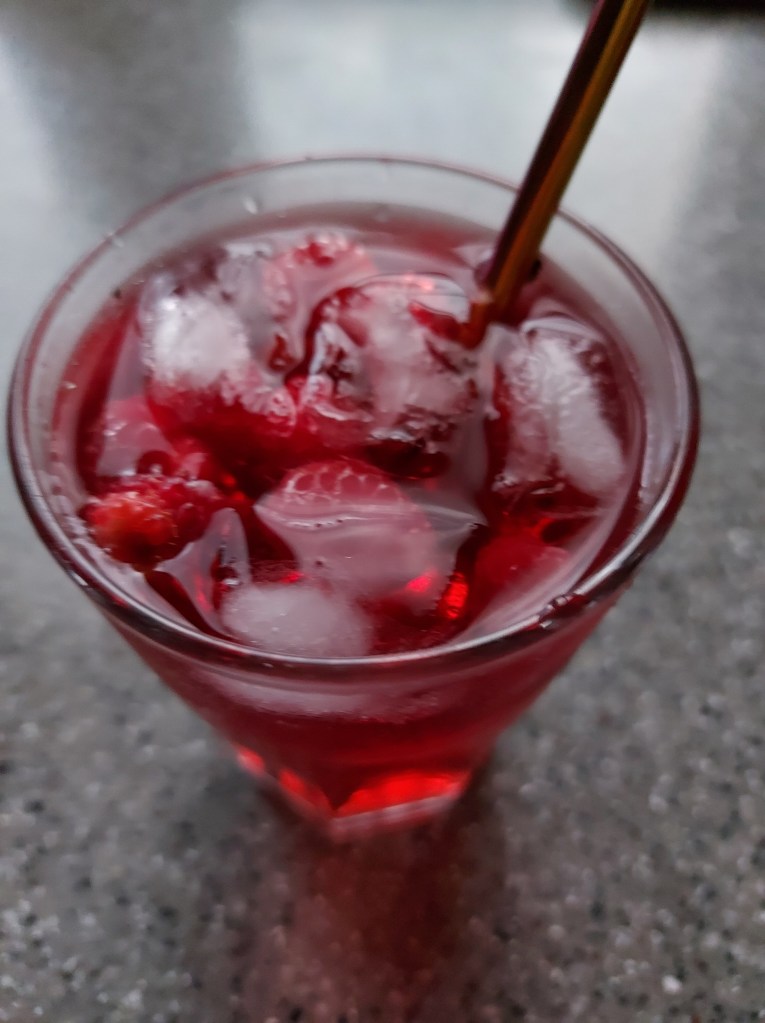
For a summertime cocktail, fill a tall glass with ice, add 10 raspberries, 100ml dry vermouth, 100ml hibiscus cold brew and top up with sparkling water. Add a shot of white rum or brandy to give your Heat Haze an extra bit of oomph.
With the summer temperatures peaking, we’ve come up with a melon and raspberry fuelled rum cocktail to help you keep cool.
Chill out with a Meloncoolia
The melon season is in full swing in Kazakhstan with honeydew melons and watermelons both at their sweetest. You can find piles of ripe melons on sale all over the country. Its hot, arid climate is particularly well-suited to this instant summer dessert. Stalls appear on street corners with tempting mounds of golden yellow and green streaked melons.
Melonmania in Mangystau, Kazakhstan
We’ve used melon in a cocktail this time round, along with raspberries, white rum or vodka and Martini Fiero, an orange-flavoured aperitif that’s been a hit with the KCC crew this summer. You can also try melon in a seasonal salad with halloumi cheese – here’s our recipe for this summertime special from a few years back.
Double meloned squeaky cheese salad
Ingredients (makes one litre)
150 g honeydew melon
100 g raspberries
250 ml water
200 ml Martini Fiero
100 ml white rum or vodka
250 – 300 ml tonic or soda water
Method
Put the fruit in a blender with the water and mix it into a smooth consistency. Pour the juice, spirit and Martini Fiero into an empty one litre plastic or glass bottle. Top up to a litre with tonic water or soda water and shake well. Fill a tumbler with ice and pour the Meloncoolia over the rocks, put your feet up and enjoy!
We’re always on the look out at KCC for something to celebrate and this week we’re heading for Scotland. Coming up on 25 January is Burns Night, which marks the birthday of the country’s national bard, Robert Burns, with a night of poetry and songs accompanied by lots of drinking and feasting.
A hearty bowl of barleekie soup – a barley, carrot, leek and lentil stew
The celebration revolves around a hearty supper and commemorates the life and works of Scotland’s most famous poet with recitals of his work and comforting winter fare. It’s all washed down with a wee dram or two of whisky.
The first course of the supper is usually cock-a-leekie soup, this is followed by the main attraction, haggis, a savoury, offal-based dish that is similar to “a crumbly sausage, with a coarse oaty texture and a warming peppery flavour,” according to the BBC Good Food website. It’s usually served with neeps (mashed turnip) and tatties (mashed potato). Clootie dumpling, a steamed, dried fruit pudding, is served for dessert.
Leeks aplenty in Turkey, many moons ago
We’ve replaced the chicken usually found in the cock-a-leekie soup with green lentils to make our vegan version – Barleekie soup, named for its key ingredients of barley and leeks.
If you want to try your hand at haggis but are not keen on all those innards then check out this recipe from Emi’s Good Eating for a vegan take on Scotland’s national dish. As for the clootie dumpling, check out this recipe from the BBC.
Ingredients (for 3 – 4 servings)
100 g pearl barley
100 g green lentils
One leek (200 g)
One carrot (150 g)
One lemon
50 ml olive oil
600 ml vegetable stock
One teaspoon cumin seeds
One teaspoon turmeric
One teaspoon ginger
One bay leaf
Method
Soak the barley and green lentils separately for 4 hours. Zest the lemon and mix this into the soaking barley.
Heat the oil in a heavy-based pan and then wash the leek thoroughly and chop the white part into 1 cm rounds and roughly chop the green parts. Add the leek to the pan and then stir in the spices. Sweat the leek over a low heat until it is soft.
Stir in the chopped carrot, barley and green lentils and then add the vegetable stock and the juice of the lemon and the bay leaf. Simmer for 30 minutes or so over a low heat until the the lentils and carrots are cooked but the barley still has a bit of bite to it.
Serve hot with hunks of crusty bread or oatcakes if you have them.
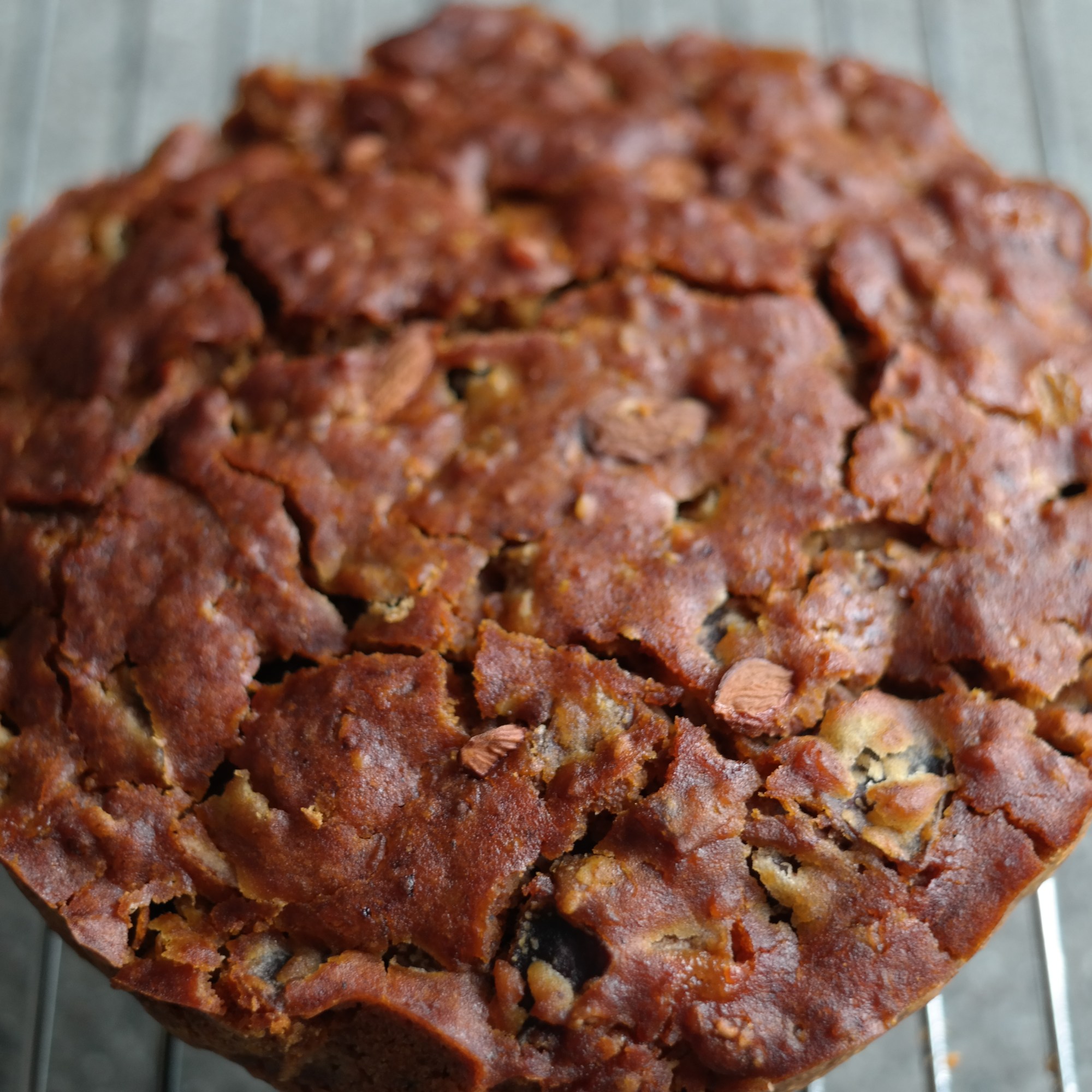
If you’re feeling down after all the partying in December, then never fear as Russian Christmas is here! To help celebrate it in style we’ve opened up our Vodkatopf (a slavic cousin of the Rumtopf) and used the fruit that’s been stewing in the vodka since summer to make a booze-infused fruitcake.
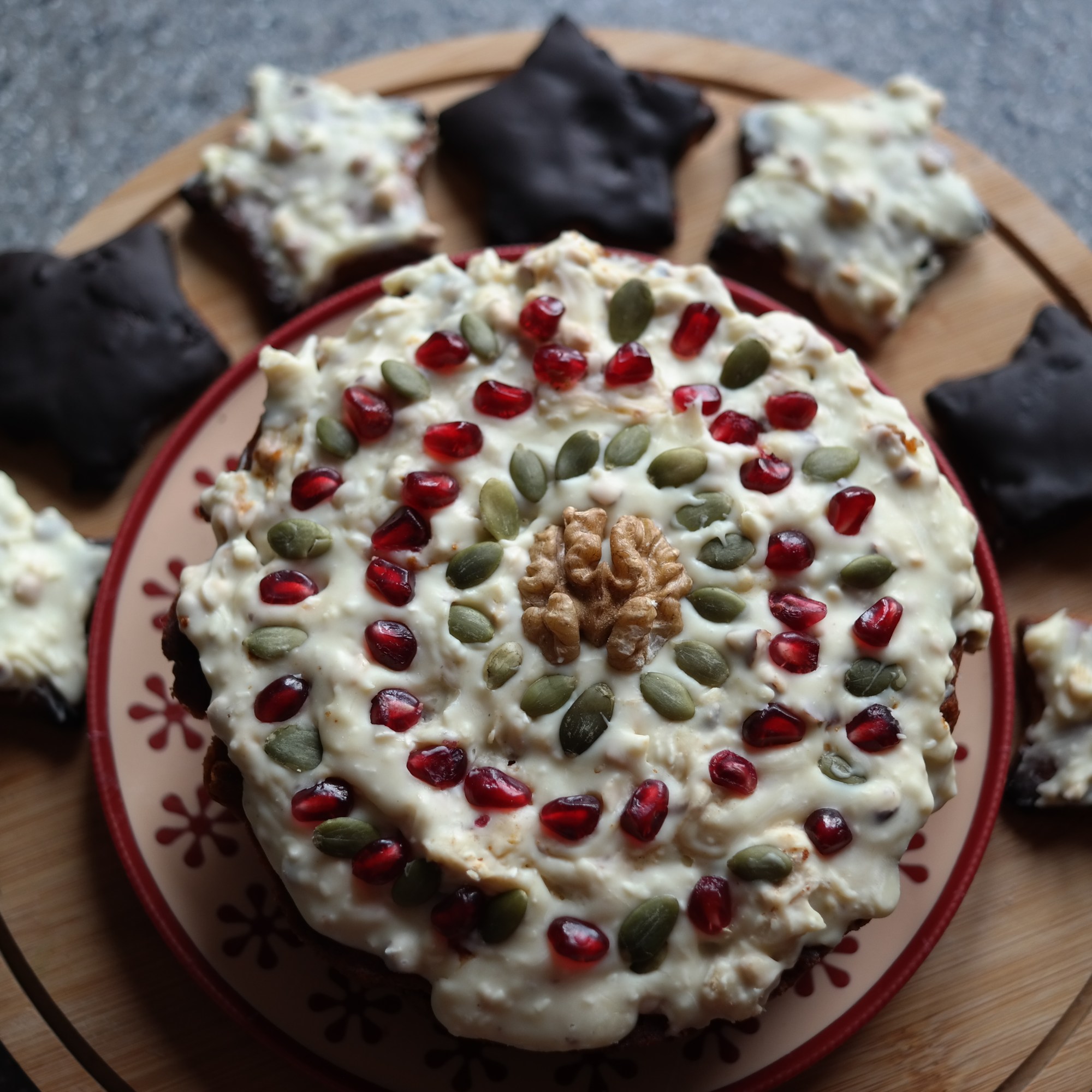
KCC’s booze-fuelled festive fruitcake
In Russia, Christmas is celebrated on 7 January – the Orthodox Church still follows the Julian calendar rather than the Gregorian calendar whereas Russia switched to the latter in 1917. The switch created a 13-day lag between the calendars so, for followers of the Orthodox faith, Christmas Eve falls on 6 January and 13 January marks the end of the old year
To make the vodkatopf we poured vodka over layers of different fruits as they appeared over the summer. The apricots, cherries and raspberries of early summer were followed by peaches and plums to make a great , fruity vodka for shooting or mixing. As an added bonus, the preserved fruit went into a the fruitcake mix. We decorated the cake with melted white chocolate and crushed almonds and used pumpkin and pomegranate seeds as the finishing touch.
Ingredients (for 6 – 8 servings)
325 g vodka-soaked mixed fruit (soak overnight in 250 ml vodka or other spirit if using dried fruit)
90 g olive oil
100 g honey (or golden syrup for a vegan cake)
175 g plain flour (we used rice flour for a gluten free cake)
50 g mixed nuts
100 ml coconut milk
25 g desiccated coconut
One teaspoon baking powder
One teaspoon each of cloves, ginger, nutmeg and cinnamon
25 ml vodka
100 g melted white chocolate
pumpkin and pomegranate seeds to decorate the cake
Method
Line a 15cm cake tin with a double layer of parchment paper, this will help stop the cake from burning
Sieve the flour and combine with the coconut milk, vodka, 30 g of chopped nuts, desiccated coconut, baking powder, cloves, ginger, nutmeg and cinnamon and stir together to make a thick batter
Melt the honey into the olive oil in a heavy-bottomed pan over a low heat and stir.
Combine the honey and oil mix with the batter.
Stir in the soaked fruits into the batter, along with any leftover liquid.
Layer the batter into the prepared tin and use a spatula to spread it level.
Melt the white chocolate in a glass or ceramic bowl over a pan of boiling water.
Spread the chocolate evenly over the top of the cake, sprinkle some mixed nuts over the icing and then decorate with pomegranate and pumpkin seeds.
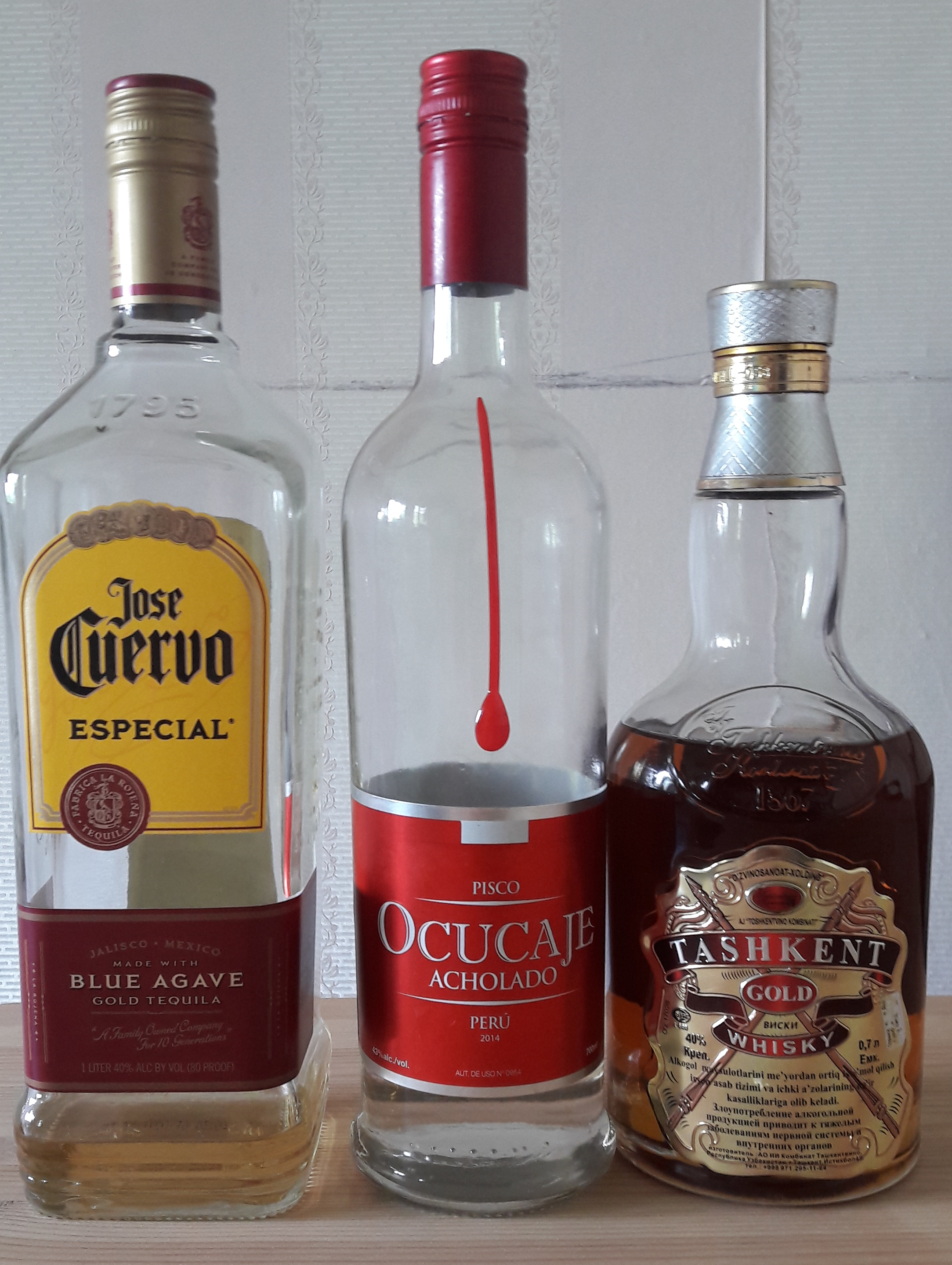
With lockdown mostly lifted here in Kazakhstan, a bit of a celebration was called for and what better way than with a cocktail – we had a root around the drinks cupboard and came up with this somewhat eclectic selection of spirits:
Choices, choices…
The tequila had taken a bit of hammering during lockdown, Tashkent Gold Whisky is something of an acquired taste, so it was left to Peru’s premier spirit, Pisco, to provide the base for the cocktail! A further root around kitchen produced some cinnamon, orange peel and sugar to provide the base for a syrup for our cocktail. A bottle of Moldovan sparkling wine left over from New Year provided the finishing fizzy touch.
Add orange and cinnamon syrup
to a shot of
pisco and ice
add orange juice
top up with Moldovan sparkling wine
to make the Post-Quarantini
To make a Pisco Spritz: Put some ice cubes in a cocktail glass, mix 25 ml Pisco (or any other clear spirit) with 25 ml syrup (see recipe below) and then add 50 ml fresh orange juice. Top up with sparkling wine (Champagne, Cava or Prosecco will work fine if Moldovan spumante is not available!) add a slice of orange and, bingo, your post-quarantini cocktail is ready! Knock yourself up a glass or two and join us to celebrate entering our brave new post-lockdown world.
Orange and cinnamon syrup (makes around 250 ml)
200 ml boiling water
20 g sliced orange peel
50 g brown sugar or honey
One cinnamon stick
Put all the ingredients into a bottle, shake well and allow to cool. Give it a vigorous shake every 15 minutes or so. When it has cooled down, store it in the fridge – leave for a few days for best results.
Welcome to the 100th post from the weird and wonderful culinary world of Knidos Cookery Club! To celebrate this occasion, we’ve come up with a rose-tinted cocktail, Pravda Punch.
You can’t run away from Pravda Punch…
Last Sunday saw Kazakhstan’s new president win a vote marred by allegations of rigging. The election campaign came to life when peaceful protestors put up a banner at Almaty’s marathon in May calling for a fair election and warning “От правды не убежишь” (You can’t run away from the truth) in Russian.
“You can’t run away form the truth” banner at Almaty Marathon, April 2019
To celebrate both this act and our 100th post, we’d like to raise a glass of Pravda (Truth) Punch in the hope that one day there will be free and fair elections in Kazakhstan.
How to make your own Pravda Punch:
3 ice cubes
One part raspberry vodka
One part Martini Rosato
Two parts cucumber Sprite
Two parts still lemonade
Mint leaves
Slice of lemon
Put the ice cubes in a tall glass and pour raspberry vodka over them. Add the mint leaves and muddle with a wooden spoon. Add the Martini Rosato, cucumber Fanta, still lemonade and stir. Add a slice of lemon and serve.
This week KCC is in London for the literary event of the year – the launch of Joanna Lillis’s compelling book Dark Shadows: Inside the Secret World of Kazakhstan.
To celebrate this momentous occasion, we have invented the Dark Shadows cocktail: a blend of one part vodka (Kazakhstan’s favourite tipple), three parts cloudy cider (apples are from Kazakhstan!), and a splash of blood-like Grenadine (or pomegranate syrup or juice) to convey something of the secretive nature of Kazakhstan. It makes the perfect companion when reading this gripping saga.
Dark Shadows – the cocktail
Based on 13-years of on-the-ground reporting, this book lifts the veil to take a glimpse at what’s really going on in this Central Asian oil and gas powerhouse, making it the ideal stocking-filler for Kazakhstan fans. you can order a copy from the publisher, I.B.Tauris or look for a copy signed by the author in Foyles in London.
Joanna Lillis signing copies of her book in Foyles, London
We finally got round to tasting our first batch of cider made with apples sourced from Almaty, widely acknowledged as the place where the ancestors of today’s apples evolved. We’re pleased to announce that the experiment was a success!
This slideshow requires JavaScript.
We used locally grown aport apples, a large red and yellow coloured variety, that grows around Almaty, Kazakhstan. a big clue as to the apple’s origins can be found in the name Almaty which translates from the Kazakh as ‘the place of apples.’
For the experiment, we used five kilos of fruit, which was pressed to produce around three litres of juice. We used a juicer and a sieve with some cloth to press and filter the leftover apple pulp to squeeze out a bit more liquid.
Then the juice was poured into a clean 5-litre water container. We allowed nature to take its course, and no yeast was added to aid the fermentation process. We made an improvised airlock using a balloon with a pinhole in it (to allow the gas to escape from the fermenting liquid whilst keeping unwanted bacteria out).
Fermentation took around two weeks and then the cider was siphoned off into clean wine bottles, where it was left to mature for a year or so. The resulting cider, about 1.7 litres was produced from this batch, was a dry, pale-coloured liquid that went down all too easily.










 Knidos Cookery Club