Rip-Red Risotto

17 November 2016

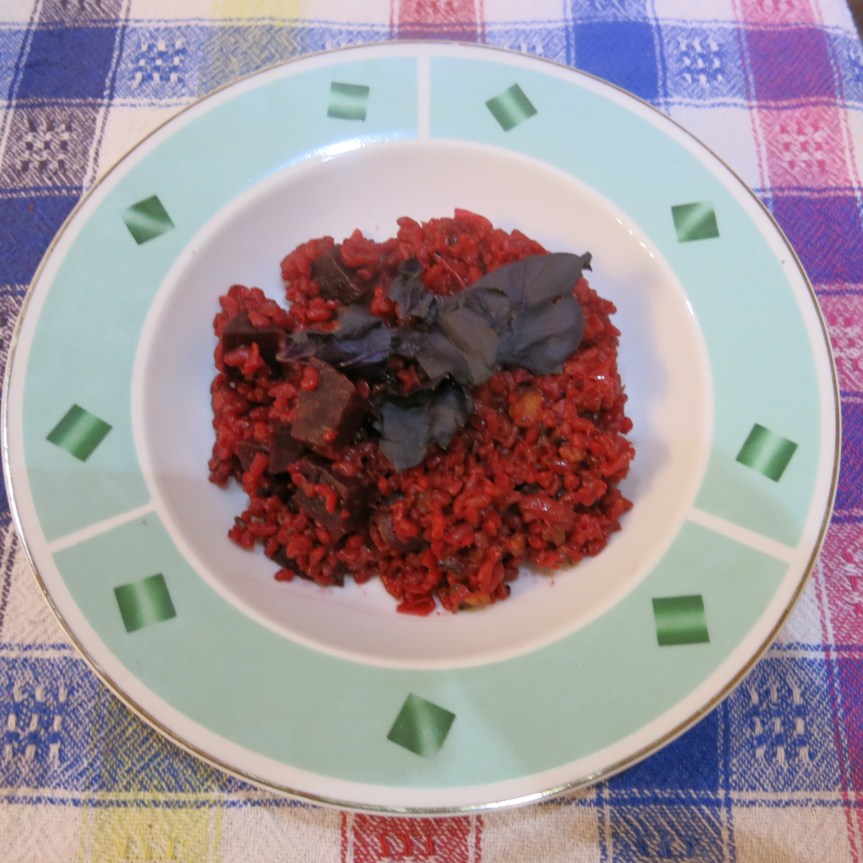
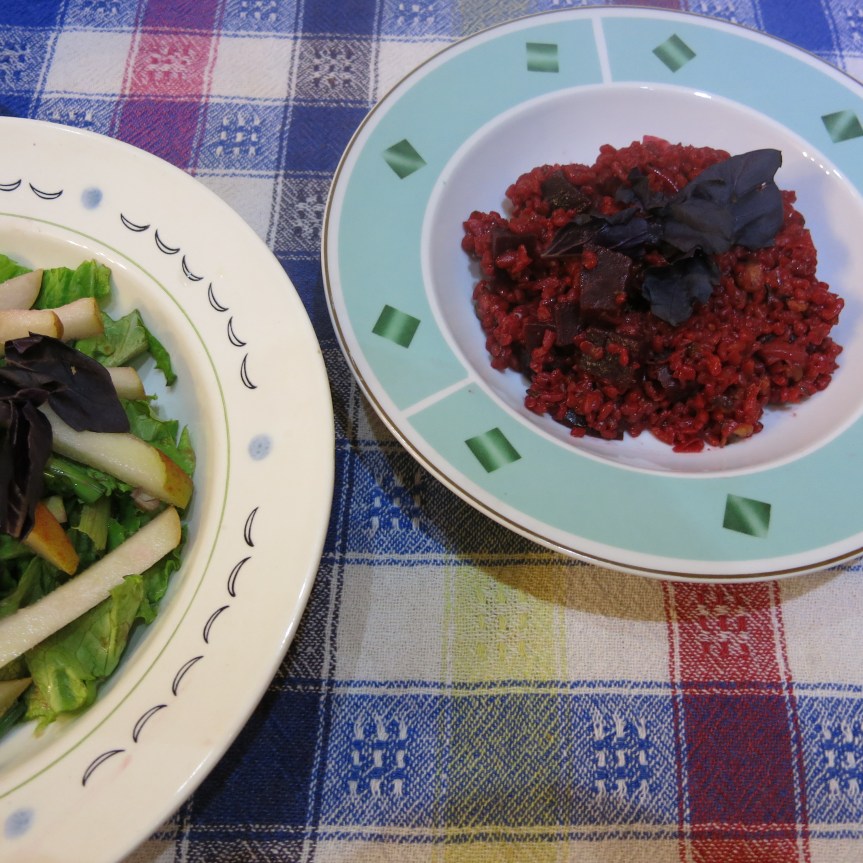
This week on Knidos Cookery Club, we’re featuring beetroot as the basis for a rip-roaringly red risotto.

In Turkish, if you want to say something is, for instance, very blue, then you add a prefix. By adding mas to mavi (blue) you end up with masmavi.  As an example, to talk about the deep blue sea you could say masmavi engin deniz.
img_2365

A rich red colour, such as that imparted by beetroot, would come out as kıpkırmızı, or, in English, rip-red, which seems a perfect way to describe out beetroot risotto. To add a Turkish-edge to the dish, we used coarse bulgur wheat, but you can use arborio rice if you prefer.
img_2363

We added some walnuts to the mix, as they combine so well with the sweet edge of beetroot. This is quite a common combination – in Georgia walnuts are blended with grated beetroot to make pkhali.

Ingredients (serves 3-4)

  • 250 g  whole, uncooked beetroot
  • 50 g walnuts
  • 100 g coarse bulgur wheat
  • 150 ml red wine
  • 500 ml beetroot cooking water
  • 25 ml olive oil
  • one medium-sized onion
  • one garlic clove
  • one teaspoon dried thyme
  • one teaspoon dried rosemary
  • one teaspoon cumin seeds
  • black pepper and salt to taste
  • sprig of fresh basil leaves

Method

  • Boil the washed but unpeeled beetroot in a saucepan for 30 minutes. Put the beetroot in cold water, keeping the water you used to cook the beetroot separate, and then peel and top and tail the beetroot when cool. Put to one side.
  • Heat the olive oil in a heavy-based pan and add the cumin seeds. Cook until the seeds are beginning to burn and then add the diced onion and garlic, dried thyme and rosemary and season with salt and pepper. Cook until the onion is going translucent.
  • Add the washed bulgur wheat and stir to coat the grains. Add the glass of wine and stir occasionally until the liquid is absorbed. Add a third of the vegetable stock and keep cooking and stirring until the liquid is absorbed. Add more stock until the bulgur wheat is cooked and the risotto has a creamy consistency and then turn off the heat.
  • Meanwhile, gently toast the walnut pieces in a small frying pan and chop the beetroot into small, 1 cm cubes. Mix the beetroot and toasted walnut into the bulgur wheat risotto.
  • Garnish with fresh basil leaves -green ones make a better contrast to the red of the risotto, but we could only find the mauve coloured variety. Serve with a green salad.



Ezo the Bride’s Soup

20 October 2016

Knidos Cookery Club is off to a wedding soon so we did a quick google to see what Turkey has in the way of wedding-related foodstuffs and chanced upon this soup with a great backstory.

One wedding day tradition in Turkey is to the feed up the bride-to-be with a hearty soup, Ezogelin Çorbası, to help her prepare for the rigours of her wedding day and the subsequent move into the groom’s household.

img_2061

The name translates as ‘Ezo the Bride’s Soup’ and the recipe comes from the tale of a woman, Ezo, short for Zöhre, who was born in 1909 in a village near Gaziantep, now in south-eastern Turkey on the border with Syria.

She became famed in the region for her her looks and was highly sought after as a bride. Eventually, she married a man from a neighbouring village but unfortunately the marriage didn’t work out. One version of the tale, that has inspired short stories, folk songs, a film and a TV series in Turkey, as well as the soup, has it that her husband loved another so Ezo left him.

In 1936, Ezo married again and moved with her husband over the border to the town of Jarabulus in Syria. She pined for her homeland and to quell her homesickness she would cook a soup that reminded her of Turkey – a filling combination of red lentils, bulgur wheat, rice, tomato paste, herbs and spices. She also used the soup to win over her mother-in-law, a move crucial to finding happiness in her new home.

Ezo had nine children with her second husband, but she only lived to her mid-40s, dying in 1956 in Jarabulus. Her last wish was to be buried on a hillside overlooking her beloved homeland. Her memory lives on in this soup and in the legends that have grown up around her life story.

Ingredients (Makes four servings)

150 g red lentils

50 g coarse bulgur wheat

25 g rice

one medium-sized onion

one or two cloves of garlic

one lemon

25 ml olive oil

1.2 l warm water

3-4 tablespoons of tomato paste (a more liquid form of tomato purée – if using purée then two tablespoons should suffice)

two teaspoons of dried mint

black pepper

two teaspoons of chili flakes

sprig of fresh mint

Method

Wash the red lentils, bulgur wheat and rice and soak for two hours in cold water.

Finely chop the onion and garlic and fry for five minutes in the olive oil in a heavy-based pan. Add the red lentils, bulgur wheat and rice, pour in one litre of water and simmer over a low to medium heat for 30 minutes or until everything is cooked.

Add the tomato paste, the dried mint, chili flakes and some black pepper and 200 ml of water and the juice of one lemon and stir well. Simmer for ten or fifteen minutes until the soup is taking on a creamy texture.

Ladle the soup into bowls and garnish with a sprig of fresh mint and sprinkle more chili flakes over the top. Serve with a slice of lemon and some crusty bread.

Mungo Pumpkin Patties

6 October 2016

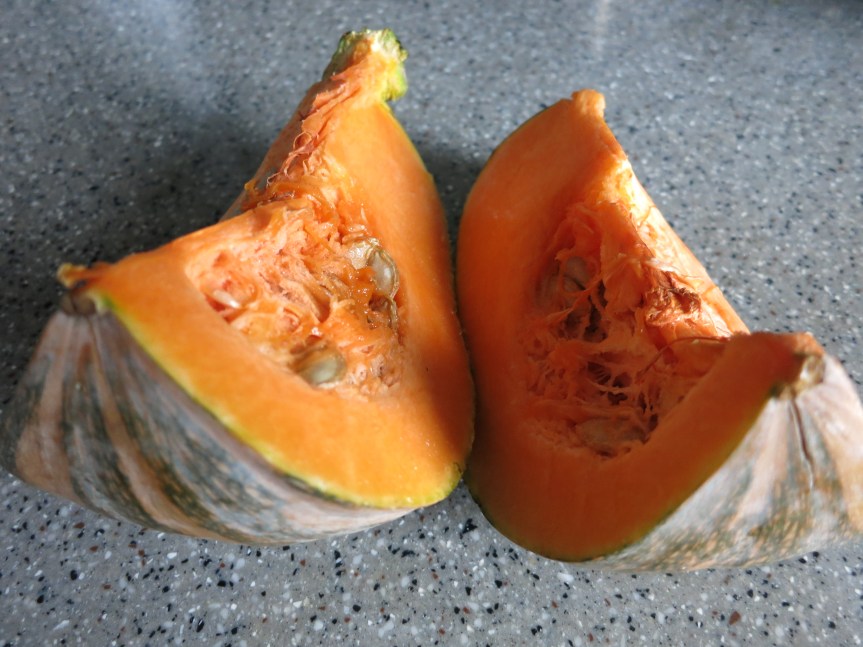
Knidos Cookery Club’s autumnal vibe continues apace with the re-appearance of pumpkins of all shapes and sizes in the market. This is one vegetable that acts as a surefire marker of the onset of longer and chillier nights, with thoughts turning towards the comforting pumpkin-rich soups and stews of winter.

img_2044

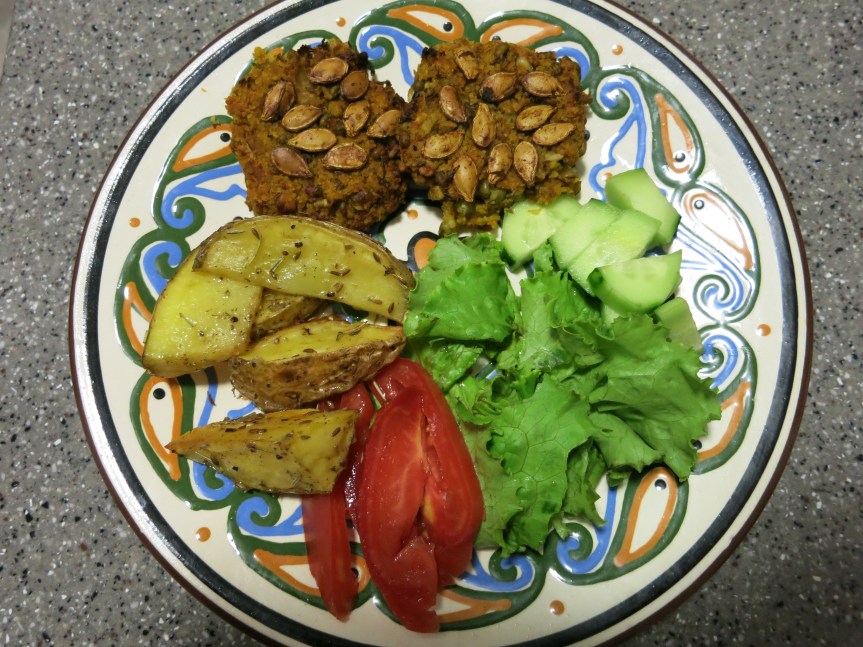
In Turkey, pumpkin is often served as a desert – kabak tatlısı , that coats the orange-coloured slices in sugar syrup. Here at Knidos Cookery Club we prefer the savoury approach to pumpkin and have come up with some mung bean, bulgur wheat and mashed pumpkin patties.

pumpkin-patties

The mung beans add a nutty, earthy flavour that compliments the natural sweetness of pumpkin, while the bulgur wheat helps to hold it all together so the patty can be fried or oven-baked. Roast the seeds and use them to decorate the patties and give tham a bit of crunch.

Ingredients (makes 6-8 patties)

300 g pumpkin

75 g mung beans

50 g fine bulgur wheat

one medium-sized onion

one garlic clove

one teaspoon cumin seeds

one teaspoon dried thyme

black pepper

one teaspoon turmeric powder

25 ml olive oil

250 ml water

Method

Wash and soak the mung beans in cold water for two hours. Then cook in 250 ml water for 45 minutes or until the beans are just starting to go mushy – add more water if necessary.

Cut the pumpkin in half and remove the seeds, retain them to use later. Peel the pumpkin and dice into 1 cm cubes. Finely chop the onion and garlic. Place the pumpkin cubes, onion and garlic in a baking dish and pour 25 ml of olive oil over them. Add the cumin seeds, dried thyme and black pepper and mix well to coat the cubes.

Bake in a pre-heated oven (220 c /gas mark 7) for 45 minutes or until the pumpkin mashes easily with a fork. While the pumpkin mix is cooking, put the seeds on some tin foil and roast in the oven until starting to char a little bit.

Mash the pumpkin mix with a fork or a potato masher and then add the cooked mung beans and blend well. Stir in the turmeric powder and then add the bulgur wheat. Mix well and allow to stand for 30 minutes.

Tak a golf-ball sized portion of the mix and flatten to a round shape. Decorate with pumpkin seeds and shallow fry in oil or oven-bake for 30 minutes at 220 c (gas mark 7).

Serve with roast potatoes or chips and a mixed salad or in a burger bun with toppings of your choice.


Roman Lor … and Chips

29 September 2016

This week on Knidos Cookery Club we’ll be looking at a recipe that uses up the rest of the lor cheese, Turkey’s answer to ricotta, that we used a few weeks ago in a stuffed aubergine in a spicy tomato sauce dish.

While surfing the net looking for inspiration, Knidos Cookery Club came across the following piece on a dish that is a summertime feature in Rome – baked stuffed tomatoes with potatoes.

img_1418
An autumn carbfeast – stuffed tomatoes with potato wedges

To our mind, the double-carbo dose seems more suited to cooler autumn nights than the heat of summer. We’ve put our own spin on the recipe by substituting bulgur wheat for the rice and adding a healthy dollop of lor to the filling.

Ingredients (Serves 4)

Four medium-sized tomatoes

One medium-sized onion

Three large potatoes

One garlic clove

100 g bulgur wheat (coarse ground) (use rice if this is not available)

50 g  lor cheese (use ricotta or cottage cheese if this is not available)

50 ml olive oil

200 ml hot water

One teaspoon dried thyme

Pinches of salt and black pepper to taste

Method

Slice the top off the tomatoes and leave to one side. Scoop out the flesh with a teaspoon used in a circular, drilling motion. Put the tomato flesh to one side. Turn the hollowed-out tomatoes upside down on kitchen paper to remove excess moisture.

Finely chop the onion and garlic and fry in 25 ml of olive oil until softening. Add the leftover tomato flesh, half a teaspoon of thyme and some salt and black pepper and stir. Cook for five minutes then add the bulgur wheat, stirring to coat the grains. Pour the hot water over the mixture and cook over a low heat until all the moisture is absorbed.

Slice the potatoes in half lengthways and then cut into wedges about 1 cm in width at their thickest point. Pour 25 ml of olive oil into a baking dish and throw in the potato wedges. Sprinkle thyme over the potatoes and coat them liberally with the olive oil – use your hands or a fork for this.

Allow the bulgur to cool and then stir in the lor cheese. Stuff the tomatoes with the bulgur mix and place the tops back on and arrange on top of the potato wedges. Bake in a pre-heated oven at 220 c (gas mark 7) for 45 minutes or so until the wedges are golden and the tomatoes are beginning to shrivel and go a bit black on top.

Serve with a green salad to balance out the carbfeast.


A Fiendishly Figgish Chutney

22 September 2016

As another summer slips into the history books with the autumn equinox almost upon us, there’s a tang of vinegar in the air. The days are getting shorter and the nights cooler, and thoughts have started turning towards using the autumnal abundance of fruit and vegetables to make pickles and chutneys for the winter months.

In Turkey at this time of year people are busy preserving vegetables such as peppers, cucumbers, carrot, tomatoes, garlic, cauliflower and cabbage in vinegar and salt to make tursu, the ubiquitous pickle plate that adorns the dinner table.

img_1396

When Lord Venal was visiting Knidos in August he was very taken with the local fig crop and was inspired to knock up a jar or two of his Fiendish Fig Chutney.

He helpfully explained the difference between a pickle and a chutney; a pickle involves raw vegetables preserved in a liquid such as brine, oil or vinegar, whilst chutney cooks vegetables or fruits in a sugary vinegar base.

IMG_1149

Lord Venal hopes you’ll enjoy his spicy chutney with all types of cheeses and crackers.

Ingredients (Makes around 1.5 kg of chutney)

1 kg fresh figs

250 g raisins or currants

250 g onions

300 ml cider vinegar

200 g brown sugar

2 cloves of garlic

5 cm fresh ginger

one teaspoon coriander seeds

one cinnamon stick

one teaspoon cloves

one teaspoon turmeric

one teaspoon chili flakes

Assorted jam jars

Method

Chop the figs roughly and remove any stems. Throw them into a large stainless steel pan and add the vinegar, chopped onions, garlic and spices (remember to grind the coriander seeds, break up the cinnamon stick and peel and finely chop the ginger).

Bring to the boil and then allow the mix to simmer, stirring occasionally, for half an hour or so until the figs are softening. Now add the sugar and keep stirring until it’s dissolved. Cook for another 15 minutes or so until the mix starts to thicken. Unlike jam, as soon as you turn the chutney off it stops thickening, so turn the heat off when you reach your desired consistency.

While the chutney is bubbling away, sterilise the jam jars in the oven at 50°c for thirty minutes. Spoon the chutney into the jars while still hot and put a lid on when it’s cooled down a bit. It’s ready to eat straight away, but, like most things in life, it improves with age.


Taking the Lor into Your Own Hands

15 September 2016

This week on Knidos Cookery Club we’ll be looking at  lor – Turkey’s answer to ricotta cheese. Drier than its Italian cousin,  lor is made from whey after it has been separated from the curd. It’s used in Turkish dishes such as börek or mixed with herbs and nigella seeds as part of a breakfast spread.

img_1402
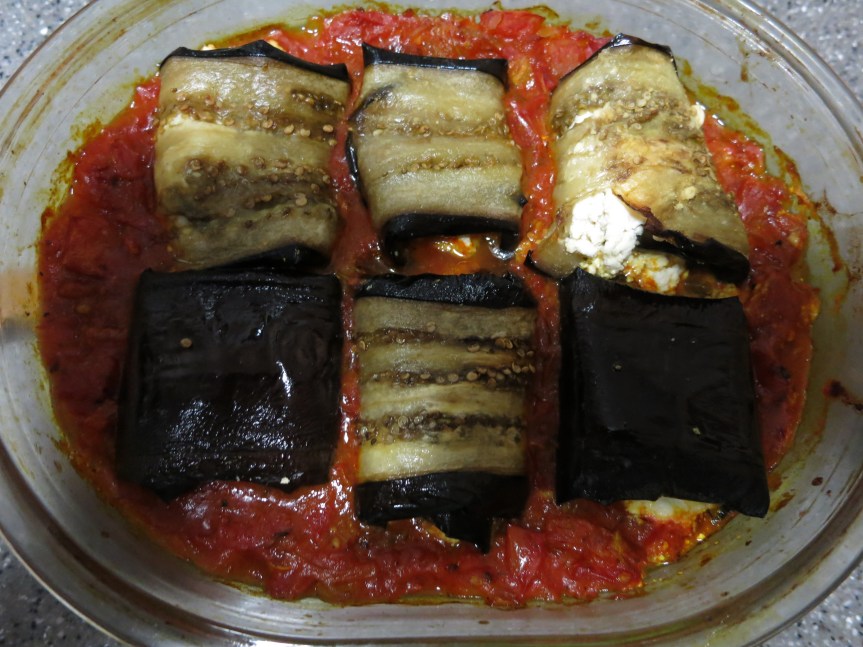
Lor stuffed aubergine slices in a spicy tomato sauce

It’s peak season for aubergines at the moment and we found that this adaptable vegetable paired excellently with lor cheese. We stuffed some slices of aubergine with the cheese, adding some spinach or sorrel leaves to the parcels to give the lor a bit more oomph. The dish was finished off by submerging the aubergine wraps in a spicy, gingery tomato sauce.

wp_20160914_18_29_47_pro
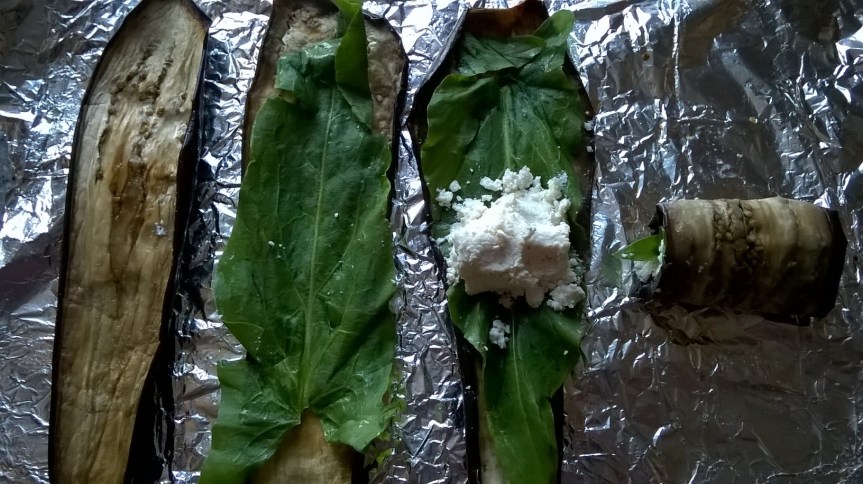
Line up the aubergine slices, add a sorrel leaf and a dollop of lor, then roll

For some reason, this combination of aubergine, white cheese and tomato just works so well.

If you’re having trouble sourcing the lor cheese, it’s dead easy to make yourself from milk or yogurt – here’s some easy-to-follow instructions from Binnur’s Turkish Cookbook.

Ingredients (serves 3-4)

Two large aubergines cut lengthways into 0.5 cm thick slices (this should yield 8-10 slices)

250 g  lor cheese (or ricotta)

Eight-ten sorrel or spinach leaves (one for each aubergine slice)

500 g tomatoes

One medium-sized onion

One or two garlic cloves

3 cm fresh ginger

One teaspoon paprika

One teaspoon chili flakes

One teaspoon turmeric

50 ml olive oil

Method

Brush the aubergine slices on both sides with olive oil, sprinkle some salt and black pepper over the slices and bake for 20 minutes or until turning a golden-brown colour in an oven pre-heated to 220°C or gas mark 7.

While the slices are cooking, prepare the sauce. Heat a glug of olive oil in a frying pan and add the finely chopped onion to the pan along with the minced garlic and ginger.

Cook over a medium heat for ten minutes then stir in the paprika, chili flakes and turmeric. Chop the tomatoes or grate them and pour into the mix. Cook for twenty minutes or so, stirring occasionally, until the sauce is reduced by about half.

Allow the aubergine slices to cool and then make the wraps – put a sorrel or spinach leaf, with the stem removed, and a dollop of lor in the middle of the slice and roll it up.

Pour the sauce into a baking dish and place the aubergine parcels in the spicy sauce. Bake in the oven at 220°C or gas mark 7 for twenty minutes or until the sauce is bubbling.

As usual, serve with a green salad and some crusty bread.


A Spicy Finger in Every Pie

18 August 2016

This week, Knidos Cookery Club is cooking with okra, another vegetable that arouses strong emotions in the love it or hate it camps.

IMG_1103
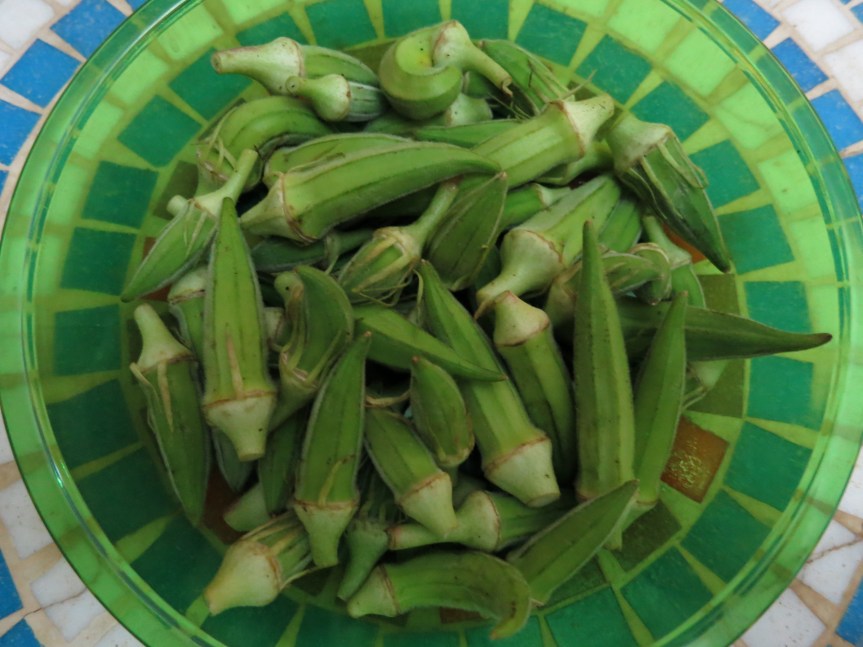
Okra – washed, dried and ready for action

Many are put off this green pod, also known as lady’s fingers, for its tendency to taste a bit slimy at times. This sliminess can be avoided by making sure that after washing, the pods are thoroughly dried before being cooked. Stir frying can also help retain okra’s natural crunchiness.

The origins of okra are unclear – South Asia, West Africa and Ethiopia all make claims to be the home of this vegetable. Okra was brought to Turkey by Arab merchants and is known by its Arabic name, bamya.  It’s often cooked with olive oil and tomatoes and served as a side dish in Turkey.

IMG_1111
Bhindi bhaji – dry okra curry

Our favourite recipe for okra is to prepare it Indian-style, stir fried with spices to make a dry bhindi bhaji, which works as a standalone dish or can be accompanied with a lentil dhal and rice combo.

Ingredients (serves 3-4)

500 g okra washed and dried

250 g tomatoes

One medium-sized onion

One clove of garlic

1 cm fresh ginger

One teaspoon mustard seeds

One teaspoon cumin

One teaspoon dried coriander

One teaspoon cinnamon

One teaspoon turmeric

One teaspoon chili flakes

50 ml olive oil

Method 

Heat the olive oil in a frying pan and tip in the mustard seeds. When the seeds begin to pop, add the diced onion and garlic and cook for five minutes or so until just starting to brown. Add the spices (ginger, cumin, coriander, cinnamon, turmeric and chili flakes) and stir well.

Throw the tomatoes into the spicy onion mix and cook for another five minutes or so until the tomatoes begin to break up. Now add the okra and stir fry for ten minutes, making sure the okra are well-coated with the curry sauce.

Serve immediately with a lentil dhal and basmati rice or chapatis, or both if you’re feeling famished.


Melon Almond a Go-Go

11 August 2016

As Knidos Cookery Club turns 20, we’re celebrating this week with a look at two of the mainstay crops of the Datça Peninsula – melons and almonds.

WP_20160810_13_03_46_Pro
This year’s almond crop has arrived!

This year’s new nut harvest is already arriving in the market. Datça’s almonds, badem in Turkish, are rightly famous in Turkey – I remember sitting at a terrace in Istanbul’s Beyoğlu district, back in the days when it still had street tables,  and a guy came round selling fresh Datça almonds, cooled on a bed of ice.

In the Knidos area, almonds are widely used in cooking, in making soaps and creams and in Datça many cafes offer a milky ‘almond coffee’. Last week we had some mezes at Kasapoğlu Pansiyon in Ovabükü which came liberally sprinkled with almonds – one green bean dish and another made from grated courgette and yogurt.

The area around Knidos is perfect for growing melons, kavun in Turkish. The market is full at the moment with a green and yellow striped variety – I’m not sure what it’s called, but it sure tastes good!

We’ve decided to attempt something unusual for the 20th edition of Knidos Cookery Club – stuffed melon. This dish was popular in the palaces of the Ottoman Empire, drawing on a Persian and Armenian-influenced fusion of sweet and savoury tastes.

IMG_1096
Plov in a melon

The Knidos Cookery Club version is fully veggie-friendly and uses mushrooms in place of meat, along with rice, dried fruit and fresh Datça almonds. The end result is basically plov in a melon, a most unusual taste sensation!

Ingredients (serves 4)

One melon (honeydew or similar – not watermelon!)

125 g rice

25 g orzu or pine nuts, if you’re feeling flush

One medium-sized onion

One garlic clove

100 g almonds

75 g mixed dried fruit (raisins, currants, chopped apricot, chopped fig)

250 g mushrooms

50 ml olive oil

One teaspoon of cumin, cinnamon and red pepper flakes

Salt and black pepper to season

Method

Wash the rice and soak for an hour or so. Heat 25 ml olive oil in a pan and cook the orzu or pine nuts until golden brown. Add the rice and stir to coat the grains with oil. Pour in 300 ml cold water, add a pinch of salt and cook until all the liquid is absorbed.

Heat the rest of the olive oil in a heavy-based pan and add the chopped onion and garlic. Cook until translucent and then add the peeled almonds. Keep stirring for five minutes and then add the mixed dried fruit and one teaspoon of cumin, cinnamon and red pepper flakes.

Chop the mushrooms up and then pour into the sizzling mix. Stir regularly – you don’t need to add any liquid as the mushrooms contain a lot of water. Cook for ten minutes or so and then turn off the heat. Mix in the rice, blending well.

Prepare the melon by cutting it in half and scooping out the seeds. Then scoop out the flesh, leaving about 1 cm inside the melon. Stuff with the rice mix, arranging some almonds on top.

Place the melon halves in a shallow dish, add 100 ml warm water and bake at 200°C or gas mark 6 for one hour.

Serve a quarter of the melon to each person with an Uzbek-style salad of sliced tomatoes, onions and chili pepper  – achik chuchuk.


Battle of the Beans 2: Land of the Giants

SAMSUNG CSC

Giant beans served up at Aigli restaurant, Kos Town, Greece

21 July 2016

When it comes to food, Turkey and Greece have more in common than they’ll often admit. They share a love for small cups of strong coffee and sweet tooths all around the Aegean Sea love baklava,  made from chopped nuts and layers of filo pastry drenched in honey.

WP_20160720_23_55_39_Pro
Baklava and coffee a la Turca

On the savoury side, no selection of starters is complete without that famous yogurt dip made with cucumber and garlic – known as cacık in Turkish, tzatziki in Greek. A Turk’s ıspanaklı börek is a spanakopita to a Greek.

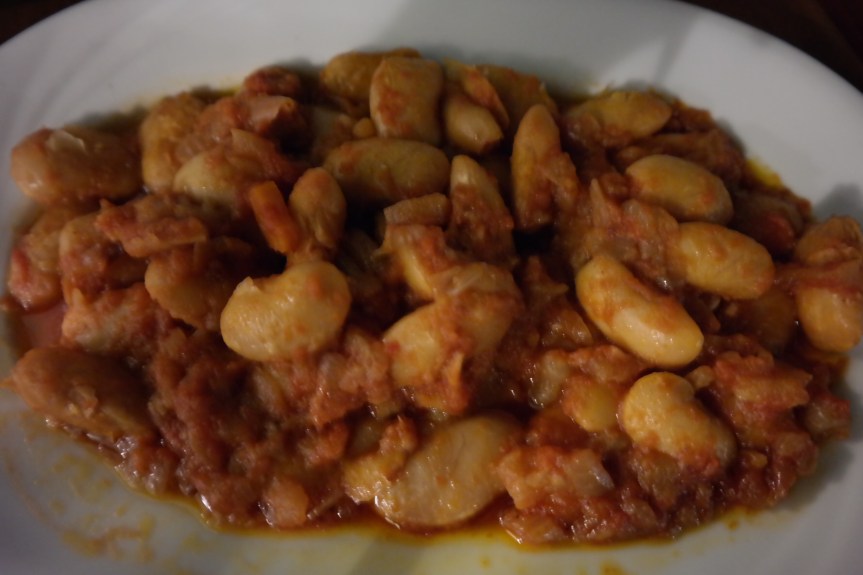
Last week’s Knidos Cookery Club looked at Turkey’s signature bean dish, kuru fasulye, using haricot beans. This week, we will attempt to make the brasher Greek version, gigantes plaki, which uses the biggest beans you can get your hands on and bakes them in a thick tomato sauce in the oven

There’s something about the humble bean that makes it a great comfort food when your body craves something plain and wholesome. After a period of indulging in Greece’s myriad takes on feta cheese: a slab placed atop a horiatiki salad, deep fried in a honey and sesame seed coating or wrapped in layers of flaky filo pastry, feta fatigue can sometimes set in.  If this happens, then there’s nothing like a bowl of giant beans served with a light green salad to bring your appetite back to life.

Butter beans, also called lima beans, work well in this dish, with their insides going soft and mushy while the exterior remains firm. Reserve some of the liquid (around 200 ml) from cooking the dried beans to use for these baked beans with an edge. A secret ingredient that gives this dish it’s distinctive taste is celery.

Ingredients (serves 5-6 generous portions)

250 g dried butter (lima) beans soaked overnight

Two medium-sized red onions

Two small stalks of celery

One or two cloves of garlic

Three medium-sized plum tomatoes

A small bunch of parsley

Pinches of salt, pepper and cumin

One teaspoon of cinnamon

One teaspoon dried thyme

50 g olive oil

Method

Boil the butter beans over a low heat for an hour or so until they are tender but not falling apart. Stick around and every five minutes or so scoop off the foam that forms while the beans are cooking. Drain the beans, reserving 200 ml of the cooking water for use later.

While the beans are cooking, prepare the sauce. Heat the olive oil in a frying pan and add most of the finely diced onion (save some slices to sprinkle over the cooked beans) and the chopped garlic. Fry until translucent and then add the finely chopped celery. Cook for five minutes or so and then add the parsley, thyme and cinnamon and season with salt, pepper and cumin.

Peel the tomatoes (dunking them in boiling water for 30 seconds and then into cold water will help loosen the skins) and chop finely and add to the other ingredients in the frying pan and cook for ten minutes.

Pour the beans into a large baking dish, cover them with the sauce and add the reserved cooking liquid. Bake in an oven pre-heated to 180 °C (gas mark 5) for one hour. The beans should still be fairly firm on the outside but mushy and soft on the inside. Leave in the oven for longer if the insides are firm other than mushy.

Allow to cool for 15 minutes or so and then serve with a green salad and crusty bread to soak up the juices.

SAMSUNG CSC
SAMSUNG CSC

T

Battle of the Beans 1: Small is Beautiful

14 July 2016

When it comes to food, Turkey and Greece have more in common than they’ll often admit. They share a love for small cups of strong coffee and sweet tooths all around the Aegean Sea love baklava,  made from chopped nuts and layers of filo pastry drenched in honey.

On the savoury side, no selection of starters is complete without that famous yogurt dip made with cucumber and garlic – known as cacık in Turkish, tzatziki in Greek. A Turk’s ıspanaklı börek is a spanakopita to a Greek.

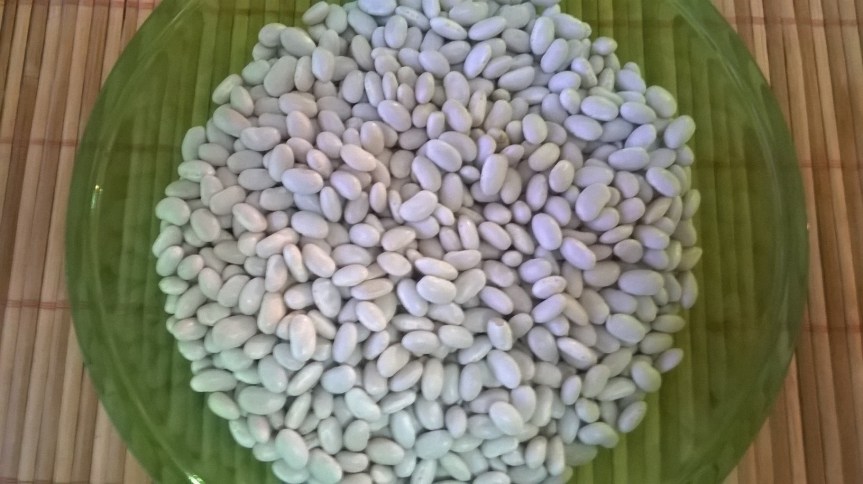
One area where there is some clear water between the Greek and Turkish kitchen is the choice of which bean to combine with a rich tomato sauce. While the Greeks favour dried giant white beans to make the dish known as gigantes plaki, in Turkey this dish is made with the smaller haricot, or navy, bean and is called kuru fasulye. Greece also has a dish made from small white beans called fasolada, but this is more of a soup.

WP_20160703_20_38_46_Pro
Dried white beans awaiting a soaking

This week on Knidos Cookery Club, we’ll be looking at the Turkish version. When thinking about Turkey’s national dish the döner kebab or köfte, meatballs, generally spring to mind, but in fact it is the humble kuru fasulye that takes the honour. It’s the ultimate Turkish comfort food when served up with pilav, a portion of rice cooked with orzo pasta.

IMG_0992
Kindos Cookery Club’s take on the Turkish classic kuru fasulye and pilav

The version that came out of the Knidos Cookery Club kitchen was a bit drier than some found in Turkish cafes. For a saucier version of this dish, add more liquid during the cooking stage; perhaps 100 ml more of water or stock or reserved cooking liquid from the beans.

Ingredients (serves 3-4)

250 g dried white beans (haricot or any small white beans you can find) soaked overnight

Four medium-sized plum tomatoes

One medium-sized red onion

One green pepper (the long, thin banana-shaped one)

3-4 teaspoons red pepper paste

200 ml cooking liquid reserved from the beans (use 100 ml more for a runnier sauce)

Seasoning: pinches  of salt and pepper, a teaspoon of cumin

Fresh parsley to garnish the finished dish

50 ml olive oil

100 g orzo pasta (pasta shaped like grains of rice)

300 g washed rice

Method 

Cook the beans in a pan of water. Bring to the boil, then simmer over a lower heat for up to 45 minutes or so until the beans are cooked but not going soft. Skim off the foam periodically.

Heat the 25 ml of oil in a heavy-based pan and then add the chopped onion. Cook until translucent over a medium heat. Add the diced green pepper and keep cooking for another 4-5 minutes.

Add  the tomatoes – grate them to remove the skins. Add the red pepper paste and season with salt, black pepper and cumin. Pour in the reserved cooking water from the beans and stir. Add the beans, give it a good stir and keep it bubbling away for 15 minutes or so. You want the beans to stay firm.

To make the rice, heat 25 ml olive oil in a heavy-based pan then add the orzo and stir. Cook until the orzo starts to turn a golden colour. Now add the drained, washed rice and keep stirring. When the rice is coated with oil, pour in water or stock so the rice is covered by about 1 cm of liquid. Add salt if required.

Turn the heat down and cook until all the water is absorbed. turn off the heat and allow it to stand for 10 minutes or so and cover with a clean tea towel or some kitchen roll and put the lid on.

Serve the rice and beans together, garnishing the beans with some chopped parsley. have some crusty bread like a baguette on hand to soak up the juices.