Mr Alan’s Top Tips

18 May 2017

Knidos Cookery Club is just back from a flying visit to Uzbekistan where we met up with dilettante chef Mr Alan, who invited us round to sample his take on asparagus tips.

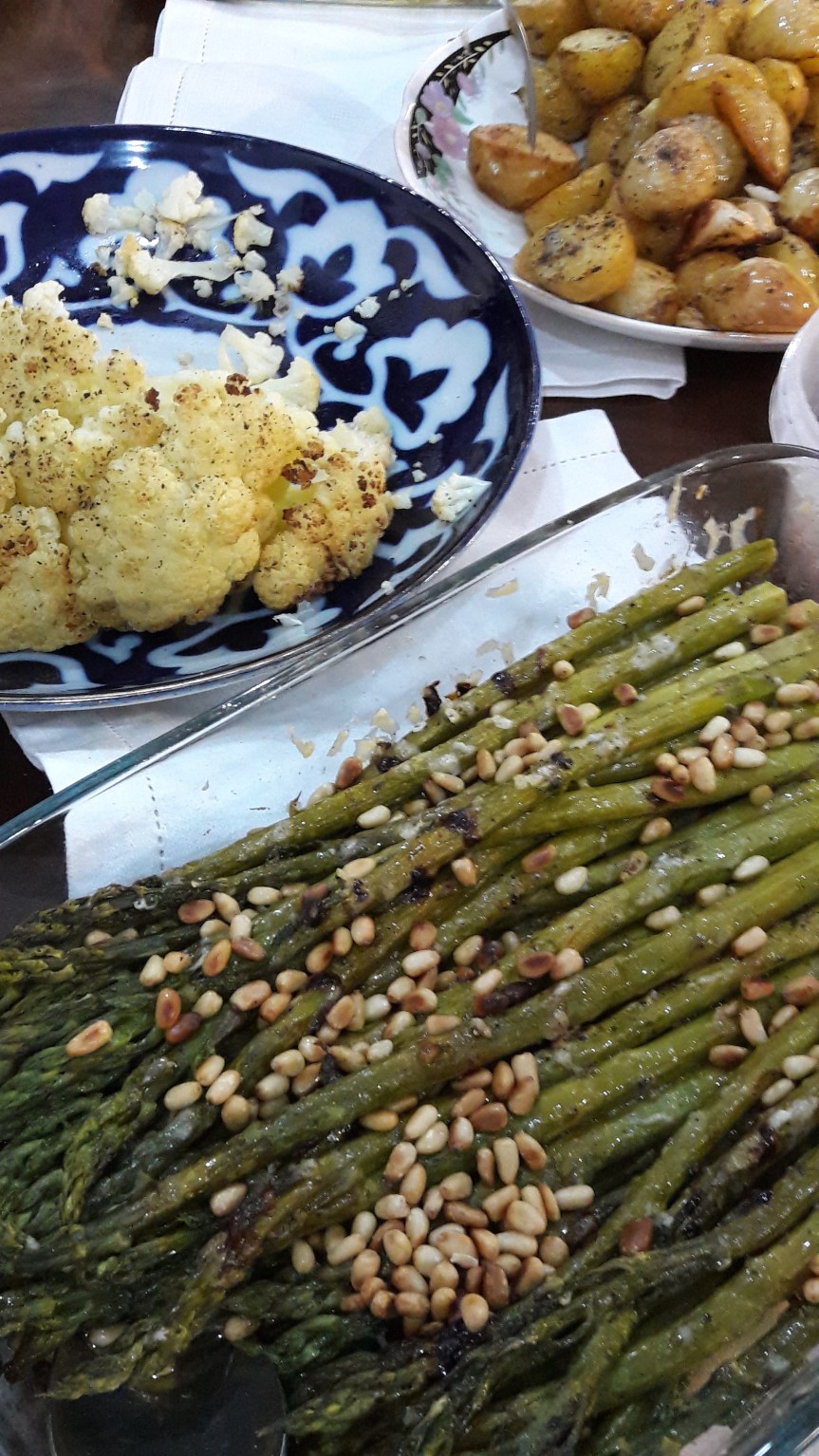
He’d tracked down some sizeable spears in Tashkent’s Alay, or Alaysky, bazaar and we added some first cold press Datça olive oil and some sun-dried tomatoes from the peninsula, which, with the addition of some toasted pine nuts and a smattering of grated pecorino cheese, made for quite a feast.
20170512_213305
Mr Alan’s way with asparagus


The asparagus tips, which are easy to bake and go well with potatoes, rice or pasta, were served up with a head of roasted cauliflower drizzled with truffle oil and roast new potatoes. Oh, and there was a duck and some fish for the carnivores, along with lashings of wine from Mr Alan’s cellar!

Ingredients (easily serves 6-8)

1 kg asparagus spears

200 g sun-dried tomatoes

50 ml olive oil

100 g pine nuts

50 g pecorino or similar hard cheese

One cauliflower, leaves removed

Truffle oil

Mixed dried herbs such as thyme or oregano

Method

Place a layer of sun-dried tomatoes on the bottom of a large baking dish. Arrange the spears over the top of the tomatoes, pour the olive oil on top, sprinkle some mixed herbs over the spears and grate the cheese over everything.

Bake in a hot, pre-heated oven at 200 c /gas mark 6 for twenty minutes or so until the spears are just beginning to char. Sprinkle the cauliflower with truffle oil and olive oil and cook for 30 minutes for so in the hot oven along with the asparagus tips. While the tips are baking, toast the pine nuts over a medium heat.

Serve the asparagus tips with the pine nuts alongside the cauliflower and potatoes and a bottle or two of your favourite wine.


Lobiani Sausagiani

9 March 2017

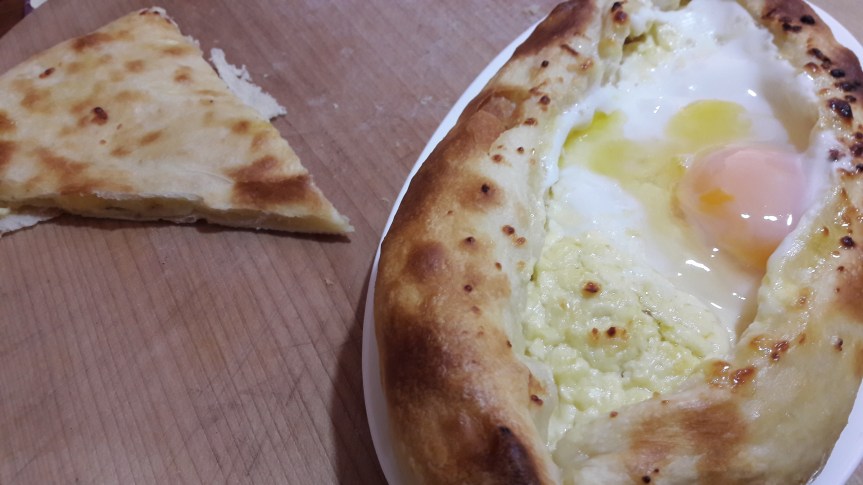
This time round on Knidos Cookery Club we’re off to Turkey’s far north-east corner and across the border into Georgia. This mountainous country shares some dishes in common with the people of Turkey’s Black Sea coast such as the bread and cheese concoction known as khachapuri in Georgia, pide in Turkey.

20170309_152546


Georgian dishes rely on both fresh and dried local ingredients. The diet is generally meat-heavy – this point was crudely pushed home last year when outraged sausage-wielding activists attacked Kiwi Café, a vegan café in Georgia’s capital Tbilisi, throwing chunks of meat and fish at diners, but there are lots of options for non-carnivores as its cuisine also features a wide range of veggie dishes.

Georgia’s location on a number of east-west trade routes heading through the Caucasus Mountains has seen different influences make their mark on its  eating culture over the years, with spices playing a key role.

20170218_135303
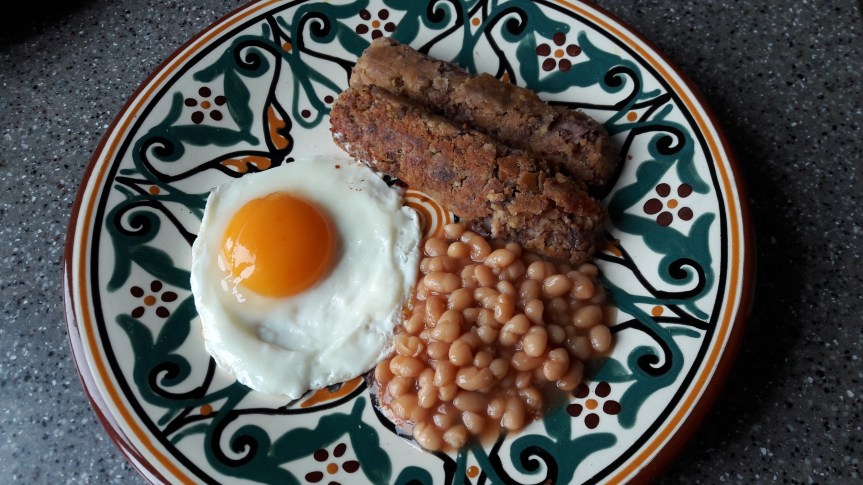
KCC’s new brunch treat –lobiani sausagiani

Dried beans, or lobio, walnuts, pomegranates and spices like coriander and blue fenugreek give a distinctive taste to the local fare. Cheese also features strongly on the Georgian table, from the versatile sulguni, an elastic, brined cheese akin to mozzarella, that can be deep fried to the fresh white imeruli cheese.

Georgia’s dried red beans are made into a dish called lobio, that, depending on the region of the country it’s prepared in, can be like a soup, a stew or re-fried beans. It is usually cooked in a clay pot and sometimes comes with a thin layer of bread as a cover on top. Mashed red beans are also cooked inside bread in a dish called lobiani.

We’ve decided to do our own take on a lobio dish, and to get our own back on those meat-wielding activists, by making a Georgian-influenced veggie sausage, to be served as part of a brunch or main meal.

Ingredients (makes 8-10 sausages)

200 g dried red beans, soaked overnight

100 g red lentils (one cup)

150 g fine bulgur wheat (1.5 cups)

50 g chopped walnuts

1 teaspoon dried coriander

1 teaspoon cumin

1 teaspoon black pepper

1 teaspoon red chili flakes

25 ml olive oil for frying the sausages

1 tablespoon plain flour

Method

Soak the beans overnight and then cook for an hour or so over a low heat until the beans are cooked and beginning to break up. Drain and reserve the cooking water , then mash the beans roughly.

Wash the lentils until the water goes clear and then place in a pan with the water from the cooked beans – add more water so the lentils are covered by 2 cm of liquid. Bring to the boil and simmer over a low heat for 20 minutes or so. The lentils should be going mushy and there should be about 1 cm of water covering the lentils – add more water if necessary.

Add the washed bulgur wheat to the cooked lentils and blend well. Allow to stand for 30 minutes or so and then add the toasted, chopped walnuts and the mashed beans. Then grind the spices together and add to the mix. Leave overnight in the fridge to allow the flavours to blend.

Sprinkle some flour on a chopping board and roll lemon-sized portions of the mix  into sausage shapes, coating evenly with flour. Fry the sausages in the oil until browned on the outside and then serve with baked beans and a fried egg for a top brunch.

Roman Lor … and Chips

29 September 2016

This week on Knidos Cookery Club we’ll be looking at a recipe that uses up the rest of the lor cheese, Turkey’s answer to ricotta, that we used a few weeks ago in a stuffed aubergine in a spicy tomato sauce dish.

While surfing the net looking for inspiration, Knidos Cookery Club came across the following piece on a dish that is a summertime feature in Rome – baked stuffed tomatoes with potatoes.

img_1418
An autumn carbfeast – stuffed tomatoes with potato wedges

To our mind, the double-carbo dose seems more suited to cooler autumn nights than the heat of summer. We’ve put our own spin on the recipe by substituting bulgur wheat for the rice and adding a healthy dollop of lor to the filling.

Ingredients (Serves 4)

Four medium-sized tomatoes

One medium-sized onion

Three large potatoes

One garlic clove

100 g bulgur wheat (coarse ground) (use rice if this is not available)

50 g  lor cheese (use ricotta or cottage cheese if this is not available)

50 ml olive oil

200 ml hot water

One teaspoon dried thyme

Pinches of salt and black pepper to taste

Method

Slice the top off the tomatoes and leave to one side. Scoop out the flesh with a teaspoon used in a circular, drilling motion. Put the tomato flesh to one side. Turn the hollowed-out tomatoes upside down on kitchen paper to remove excess moisture.

Finely chop the onion and garlic and fry in 25 ml of olive oil until softening. Add the leftover tomato flesh, half a teaspoon of thyme and some salt and black pepper and stir. Cook for five minutes then add the bulgur wheat, stirring to coat the grains. Pour the hot water over the mixture and cook over a low heat until all the moisture is absorbed.

Slice the potatoes in half lengthways and then cut into wedges about 1 cm in width at their thickest point. Pour 25 ml of olive oil into a baking dish and throw in the potato wedges. Sprinkle thyme over the potatoes and coat them liberally with the olive oil – use your hands or a fork for this.

Allow the bulgur to cool and then stir in the lor cheese. Stuff the tomatoes with the bulgur mix and place the tops back on and arrange on top of the potato wedges. Bake in a pre-heated oven at 220 c (gas mark 7) for 45 minutes or so until the wedges are golden and the tomatoes are beginning to shrivel and go a bit black on top.

Serve with a green salad to balance out the carbfeast.


Taking the Lor into Your Own Hands

15 September 2016

This week on Knidos Cookery Club we’ll be looking at  lor – Turkey’s answer to ricotta cheese. Drier than its Italian cousin,  lor is made from whey after it has been separated from the curd. It’s used in Turkish dishes such as börek or mixed with herbs and nigella seeds as part of a breakfast spread.

img_1402
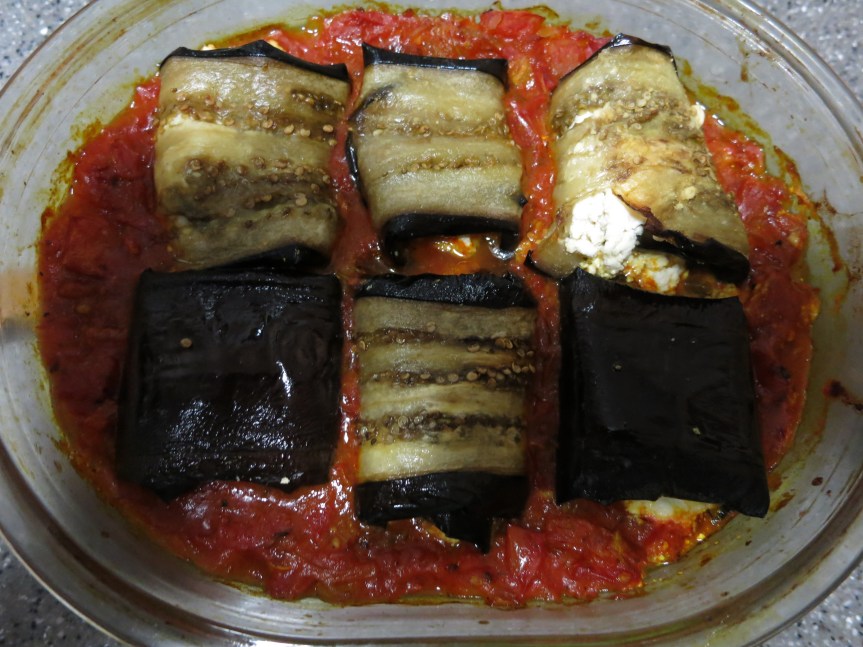
Lor stuffed aubergine slices in a spicy tomato sauce

It’s peak season for aubergines at the moment and we found that this adaptable vegetable paired excellently with lor cheese. We stuffed some slices of aubergine with the cheese, adding some spinach or sorrel leaves to the parcels to give the lor a bit more oomph. The dish was finished off by submerging the aubergine wraps in a spicy, gingery tomato sauce.

wp_20160914_18_29_47_pro
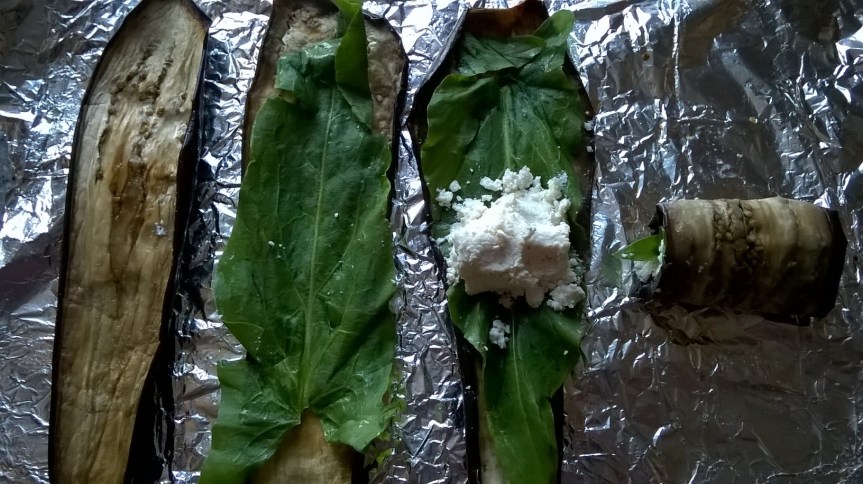
Line up the aubergine slices, add a sorrel leaf and a dollop of lor, then roll

For some reason, this combination of aubergine, white cheese and tomato just works so well.

If you’re having trouble sourcing the lor cheese, it’s dead easy to make yourself from milk or yogurt – here’s some easy-to-follow instructions from Binnur’s Turkish Cookbook.

Ingredients (serves 3-4)

Two large aubergines cut lengthways into 0.5 cm thick slices (this should yield 8-10 slices)

250 g  lor cheese (or ricotta)

Eight-ten sorrel or spinach leaves (one for each aubergine slice)

500 g tomatoes

One medium-sized onion

One or two garlic cloves

3 cm fresh ginger

One teaspoon paprika

One teaspoon chili flakes

One teaspoon turmeric

50 ml olive oil

Method

Brush the aubergine slices on both sides with olive oil, sprinkle some salt and black pepper over the slices and bake for 20 minutes or until turning a golden-brown colour in an oven pre-heated to 220°C or gas mark 7.

While the slices are cooking, prepare the sauce. Heat a glug of olive oil in a frying pan and add the finely chopped onion to the pan along with the minced garlic and ginger.

Cook over a medium heat for ten minutes then stir in the paprika, chili flakes and turmeric. Chop the tomatoes or grate them and pour into the mix. Cook for twenty minutes or so, stirring occasionally, until the sauce is reduced by about half.

Allow the aubergine slices to cool and then make the wraps – put a sorrel or spinach leaf, with the stem removed, and a dollop of lor in the middle of the slice and roll it up.

Pour the sauce into a baking dish and place the aubergine parcels in the spicy sauce. Bake in the oven at 220°C or gas mark 7 for twenty minutes or until the sauce is bubbling.

As usual, serve with a green salad and some crusty bread.


Double Meloned Squeaky Cheese

1 September 2016

This summer has seen a rash of articles in the UK press about salads combining melon and white cheese and here at Knidos Cookery Club we love to tap into any zeitgeist that’s going – here’s our own take on this refreshing summery salad using watermelon, honeydew melon and halloumi cheese.

IMG_1324
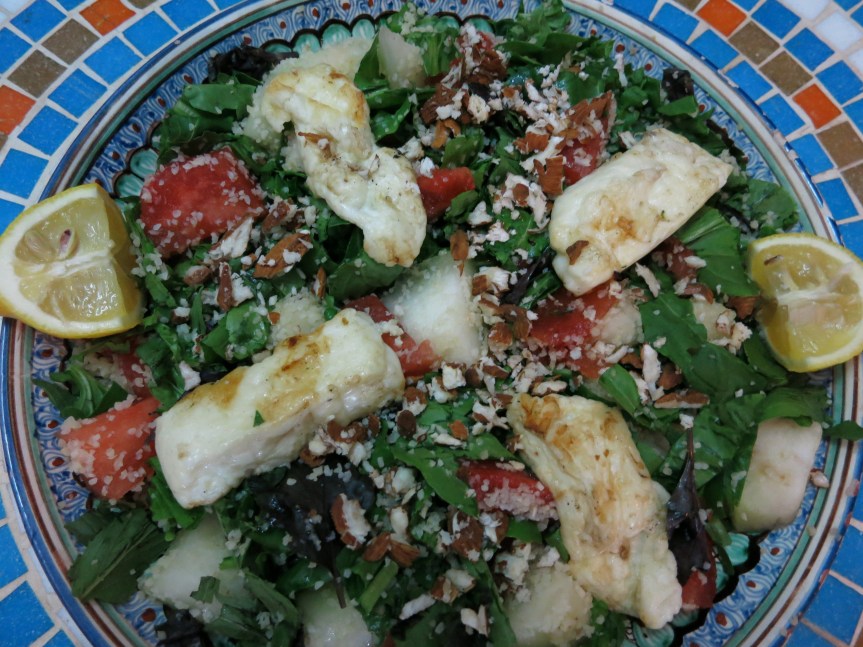
Double Meloned Squeaky Cheese

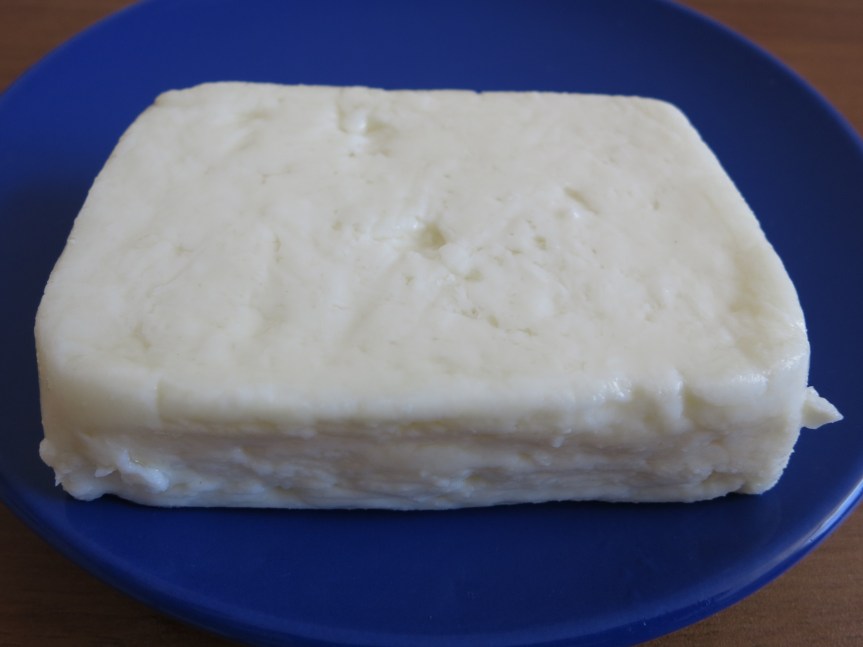
Halloumi, hellim in Turkish, is a salty white cheese with a high melting point that makes it perfect for grilling or frying. It originated in Cyprus – it’s a semi-hard cheese preserved in brine that can be stored for use in the winter months. It’s known in some quarters as ‘squeaky cheese’ because of its tendency to emit a mouse-like sound when you bite into it.

IMG_1337
A slab of halloumi – the cheese that squeaks!

It’s peak season for melons at the moment in the Knidos area so the time was ripe to attempt our own melon cheese combo. With the addition of some halloumi, that had been grilled into submission on the barbecue, and some rocket leaves, fresh mint  and basil, along with bulgur wheat and crushed almonds to add some body, the salad was a winner and set to be a fixture on the Knidos Cookery Club menu.

Ingredients (serves 3-4)

300 g watermelon cut into wedges

300 g honeydew melon cut into wedges

250 g halloumi cheese

One bunch of rocket (approx 125 g)

A handful of fresh mint and basil leaves

100 g fine bulgur wheat

50 g chopped almonds

100 ml hot water

One small lemon, juiced

A glug of olive oil

Method

Soak the bulgur wheat in 100 ml hot water until all the water is absorbed

Tear the rocket, mint and basil leaves and scatter into a large bowl and then add the bulgur wheat. Add the melon wedges and mix well. Dress the salad with lemon juice and olive oil.

Cut the halloumi into slices and grill or fry until going golden-brown on the outside. Arrange the halloumi slices on top of the melon and leaves and sprinkle chopped almonds over the salad. Serve with crusty bread.


Capering around Knidos

4 August 2016

This week in Knidos Cookery Club the focus is on capers,  the unripened flower buds of Capparis spinosa, a thorny evergreen shrub that is native to the Mediterranean region.

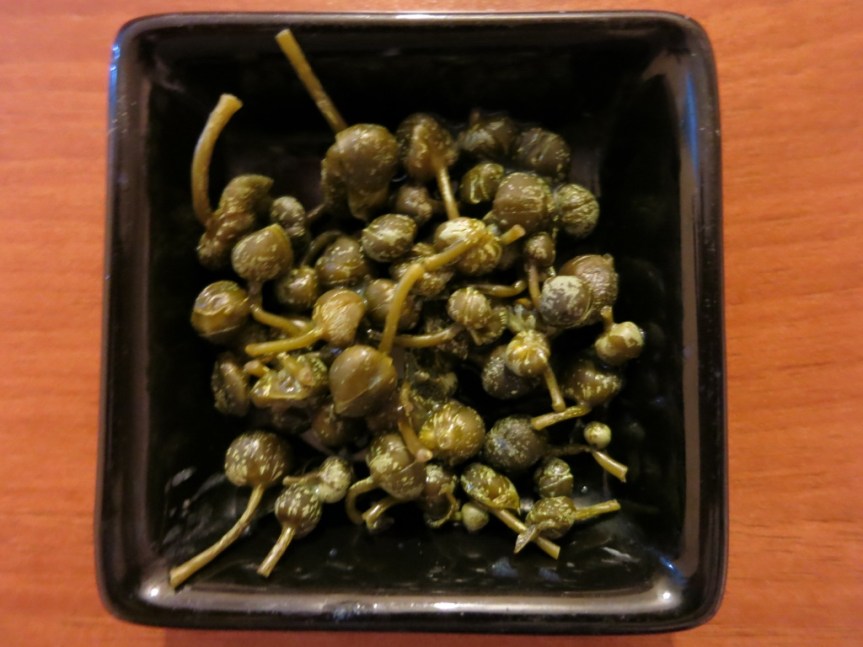
This wonder bud can be used to add taste to a variety of dishes from pastas and pizzas to salads and stews. They can be preserved in brine, sun-dried or salted to allow their complex lemony flavours to come to the fore.

thumb_IMG_1061_1024
Capers preserved in brine

A few weeks ago, Knidos Cookery Club was treated to a tasty lasagne topped with salted capers from the kitchen of Mr Alan in Tashkent, Uzbekistan. On returning to Knidos, our tastebuds awakened, the Saturday market and the local shops were scoured and a jar of capers in brine was tracked down.

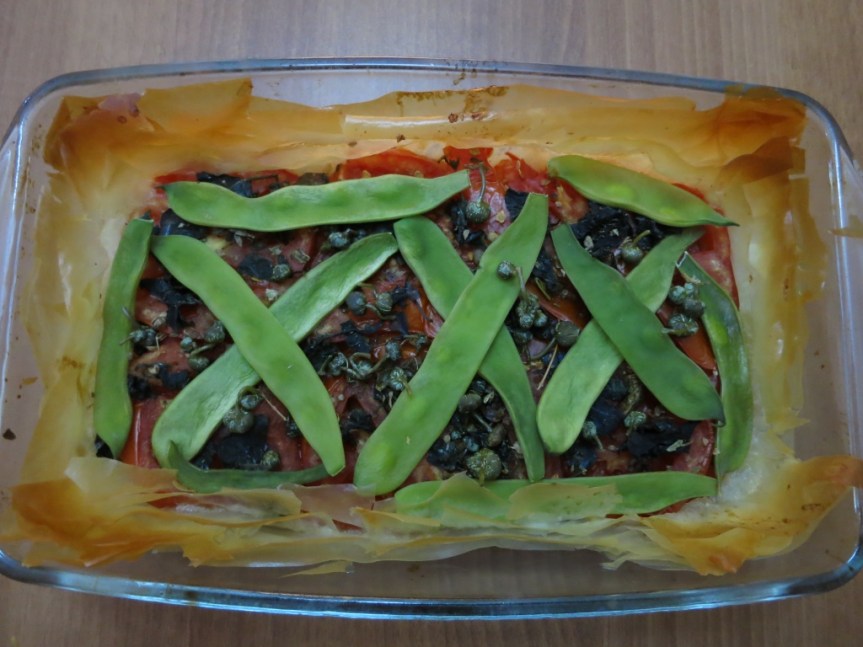
We spotted a Nigel Slater recipe in The Guardian recently for a tomato, olive and French bean tart – we decided to give it a go with some modifications, using some Datça capers in place of the olives. Here’s what the finished product should look like:

thumb_IMG_1082_1024


Ingredients (serves 3-4)

100 g filo pastry (yufka)

500 g tomatoes (any sort or a mix)

25 capers

20 green beans

25 ml olive oil infused with dried thyme

Seasoning: pinches of salt, black pepper, cumin, dried thyme

Method

Grease a large baking dish with some olive infused with dried thyme and place a sheet of filo pastry in the dish. Brush with more oil and put another layer of filo pastry – continue oiling and layering until pastry is used up.

Thinly slice the tomatoes and layer on the pastry base. Dot with capers and season with pinches of salt, black pepper, cumin and dried thyme.

Put the dish in a pre-heated oven (200 °C/gas mark 6) and bake for 30 minutes or until the pastry starts to go a deep golden colour. Keep an eye on it to make sure the pastry doesn’t burn.

While the tart is baking, cook the beans in boiling water for 4 minutes.

When the tart is cooked, arrange the beans in a criss-cross pattern on top of the tomato and caper base. Serve with a green salad – we had a  purslane, rocket, sorrel, cucumber and onion salad dressed with lemon, olive oil and pomegranate sauce.


Battle of the Beans 2: Land of the Giants

SAMSUNG CSC

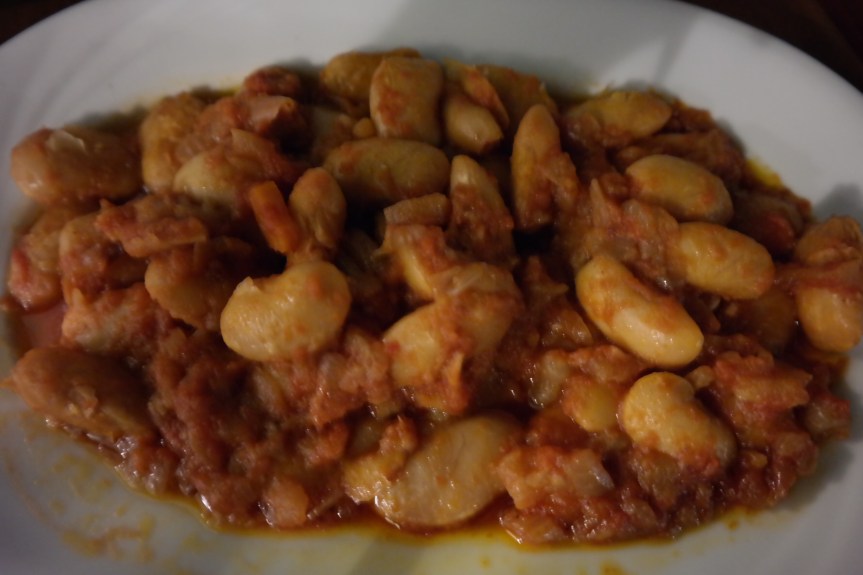
Giant beans served up at Aigli restaurant, Kos Town, Greece

21 July 2016

When it comes to food, Turkey and Greece have more in common than they’ll often admit. They share a love for small cups of strong coffee and sweet tooths all around the Aegean Sea love baklava,  made from chopped nuts and layers of filo pastry drenched in honey.

WP_20160720_23_55_39_Pro
Baklava and coffee a la Turca

On the savoury side, no selection of starters is complete without that famous yogurt dip made with cucumber and garlic – known as cacık in Turkish, tzatziki in Greek. A Turk’s ıspanaklı börek is a spanakopita to a Greek.

Last week’s Knidos Cookery Club looked at Turkey’s signature bean dish, kuru fasulye, using haricot beans. This week, we will attempt to make the brasher Greek version, gigantes plaki, which uses the biggest beans you can get your hands on and bakes them in a thick tomato sauce in the oven

There’s something about the humble bean that makes it a great comfort food when your body craves something plain and wholesome. After a period of indulging in Greece’s myriad takes on feta cheese: a slab placed atop a horiatiki salad, deep fried in a honey and sesame seed coating or wrapped in layers of flaky filo pastry, feta fatigue can sometimes set in.  If this happens, then there’s nothing like a bowl of giant beans served with a light green salad to bring your appetite back to life.

Butter beans, also called lima beans, work well in this dish, with their insides going soft and mushy while the exterior remains firm. Reserve some of the liquid (around 200 ml) from cooking the dried beans to use for these baked beans with an edge. A secret ingredient that gives this dish it’s distinctive taste is celery.

Ingredients (serves 5-6 generous portions)

250 g dried butter (lima) beans soaked overnight

Two medium-sized red onions

Two small stalks of celery

One or two cloves of garlic

Three medium-sized plum tomatoes

A small bunch of parsley

Pinches of salt, pepper and cumin

One teaspoon of cinnamon

One teaspoon dried thyme

50 g olive oil

Method

Boil the butter beans over a low heat for an hour or so until they are tender but not falling apart. Stick around and every five minutes or so scoop off the foam that forms while the beans are cooking. Drain the beans, reserving 200 ml of the cooking water for use later.

While the beans are cooking, prepare the sauce. Heat the olive oil in a frying pan and add most of the finely diced onion (save some slices to sprinkle over the cooked beans) and the chopped garlic. Fry until translucent and then add the finely chopped celery. Cook for five minutes or so and then add the parsley, thyme and cinnamon and season with salt, pepper and cumin.

Peel the tomatoes (dunking them in boiling water for 30 seconds and then into cold water will help loosen the skins) and chop finely and add to the other ingredients in the frying pan and cook for ten minutes.

Pour the beans into a large baking dish, cover them with the sauce and add the reserved cooking liquid. Bake in an oven pre-heated to 180 °C (gas mark 5) for one hour. The beans should still be fairly firm on the outside but mushy and soft on the inside. Leave in the oven for longer if the insides are firm other than mushy.

Allow to cool for 15 minutes or so and then serve with a green salad and crusty bread to soak up the juices.

SAMSUNG CSC
SAMSUNG CSC

T

The Turk Brekkie Club

7 July 2016

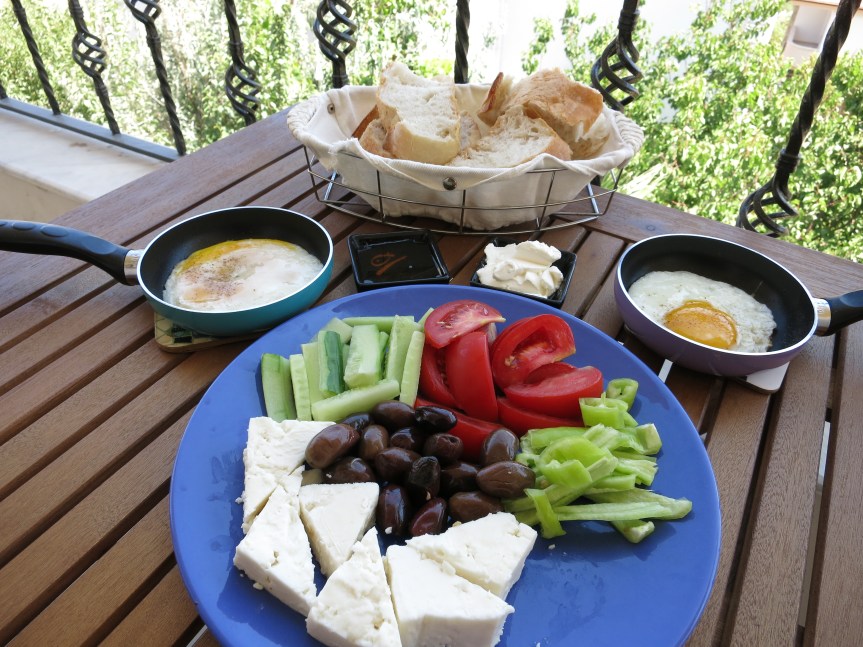
Turkey has turned the first meal of the day into an art form with ever-more elaborate spreads of cheeses, jams, honey, olives, tomatoes, cucumbers, peppers and egg dishes spilling across the table with different regions of the country bringing local additions to the mix.

IMG_0964
Turk Brekkie!

At the heart of the breakfast there is usually an egg dish – often a soft-boiled or fried egg, or a speciality dish such as menemen, a hearty scramble of eggs, onions peppers and tomatoes.

In Datça, the köy, or village, breakfast can come with lashings of local honey and gözleme, a pancake filled with  white cheese and fresh herbs. The Van Breakfast, originating in the east of the country, has conquered the rest of Turkey with its array of 20 or more dishes. It  includes otlu peynir, a herb-infused cheese, martuğa, made from flour, butter and egg, and kavut, a porridge made from cornmeal and ground barley.

SAMSUNG CSC
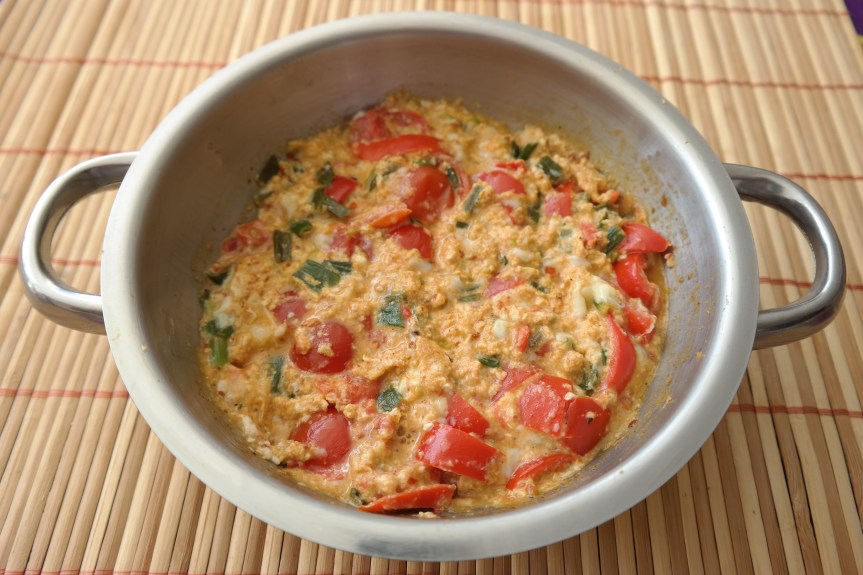
Menemen

This week on Knidos Cookery Club, we’ll be cooking up menemen. I first encountered this breakfast-time treat when staying in Izmir, on the Aegean coast. Walking out of my hotel, I was met be the mouth-watering aroma of eggs bubbling away with peppers and tomatoes.  Street hawkers, hunched over single-burner camping stoves, were busily whipping up pans of scrambled delight.

Ingredients (for one hearty serving)

Two eggs

One spring onion

One small red or green pepper (if you like it hot, use a chili pepper)

One small tomato

Seasoning: pinches of salt, black pepper, cumin and chill pepper flakes

Parsley for garnishing

Olive oil for frying

Method

Heat the oil in a small frying pan. Add the diced spring onion and cook over a medium heat until starting to brown. Add the diced tomato and diced pepper and season with salt, black pepper, cumin and chill pepper flakes.

Cook until the peppers begin to soften then reduce to a low heat and crack in the eggs. Keep stirring as you would for scrambled eggs. When the egg begins to set, remove from the heat – it’ll carry on cooking in the pan. Garnish with some chopped parsley.

Serve immediately with crusty bread and a plate of white cheese, honey, olives, tomatoes, cucumbers and peppers for the full-on Turk brekkie effect.


Who Ate All the Pies?

9 June 2016

This week, Knidos Cookery Club is going to have a look at a local take on the pie – börek. 

This member of the baked, filled pastry club is made from thin layers of filo pastry, known as yufka in Turkey. It comes with a variety of fillings including spinach, white cheese, potatoes, grated courgettes, swiss chard, leeks or combinations of these fillings.

IMG_0227
Individual spinach börek ready for the oven

There are two main ways of preparing börek – in a large pan and then sliced after baking, or as an individual serving in a cigar-shape. Either way, the börek is a moreish treat so always make more than you think you’ll need!

Kindos Cookery Club will tell you how to make the individual servings today. To make the pan version, layer 3-4 sheets of filo pastry in a large, greased dish, brushing glaze between the layers (as in this recipe for a zesty leek, goat cheese and walnut tart). Next add the filling of your choice and then top it off with 3-4 more sheets of filo and sprinkle with nigella seeds. Follow the baking instructions below for the individual pies to cook the pan version.

Follow these steps to make some tasty individual white cheese and spinach börek.

IMG_0225
Ready to roll…


Ingredients (To make 5 individual pies)

15 sheets of filo pastry

500 g spinach

One medium-sized onion

100 g white cheese

50 ml olive oil

50 ml natural yogurt or milk

Fresh mixed herbs (mint, oregano, thyme,dill)

Salt and pepper

Nigella seeds

Method

To make the filling, heat some olive oil in a heavy-based pan and cook the chopped onion over a medium heat until translucent. Add the chopped, fresh herbs and washed and shredded spinach. Season with dashes of salt and pepper.

Cook until the spinach wilts and then add the crumbled white cheese. Mix well and allow to cool.

Make a glaze for the filo pastry by blending equal parts of olive oil and natural yogurt (or milk). Brush the glaze over one 15 cm x 15 cm sheet of filo (or triangle shapes if you can find them), then place another layer of pastry, glaze and finally one more sheet and glaze.

Put two generous dollops of filling onto the bottom edge of the layered filo sheets, leaving about 2 cm at each end. Roll the pie into a cigar shape and press the ends down.

Brush with glaze and sprinkle nigella seeds over the cigar.

Place on a greased baking tray and put into a pre-heated oven and bake at 200 °C (gas mark 6) for 30 minutes or until the pies are golden brown in colour.


Much Ado about Courgettes

28 April 2016

Last time round, Knidos Cookery Club looked at stuffed courgettes and tomatoes and this week we’re going to find a use for some of the leftovers scooped out from the courgettes (zucchini to our North American friends!)

IMG_0350

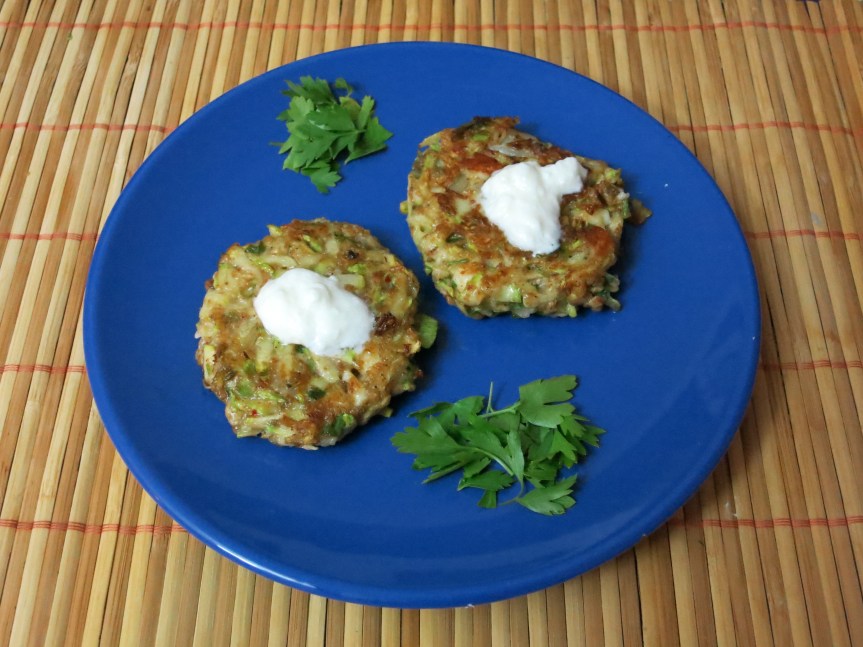
Courgette fritters, Mücver in Turkish, offer a quick and easy solution as to what to do with the courgette middles. Mücver are a great comfort food that can be knocked up in no time and can be served as breakfast, as a burger for lunch, as part of a more substantial main meal or as an easy supper.

These versatile fritters take a few minutes to prepare and can be seasoned with whatever is to hand. They can be fried in next to no time or, for a healthier alternative, can be baked in the oven or even grilled on the barbecue for a smokier flavour.

IMG_0411

Afiyet olsun! (as they say in Turkish)

For a vegan version, omit the egg and yogurt topping. For more of a protein kick add some salty cheese such as feta or halloumi (hellim in Turkish) to the mix. For a more substantial veggie burger add one grated carrot and 100g of your preferred chopped nuts to the mix before frying.

Ingredients (for around 8 fried courgette fritters)

Two medium-sized courgettes

One small onion

One egg

50 g white cheese (feta, halloumi or similar)

Four-five dessert spoons of plain flour

Bunch of parsley, mint and/or dill (if you like that sort of thing)

Dried herbs to taste

A generous sprinkle of sesame seeds

An  optional dusting of chili flakes and grated cinnamon

Salt and pepper

A dash of olive oil for frying

Plain yogurt for serving

Method

Grate or chop up the courgettes finely and mix with the chopped onion. Add fresh parsley, mint and/or dill, dried herbs, chili flakes, cinnamon, sesame seeds salt and pepper and blend well.

Make a well in the centre of the mix and break the egg into it. Sprinkle in the crumbled white cheese. Mix well. (Vegan readers should skip the egg and cheese and jump straight to the adding flour phase!)

Gradually add  the dessert spoons of plain flour and blend  until the mixture has quite a thick consistency – you don’t want it to be too wet and sloppy.

Drizzle some olive oil in a frying pan and put over a medium heat.

Place golf ball-sized scoops of the courgette mixture into the pan and flatten with a spatula or fork.

After a few minutes turn the fritter. Keep cooking until both sided are a golden-brown colour.

Serve hot with a dollop of yogurt on top.