Muhammara: Spread the Word

15 December 2016

This time out on Knidos Cookery Club we’re going to make muhammara, a spicy roasted red pepper and toasted walnut dip. Originally from Syria, this spread made its way onto Turkish tables via Antakya, which is located at the easterly end of Turkey’s Mediterranean coast.

img_2503This delicious dip was brought to Knidos Cookery Club’s attention by our good friend Tolga, who introduced us to the method of roasting the peppers over an open flame on our gas hob.

img_2496Put some tin foil under the burner to stop your hob getting all messed up and cook the peppers over a medium-high flame. Using a chopstick or a wooden skewer can make the peppers easier to manoeuvre on the flame.

You can also grill the peppers or roast them in the oven, but the open-flame method gives them a smoky flavour that combines excellently with the toasted walnuts and chili flakes.

Muhammara works well when teamed with our courgette and almond dip and our carrot and walnut tarator as part of a scrumptious meze platter.

Ingredients 

two medium-sized red (bell) peppers

100 g walnuts (shelled and chopped)

one clove of minced garlic

one lemon – use the juice of half the lemon for the dip and use the rest as a garnish

two teaspoons chili flakes

two teaspoons pomegranate sauce or molasses

25 ml olive oil

Method

Roast the peppers over an open flame, under a grill or in a hot oven until all the skin is blackened. Turn them round regularly to ensure they are cooked evenly.

While the peppers are roasting, toast the walnut pieces in a frying pan over a medium heat for 5 minutes, stirring or shaking the pan regularly. Don’t overcook them as they can taste bitter if you do.

Place the peppers in brown paper bag and allow to cool – this will make it easier to peel the peppers. Now remove the outer skin from the peppers then halve  and de-seed them. Be careful when cutting the peppers as some hot liquid may spurt out if they’re not cooled down enough.

Cut up the peppers and put them with half the walnuts and other ingredients into a blender and mix until you have a smooth paste. Add the rest of the walnuts and give the dip another blast – but not for too long as you want some of the walnuts to still be crunchy.

Garnish with slices of lemon and fresh mint (if you have it) and serve alongside other dips with pita bread and/or slices of raw carrot, cucumbers and green peppers.


A Creamy Almond and Courgette Dipfest

8 September 2016

The courgette is one of the most versatile vegetables in the Knidos Cookery Club kitchen. Earlier it featured in a stuffed platter and as a fritter. We also like it in an omelette, in börek or just sliced and grilled on the barbecue.

IMG_1169
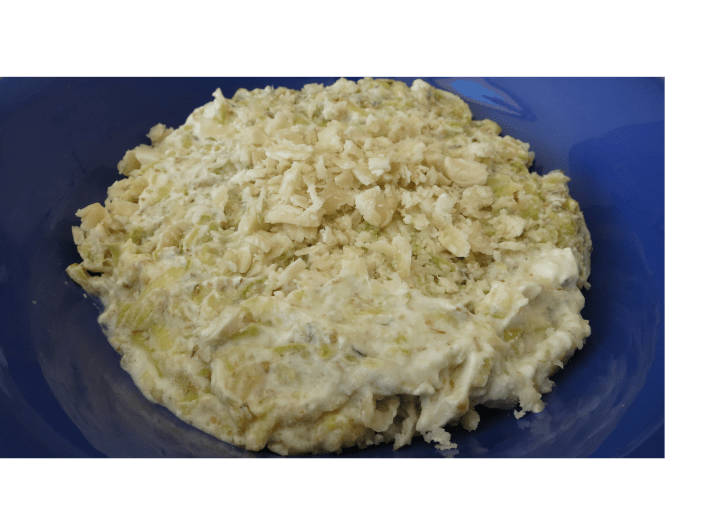
Creamy Almond and Courgette Dip

This week we’ve  incorporated this key ingredient into a creamy almond and courgette dip that can be used as part of a starter, or meze, combo with other dips such as our Carrot and Walnut Tarator.

Yogurt and chopped almonds were added to the grated courgette to make it creamy and some wholemeal flour was used to hold it all together.

Ingredients (Serves 3-4)

250 g  grated courgette

100 ml plain, natural yogurt

50 g wholemeal flour

50 g chopped almonds

One garlic clove

25 ml olive oil

Method

Heat the olive oil in a frying pan over a medium heat then add the grated courgette and garlic and stir fry for five minutes. Add the flour and stir fry for two more minutes. Take the frying pan off the heat, mix in the yogurt and almonds, reserving a few nuts to sprinkle over the top.


Sundowner Time

2 June 2016

Welcome to the tenth edition of Knidos Cookery Club! This calls for a celebration and this week we’ll be looking at some snacks and starters commonly associated with Turkey’s favourite alcoholic tipple, rakı.

IMG_0383
A classic sundowner set with rakı, white cheese and cucumber

Rakı is a member of the family of anise-flavoured drinks common to many countries with coastlines on the Mediterranean  Sea – ouzo in Greece, pastis in France, sambuca in Italy, arak in Lebanon and chinchón in Spain.

When rakı is diluted with water, it turns a milky white colour leading to its Turkish nickname, aslan sütü, or lion’s milk. It’s drunk as an aperitif and is accompanied by white cheese and cucumber. In spring and early summer, it’s often served with tart, sour green plums, known as can erik.

SAMSUNG CSC
Sour plums

Rakı also accompanies a long, lazy lunch or evening meal with the drink served alongside a selection of mezeler, or appetizers that include, among many others, a spicy tomato and chili paste, acılı ezme, yogurt, grated cucumber and crushed garlic, cacık, and semizotu, purslane mixed with yogurt. These starters are usually followed by a grilled fish course and the meal is finished with slices of fresh melon.

SAMSUNG CSC
The new season’s carrots have arrived!

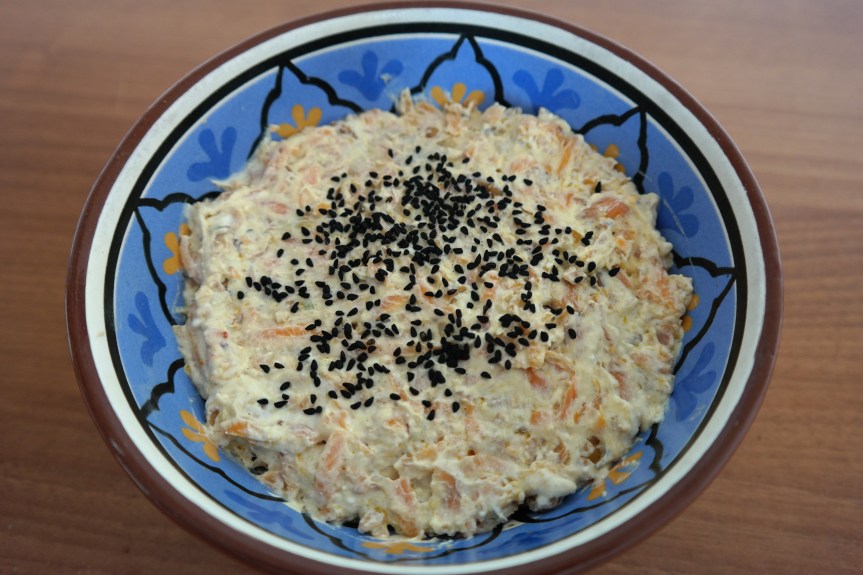
We couldn’t resist these great carrots in the market last week, and they’ve inspired this meze to go with a glass or two of lion’s milk. This week’s recipe is for cezizli havuç tarator, a combo of walnuts, carrots and yogurt.

SAMSUNG CSC
Carrot and Walnut Tarator

Ingredients (serves 3-4)

200 g baby carrots

Eight walnuts

200 ml Greek (strained) yogurt

One or two garlic cloves

Splash of olive oil

Salt, black pepper, dried oregano, chili flakes, cumin and nigella seeds

Method

Heat the olive oil in a frying pan. Clean and grate the carrots (keep the carrot tops to make this pesto) then cook the grated carrot over a low heat for ten minutes or so to help release the natural sugars in the carrots. While it’s cooking, keep stirring and add pinches of salt, black pepper, dried oregano, chili flakes and cumin.

Allow the carrots to cool then add the crushed walnuts (use a blender or a rolling pin to crush them), as much garlic as you prefer and the yogurt. Blend together well and drizzle with nigella seeds.

Serve as a dip with crackers and slices of red pepper and cucumber along with a glass of rakı, water and ice.


A Passion for Purslane

19 May 2016

This week on Knidos Cookery Club we’ll be looking at some ways of using purslane, our favourite weed. This highly-nutritious plant is called semizotu and is widely cultivated in Turkey, where it also grows wild. It’s used in salads, soups and stews.

IMG_0796
Freshly-picked purslane

Purslane has a crunchy texture and a lemony taste and can be used as a substitute for spinach and watercress. This superweed is packed with vitamins – it has the highest concentration of vitamin E of any plant and also contains a useful essential omega-3 fatty acid called alpha-linolenic acid, reports motherearthnews.com.

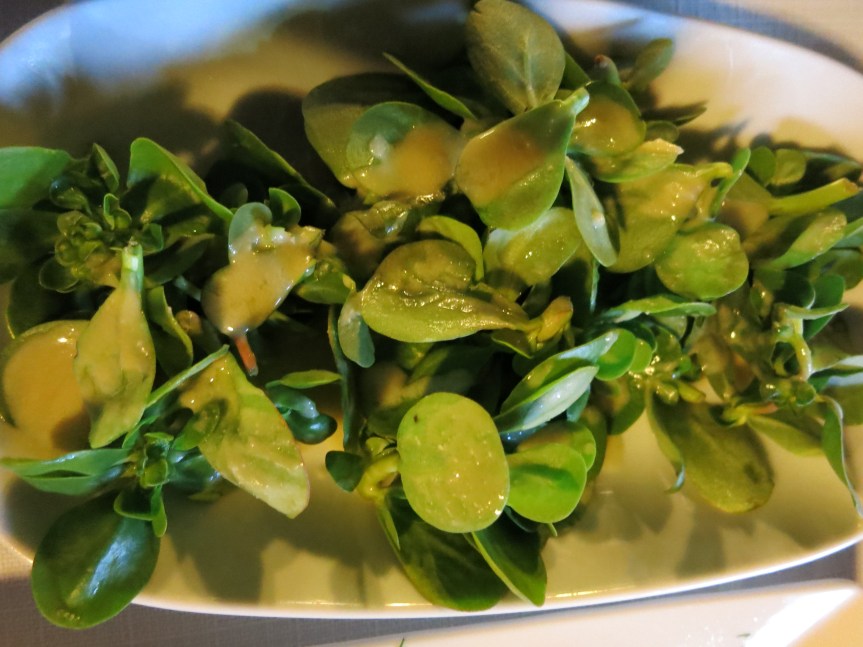
In the Knidos area, it’s a mainstay of meze, or starter, combos when served with yogurt and a hint of garlic. The leaves and stems are also good as a simple but tasty salad dressed with a tahini sauce.

IMG_0776
Purslane in a tahini dressing

We’ve opted for a vitamin-packed spring stew, Semizotu Nohutlu Bulgur Pilavı with purslane, chick peas (garbanzo beans), tomato. carrot and bulgur wheat. Here’s what the finished dish should look like:

IMG_0807

Ingredients (serves3-4)

One bunch of purslane

One medium-sized onion

Two carrots

Four medium-sized tomatoes

100 g coarse bulgur wheat

One can chick peas or 150 g dried chick peas soaked overnight and boiled for an hour or so

One bay leaf

Fresh herbs – parsley and mint

A pinch of cumin, cinnamon, black pepper, red chili flakes, thyme and salt

250 ml warm water

25 ml olive oil

Method

Heat the olive oil in a heavy-based pan and add the chopped onion, the bay leaf and a sprinkle of dried thyme.

Slice the carrot into 50 mm rounds then chop up the tomatoes. When the onions are translucent, add the carrots to the mix and after five minutes or so add the tomatoes.

Cook for another five minutes then add the chick peas, bulgur wheat and water and season with the fresh herbs and spices.

Stir well and bring to the boil. Then turn the heat down, add the purslane and cook over a low heat for 20-25 minutes until the bulgur wheat is cooked but still a bit chewy.

Allow to rest for 5-10 minutes then serve with yogurt and garnish with mint.

Afiyet olsun!


King Celeriac Meets the Olive Oil Uptown

7 April 2016

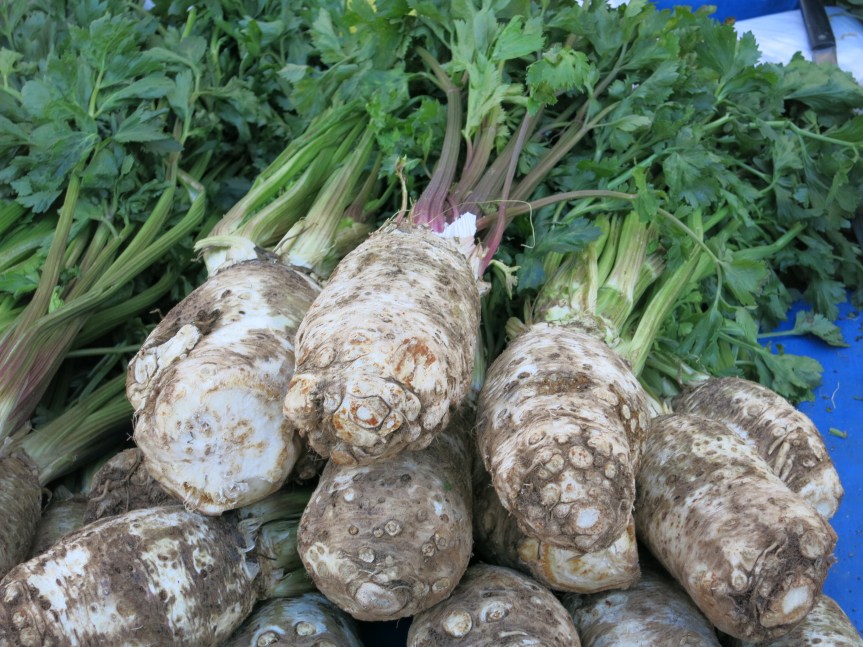
This week Knidos Cookery Club turns its attentions to celeriac – a knobbly root vegetable of the same family as celery. Celeriac bulbs impart an earthy, nutty flavour with a strident undernote of celery.

IMG_0079

Celeriac, kereviz in Turkish, is found all around the Mediterranean and grows in the cooler months of autumn and winter. It can be used raw and grated into a salad, roasted as a main course, boiled as a side dish, served as mash or in a tasty soup.

In Turkey it’s often served up as a cold side-dish in the zeytinyağlı style, which means it is braised in a generous portion of olive oil, a key ingredient of Turkish cooking.

Zeytinyağlı dishes can be made with any seasonal vegetables that are to hand – from green beans to leeks, and from artichokes to courgettes.

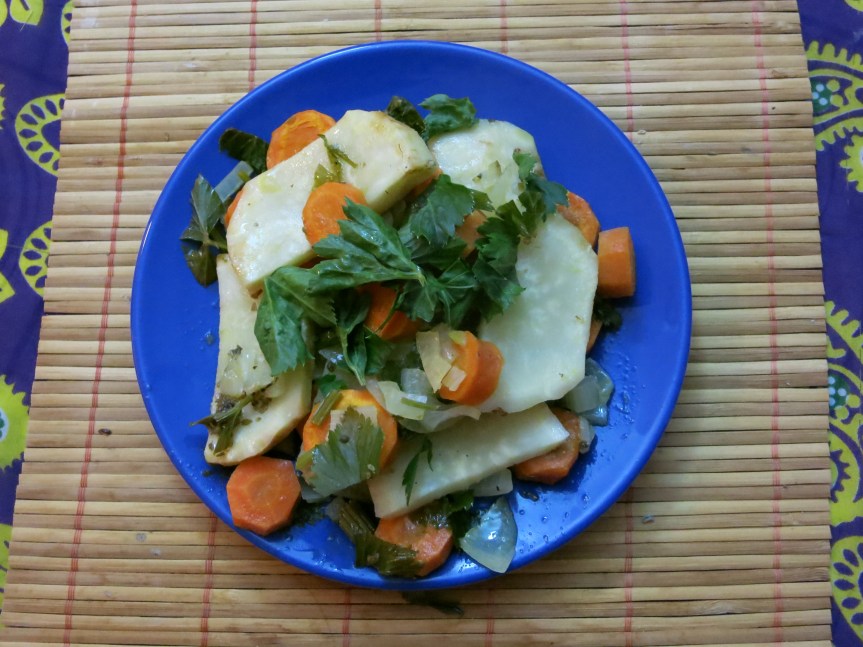
In this week’s recipe, based on Elizabeth Taviloğlu’s, we’ll show you how to get from this …

IMG_0181

… to this

IMG_0202

in a few easy steps using lemon and orange juice, and plenty of olive oil.

Ingredients

One celeriac bulb, peeled and cleaned, retain the stalks and leaves

Two medium carrots

One medium onion

Juice of half a lemon

Juice of two medium-sized oranges

125 ml good quality olive oil (extra virgin if you have it)

100 ml water

Method

Top and tail the celeriac then peel off all the dirt-covered hard outer skin to expose a white bulb. Wash the bulb to remove any lingering soil. Keep the stalks and leaves for later use.

Cut the celeriac in half and then into 0.5 cm slices. Place the slices in a heavy-based saucepan and cover with lemon and orange juice – this is to stop it discolouring.

Next cut the carrot into thin slices, and chop the onion and stalks from the celeriac roughly. Place the carrots, stalks and onion on top of the celeriac.

Pour 100 ml olive oil and 100 ml of water into the pan and bring to a boil.

After the mix boils, reduce the heat and simmer until the vegetables are tender – 20-30 minutes or so.

Allow to cool and then arrange on a plate and sprinkle with more chopped celeriac stalks and leaves. Add a generous drizzle of olive oil and serve.