Capering around Knidos

4 August 2016

This week in Knidos Cookery Club the focus is on capers,  the unripened flower buds of Capparis spinosa, a thorny evergreen shrub that is native to the Mediterranean region.

This wonder bud can be used to add taste to a variety of dishes from pastas and pizzas to salads and stews. They can be preserved in brine, sun-dried or salted to allow their complex lemony flavours to come to the fore.
thumb_IMG_1061_1024
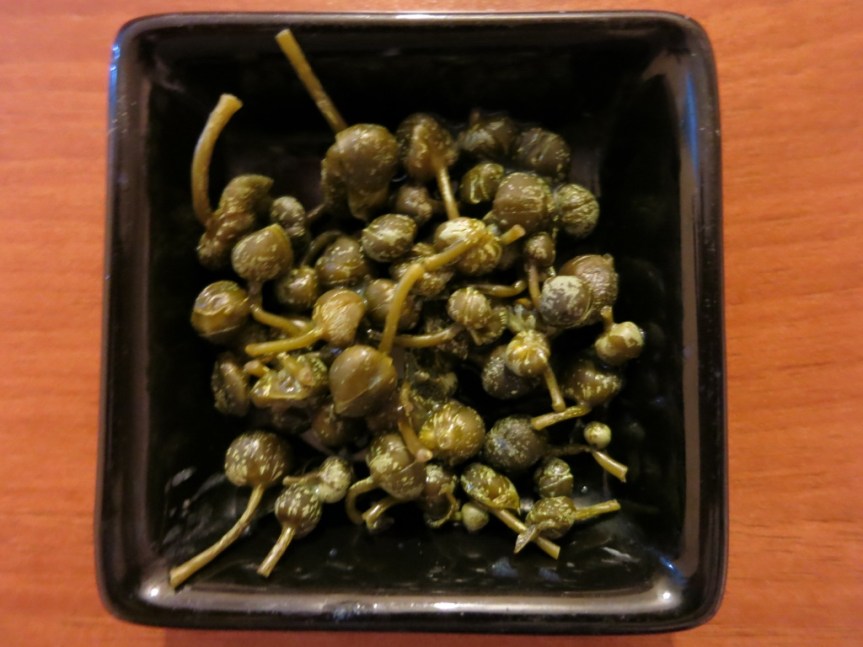
Capers preserved in brine

A few weeks ago, Knidos Cookery Club was treated to a tasty lasagne topped with salted capers from the kitchen of Mr Alan in Tashkent, Uzbekistan. On returning to Knidos, our tastebuds awakened, the Saturday market and the local shops were scoured and a jar of capers in brine was tracked down.

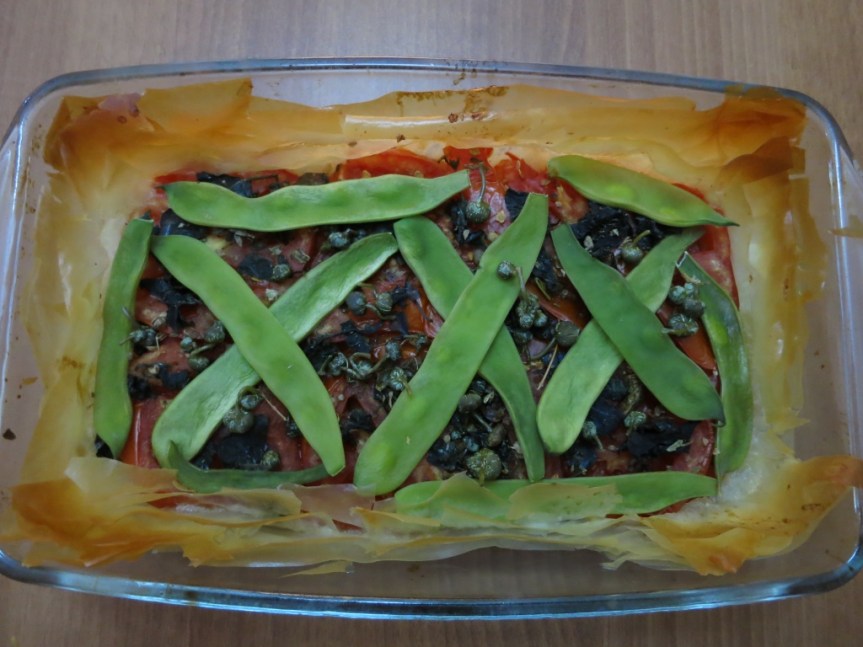
We spotted a Nigel Slater recipe in The Guardian recently for a tomato, olive and French bean tart – we decided to give it a go with some modifications, using some Datça capers in place of the olives. Here’s what the finished product should look like:
thumb_IMG_1082_1024


Ingredients (serves 3-4)

100 g filo pastry (yufka)

500 g tomatoes (any sort or a mix)

25 capers

20 green beans

25 ml olive oil infused with dried thyme

Seasoning: pinches of salt, black pepper, cumin, dried thyme

Method

Grease a large baking dish with some olive infused with dried thyme and place a sheet of filo pastry in the dish. Brush with more oil and put another layer of filo pastry – continue oiling and layering until pastry is used up.

Thinly slice the tomatoes and layer on the pastry base. Dot with capers and season with pinches of salt, black pepper, cumin and dried thyme.

Put the dish in a pre-heated oven (200 °C/gas mark 6) and bake for 30 minutes or until the pastry starts to go a deep golden colour. Keep an eye on it to make sure the pastry doesn’t burn.

While the tart is baking, cook the beans in boiling water for 4 minutes.

When the tart is cooked, arrange the beans in a criss-cross pattern on top of the tomato and caper base. Serve with a green salad – we had a  purslane, rocket, sorrel, cucumber and onion salad dressed with lemon, olive oil and pomegranate sauce.


Pass the Glasswort

30 June 2016

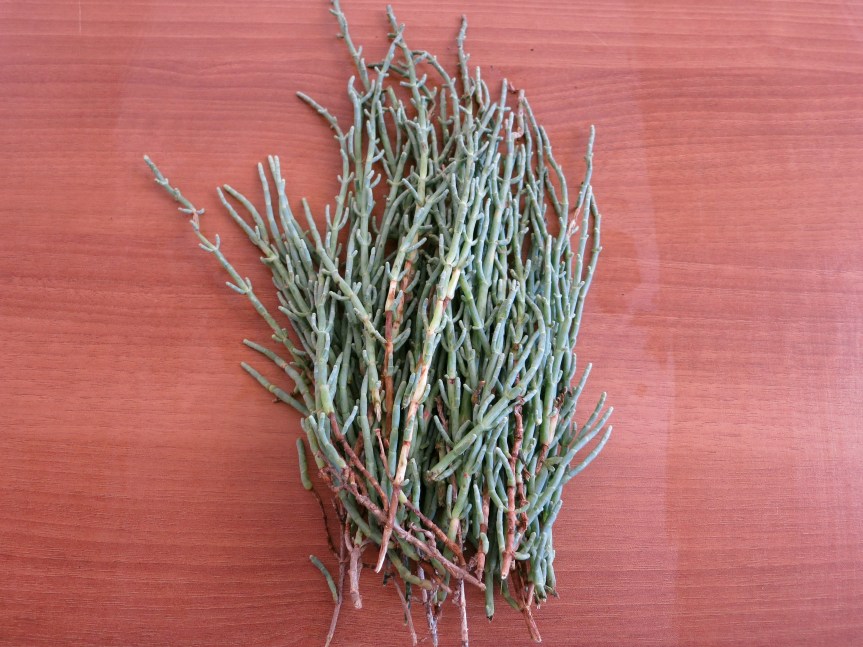
This week on Knidos Cookery Club we’re back in Turkey and we’ll be looking at a plant that grows in abundance on the salty shores of the Mediterranean and Aegean Seas – glasswort, or marsh samphire (salicornia europa). It’s known as glasswort because it used to be used as a source of sodium sulphate in the glass-making process until the nineteenth century.

IMG_0951
Freshly-picked samphire/glasswort

This bright green plant thrives in salty conditions and grows wild along seashores, estuaries and salt marshes all over Europe. It used to be widely eaten in the UK, it’s rich in minerals and has a pleasing flavour of the sea, but has only recently started re-appearing on menus as a much sought after ‘designer vegetable’- you might see it referred to as ‘sea asparagus’.

It’s called deniz börülcesi in Turkey, which translates as sea beans, and is served as a side dish dressed with olive oil, lemon and garlic alongside an array of other starters.

IMG_0954
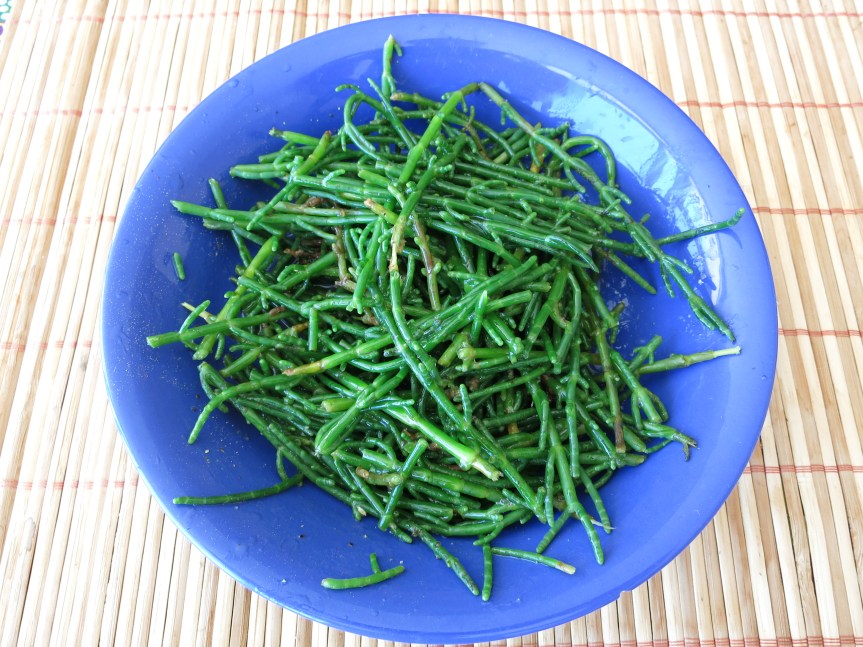
Blanched glasswort dressed with olive oil, lemon juice and black pepper

For this simple dish, you’ll need around 50-75 g of glasswort for each person. When preparing the glasswort, take care to wash it thoroughly and clean any sand and grit away. Cut off any tough stalks and roots and then blanch it in unsalted, boiling water for three minutes.

Drain the water away and then dress the stems with olive oil, a squeeze of fresh lemon juice and a sprinkling of black pepper – you won’t need to add any extra salt as it will already be salty enough. Serve warm alongside a salad of rocket, tomato, olives and onion and some fresh, crunchy bread for a light but tasty lunch.


Sundowner Time

2 June 2016

Welcome to the tenth edition of Knidos Cookery Club! This calls for a celebration and this week we’ll be looking at some snacks and starters commonly associated with Turkey’s favourite alcoholic tipple, rakı.

IMG_0383
A classic sundowner set with rakı, white cheese and cucumber

Rakı is a member of the family of anise-flavoured drinks common to many countries with coastlines on the Mediterranean  Sea – ouzo in Greece, pastis in France, sambuca in Italy, arak in Lebanon and chinchón in Spain.

When rakı is diluted with water, it turns a milky white colour leading to its Turkish nickname, aslan sütü, or lion’s milk. It’s drunk as an aperitif and is accompanied by white cheese and cucumber. In spring and early summer, it’s often served with tart, sour green plums, known as can erik.

SAMSUNG CSC
Sour plums

Rakı also accompanies a long, lazy lunch or evening meal with the drink served alongside a selection of mezeler, or appetizers that include, among many others, a spicy tomato and chili paste, acılı ezme, yogurt, grated cucumber and crushed garlic, cacık, and semizotu, purslane mixed with yogurt. These starters are usually followed by a grilled fish course and the meal is finished with slices of fresh melon.

SAMSUNG CSC
The new season’s carrots have arrived!

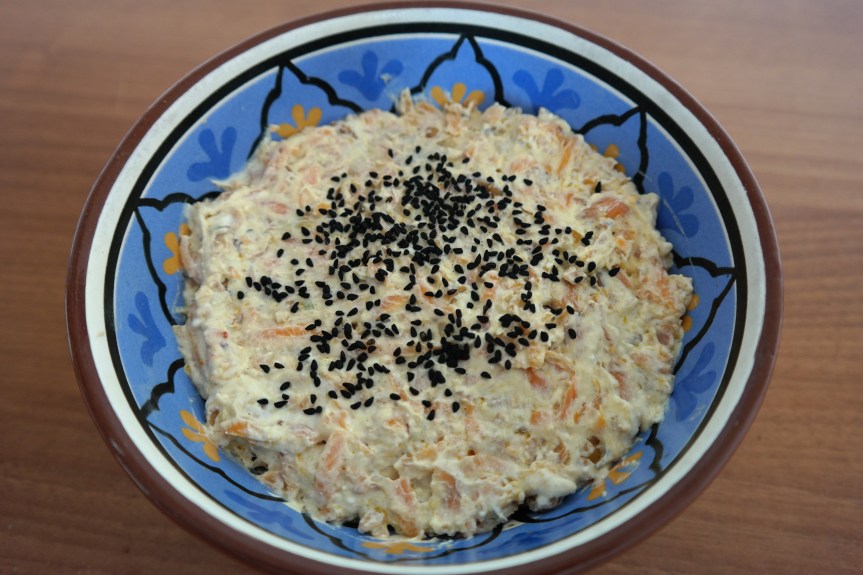
We couldn’t resist these great carrots in the market last week, and they’ve inspired this meze to go with a glass or two of lion’s milk. This week’s recipe is for cezizli havuç tarator, a combo of walnuts, carrots and yogurt.

SAMSUNG CSC
Carrot and Walnut Tarator

Ingredients (serves 3-4)

200 g baby carrots

Eight walnuts

200 ml Greek (strained) yogurt

One or two garlic cloves

Splash of olive oil

Salt, black pepper, dried oregano, chili flakes, cumin and nigella seeds

Method

Heat the olive oil in a frying pan. Clean and grate the carrots (keep the carrot tops to make this pesto) then cook the grated carrot over a low heat for ten minutes or so to help release the natural sugars in the carrots. While it’s cooking, keep stirring and add pinches of salt, black pepper, dried oregano, chili flakes and cumin.

Allow the carrots to cool then add the crushed walnuts (use a blender or a rolling pin to crush them), as much garlic as you prefer and the yogurt. Blend together well and drizzle with nigella seeds.

Serve as a dip with crackers and slices of red pepper and cucumber along with a glass of rakı, water and ice.