With the rain finally relenting here in Almaty, Kazakhstan, it’s time to hit the great outdoors for the BBQ season. Courgettes, zucchini to our North American friends, are in their prime at the moment and this versatile vegetable makes a great addition to a barbecue platter.
One thing about courgettes is that they contain a lot of liquid, so before cooking you can remove some of the excess by cutting the courgette into two slices down the middle and then use a knife to cut diagonals into the fleshy side. Sprinkle with salt and leave for 30 minutes then squeeze out the excess liquid.
Pour some olive oil over the courgette halves into the diagonal cuts and then cook on the grill, turning to brown both sides. These courgette slices can also be baked in a hot oven (180 c) for 30 minutes or fried in a pan until browned. We served them with some parboiled new potatoes, finished on the grill, and a slab of char-grilled halloumi. Add a green salad for a great outdoor meal.
With the barbecue season in full swing, we’ve been sent this photo from a reader in Uzbekistan that reminded us that a while back we promised a recipe for Armenia’s favourite warm vegetable salad — khoravats, made from grilled aubergines, peppers and tomatoes.
Grilled veggies ready to be turned into khorovats
Khoravats is a fixture on the menu in many post-Soviet countries — it’s name comes from the Armenian verb khorovel, which simply means to grill. With an abundance of seasonal vegetables appearing in the markets and sunny days and long evenings (in Kazakhstan at least!), it’s time to fire up your grill and get making some khoravats.
Ingredients
2 medium sized aubergines (eggplants)
3 medium-sized green peppers (bell peppers)
3 medium-sized tomatoes
1 small onion
1 bunch parsley or coriander (cilantro)
25 ml olive oil
Juice of one lemon
Method
Wash the vegetables and prick the aubergines with a fork in a few places (to stop them exploding!). Grill the vegetables until the skins start to char, then keep turning so that the whole vegetable is cooked evenly. The tomatoes will cook first, then the aubergines and peppers. Remove from the grill and put in a paper bag to cool down — this will make it easier to peel the vegetables.
After 15 minutes or so, remove from the bag and peel. Then chop into chunks and mix together in a big bowl. Dress the chunks with the olive oil and lemon juice and season with black pepper and then add the finely chopped onion, parsley or coriander (cilantro) and serve with flat bread warmed up on the grill.
It’s official – the 2021 Kazakhstan barbecue season has opened with a glamping grillfest in the hills near Talgar, a short drive from Almaty.
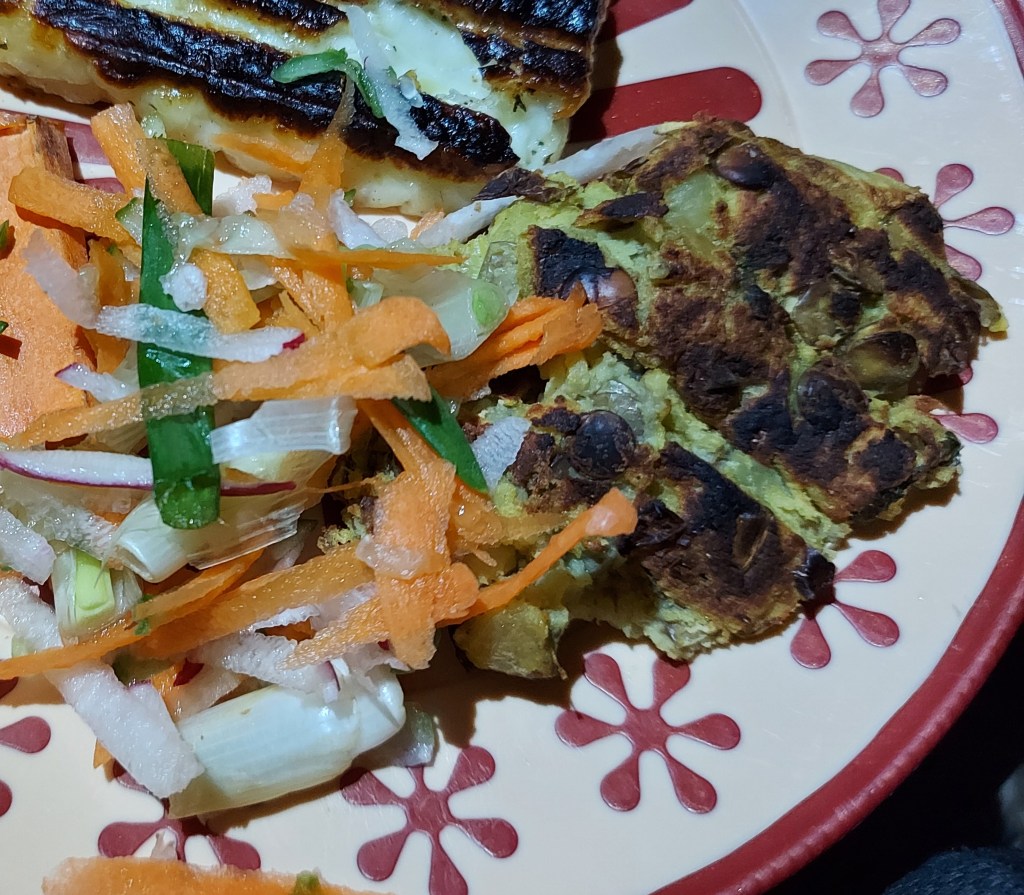
Bhaji burgers, halloumi and carrot slices on the grill
After receiving the second dose of the Sputnik V vaccine, we’re taking some tentative steps back to life in the world beyond Almaty. First stop was Bubble Gum View – a newly-opened glamping (glamour camping for the uninitiated) spot with four socially distanced pods in an apple orchard, perfect for a contact-free break. Each pod comes with its own barbecue area so it was time to kick off the 2021 season in style.
Bubble Gum View pod and bbq grill
We’ve been working on a burger that will hold up to being put on the grill and this one, which combines potato, green lentils, onion and green leaves, uses chickpea flour to bind the mix together. We served it along with some grilled halloumi and some char grilled carrot slices. For a bit more variety, when courgettes and aubergines are in season, then put some of these on the grill.
Bhaji burgers a gogo
Bhaji burger ready to eat
Ingredients (makes 8 burgers)
250 g potato
100 g green lentils
50 g chickpea flour (also known as gram or besan)
One medium onion
100 g mixed green leaves (we used radish leaves but you can use any you have handy)
One teaspoon turmeric, cumin seeds, chilli pepper and cinnamon
25 ml olive oil
Method
Soak the lentils for a few hours and then cook in 400 ml water until they begin to go mushy and have soaked up all the liquid. Cook the potatoes in a separate pan and when ready drain and mash in a large bowl.
Heat the oil in a heavy-based pan, add the cumin seeds and, when they start to pop, add the finely chopped onion and cook over a medium heat until translucent. Add the chopped mixed leaves and cook over a medium heat until they start to wilt.
Add the turmeric, chilli pepper and cinnamon and then add the cooked lentils to the mashed potato and then add the onions and leaves to the potato-lentil mix and stir well. Add the chickpea flour and combine all the ingredients.
Form the mix into golf ball sized rounds, flatten with your hand and then cook on the grill, turning after five minute or so when the burger is beginning to char. Serve immediately with other grilled vegetables, halloumi if you eat cheese and a salad of your choice.
We’re turning our attention back to Georgia to take a look at how walnuts form the backbone of the nation’s cuisine. This versatile nut can be made into a sauce, bazhe, and slathered on slices of fried aubergine or poured over a cucumber and tomato salad. It’s also used liberally in the vegetable dip, pkhali, in the thicker satsivi paste and in the red bean dish, lobio.
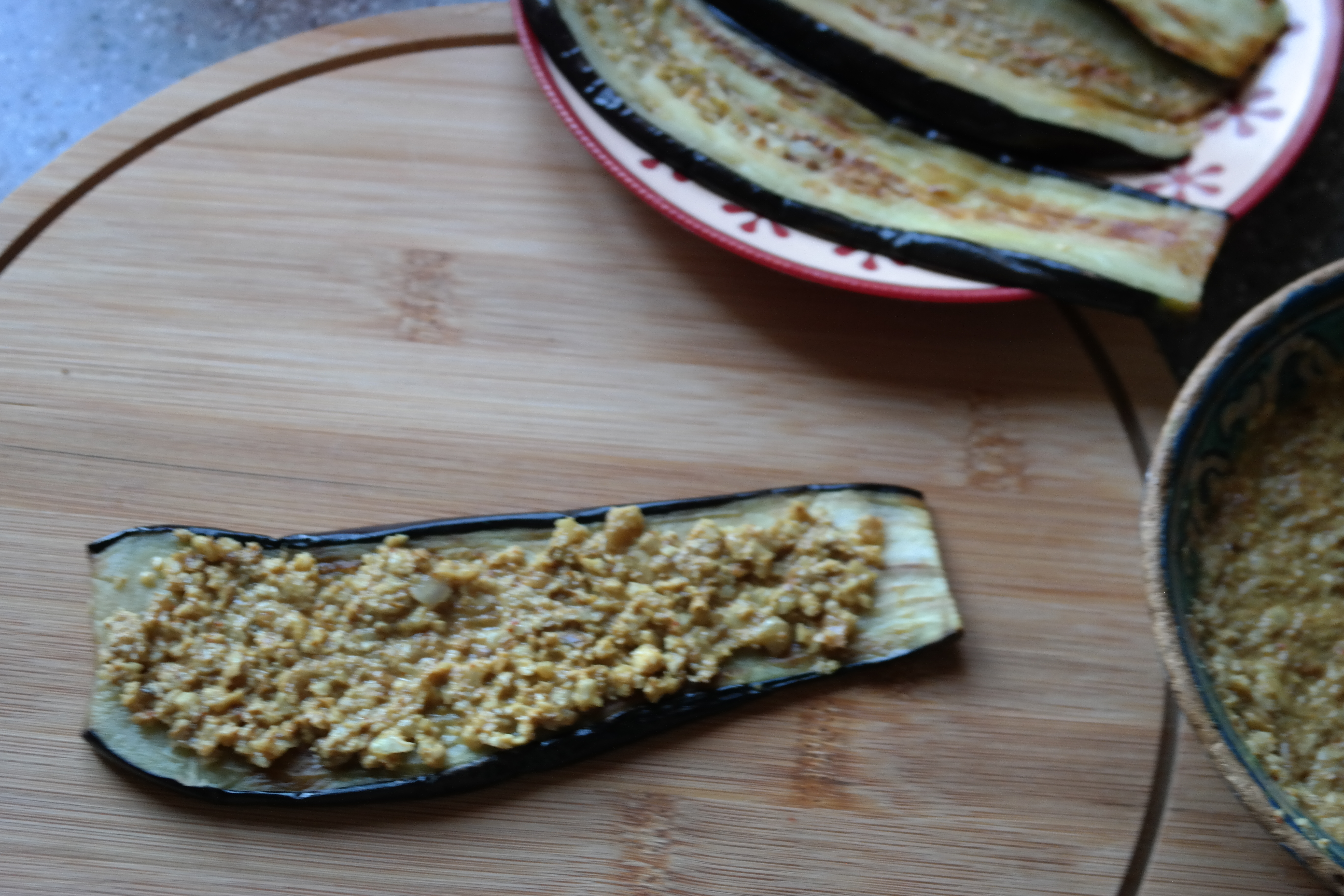
Aubergine slices stuffed with bazhe, Georgia’s versatile walnut sauce
We made some bazhe to roll up in slices of fried aubergine, a favourite from the days of visiting Georgian restaurants. These aubergine rolls, nigvziani badrijani in Georgian, are usually served at the start of the meal, especially at lengthy wine and chacha (a grape-based spirit akin to Italy’s grappa or Greece’s tsipouro) fuelled banquets, but we think they’re great to eat at anytime and they’re particularly handy for picnics or barbecues.
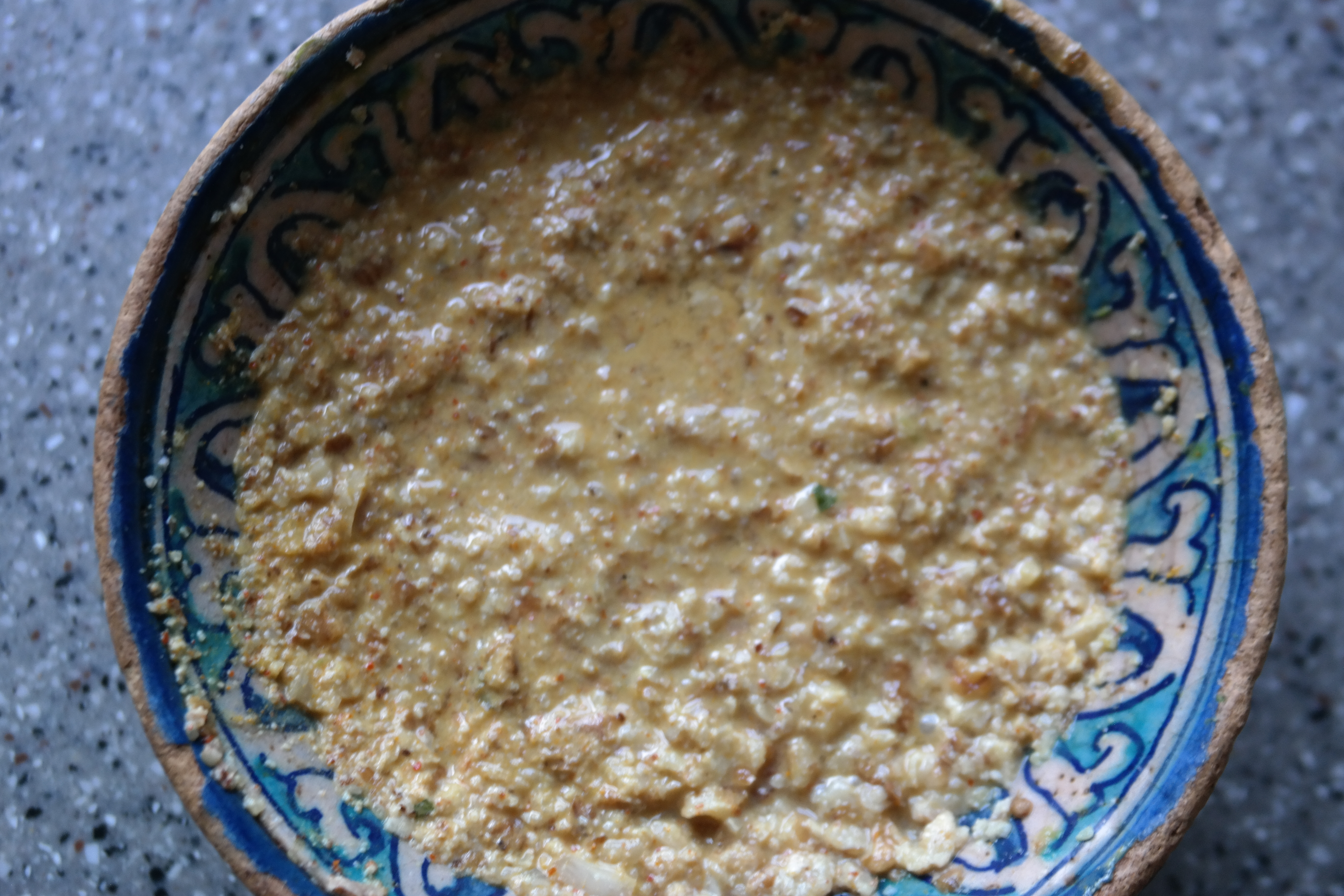
Bazhe – Georgia’s versatile walnut sauce
To remove the bitter taste of the aubergine, sprinkle with salt and leave for 30 minutes. Rinse in cold water and pat dry with kitchen roll. Make sure the oil is very hot when frying the slices – this will help them not to soak up too much fat while cooking.,
Spread the sauce on the fried aubergine slice and then roll it up
Ingredients (for 16-20 aubergine rolls)
3 or 4 large aubergines
100 ml cooking oil
100 g walnuts
2 garlic cloves
1 tablespoon vinegar (red or white wine or apple)
1 tablespoon pomegranate sauce
1 teaspoon blue fenugreek (use cumin seeds if you can’t find this)
1 teaspoon marigold flower (use turmeric if you can’t find this)
1 teaspoon coriander seeds
1 teaspoon paprika
50 ml cold water
Salt to sprinkle over the aubergine slices
Fresh basil and coriander leaves to garnish
Method
Make the walnut sauce first. Crush the nuts using the back of a wooden spoon on a wooden chopping board. This method gives the sauce a more crunchy texture. Mince the garlic and mix with the nuts in a bowl. Add the spices, vinegar and pomegranate sauce and combine all the ingredients into a smooth paste. Add water until the sauce has a more runny consistency but is still quite thick.
While the sauce is chilling in the fridge, fry the aubergine. Heat 50 ml of oil in a heavy based pan. Top and tail the aubergine and slice off a thin layer of skin on both sides. Cut the aubergine into 0.5 cm slices lengthways and then fry on both sides until golden brown. Drain on kitchen paper.
When the slices have cooled down, spread the walnut sauce onto the slice and then roll it up. Garnish with fresh herbs such as coriander and basil, and pomegranate seeds (if you have any – we’re not expecting any until autumn) and serve cold with other Georgian starters such as pkhali and crusty bread.
After a couple of months of lockdown, a bit of garden envy is setting in as we hear about people getting outside and having barbecues. With no open space in the flat other than an enclosed balcony, it was time to get inventive in order to get some char-grilled food.
It’s barbecue time!
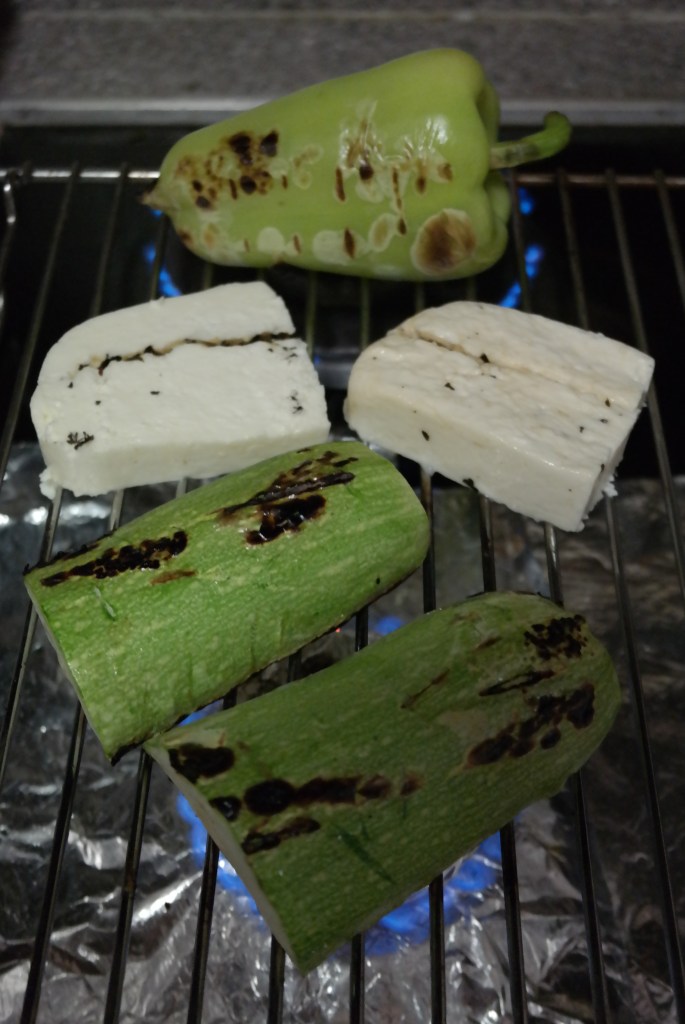
We’re fortunate to have a gas hob, so with some creative use of tin foil (some of it salvaged from last week’s chocolate fest!) and a rack from the oven, KCC came up with an improvised BBQ grill.
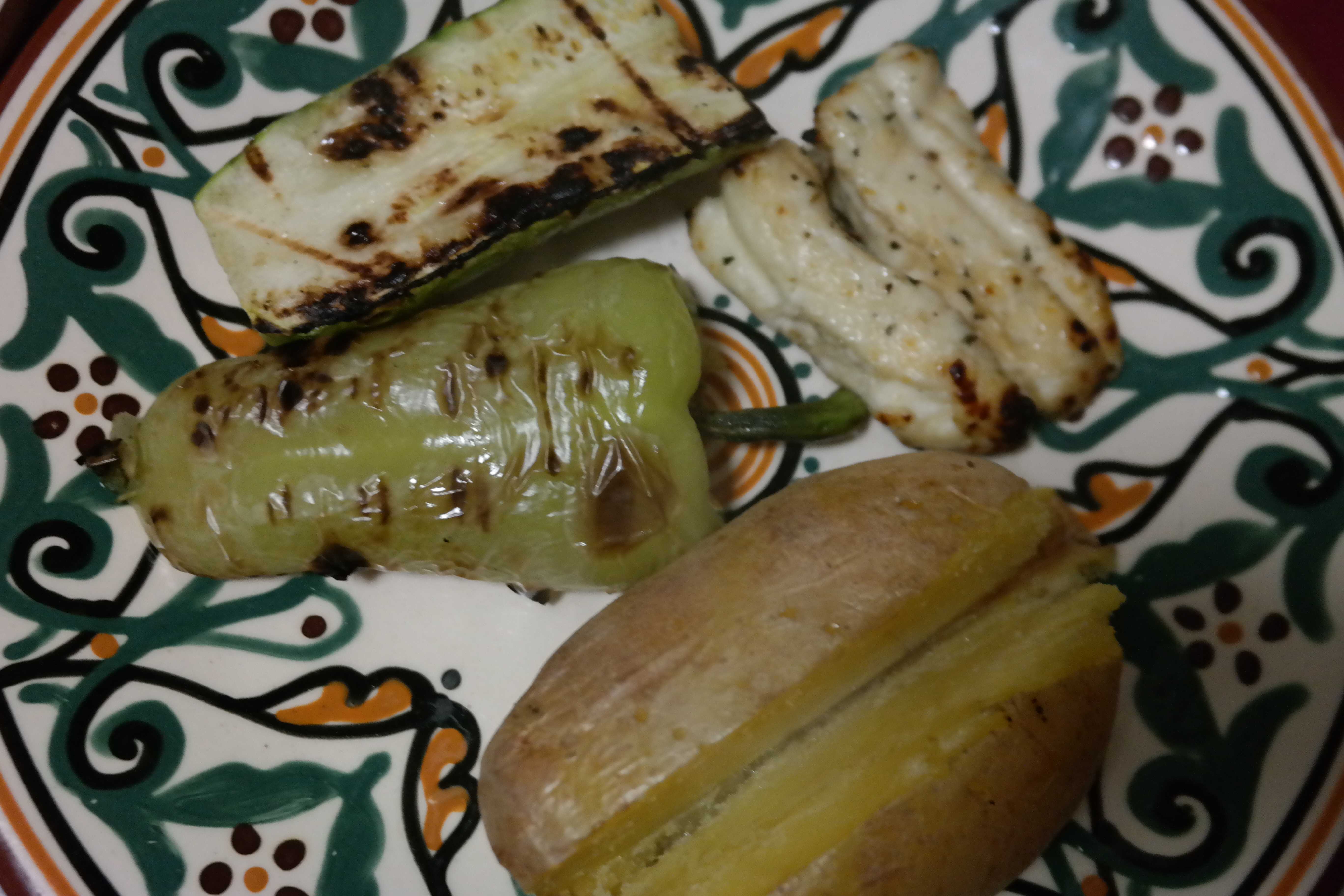
A char-grilled platter
Use whatever vegetables are available – we had courgettes and green peppers, and cook them over the open flame, turning regularly. We grilled some halloumi as well. We cooked the jacket potato in the oven and made our own chapati, a flatbread from the Indian sub-continent, to serve with the indoor barbecue.
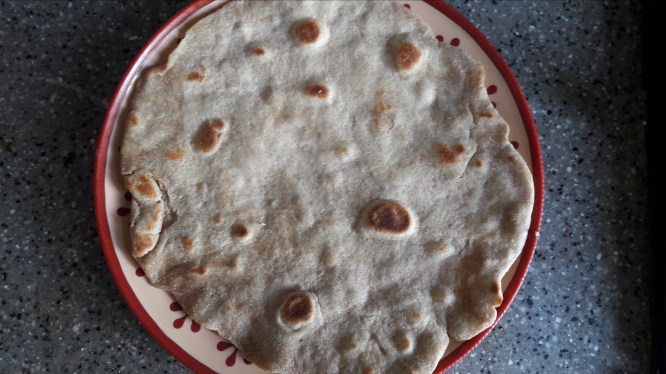
KCC’s chapati: ideal for a BBQ
Chapati recipe (makes 4):
150 g wholemeal flour
75 ml water
50 ml oil ( we used olive oil, but you can use whatever you have handy)
A pinch of bicarbonate of soda
Method
Sieve the flour into a large, ceramic mixing bowl and add the oil and bicarbonate of soda. Combine with a wooden spoon or your fingers until the mixture resembles bread crumbs. Slowly add the water until you have a fairly elastic dough – not too wet and not too dry. Knead for ten minutes and then leave covered with a tea towel for an hour or so.
Heat up a non-stick frying pan or a cast iron pan. Divide the mixture into four and form into balls. Flatten with your hands and then use a rolling pin to roll the dough into 1 mm thick rounds. Cook over a high heat on both sides until the chapatis take on a leopard-spotted look as in the picture above.



 Knidos Cookery Club