Battle of the Beans 1: Small is Beautiful

14 July 2016

When it comes to food, Turkey and Greece have more in common than they’ll often admit. They share a love for small cups of strong coffee and sweet tooths all around the Aegean Sea love baklava,  made from chopped nuts and layers of filo pastry drenched in honey.

On the savoury side, no selection of starters is complete without that famous yogurt dip made with cucumber and garlic – known as cacık in Turkish, tzatziki in Greek. A Turk’s ıspanaklı börek is a spanakopita to a Greek.

One area where there is some clear water between the Greek and Turkish kitchen is the choice of which bean to combine with a rich tomato sauce. While the Greeks favour dried giant white beans to make the dish known as gigantes plaki, in Turkey this dish is made with the smaller haricot, or navy, bean and is called kuru fasulye. Greece also has a dish made from small white beans called fasolada, but this is more of a soup.
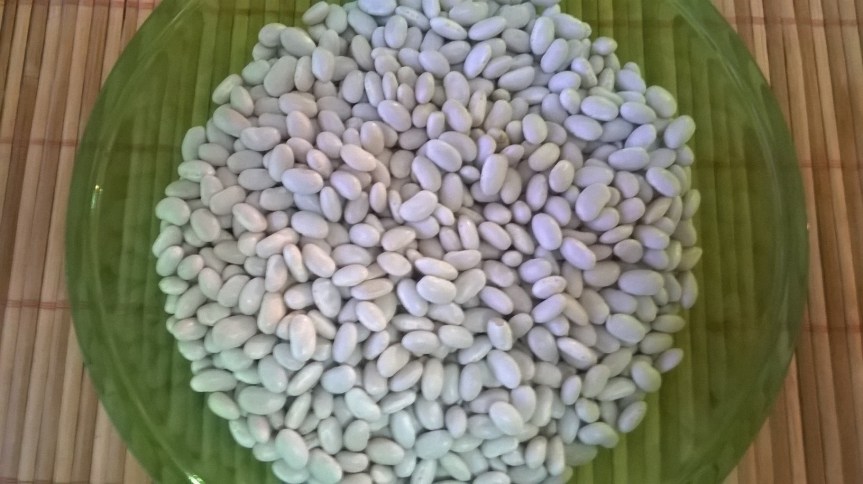
WP_20160703_20_38_46_Pro
Dried white beans awaiting a soaking

This week on Knidos Cookery Club, we’ll be looking at the Turkish version. When thinking about Turkey’s national dish the döner kebab or köfte, meatballs, generally spring to mind, but in fact it is the humble kuru fasulye that takes the honour. It’s the ultimate Turkish comfort food when served up with pilav, a portion of rice cooked with orzo pasta.

IMG_0992
Kindos Cookery Club’s take on the Turkish classic kuru fasulye and pilav

The version that came out of the Knidos Cookery Club kitchen was a bit drier than some found in Turkish cafes. For a saucier version of this dish, add more liquid during the cooking stage; perhaps 100 ml more of water or stock or reserved cooking liquid from the beans.

Ingredients (serves 3-4)

250 g dried white beans (haricot or any small white beans you can find) soaked overnight

Four medium-sized plum tomatoes

One medium-sized red onion

One green pepper (the long, thin banana-shaped one)

3-4 teaspoons red pepper paste

200 ml cooking liquid reserved from the beans (use 100 ml more for a runnier sauce)

Seasoning: pinches  of salt and pepper, a teaspoon of cumin

Fresh parsley to garnish the finished dish

50 ml olive oil

100 g orzo pasta (pasta shaped like grains of rice)

300 g washed rice

Method 

Cook the beans in a pan of water. Bring to the boil, then simmer over a lower heat for up to 45 minutes or so until the beans are cooked but not going soft. Skim off the foam periodically.

Heat the 25 ml of oil in a heavy-based pan and then add the chopped onion. Cook until translucent over a medium heat. Add the diced green pepper and keep cooking for another 4-5 minutes.

Add  the tomatoes – grate them to remove the skins. Add the red pepper paste and season with salt, black pepper and cumin. Pour in the reserved cooking water from the beans and stir. Add the beans, give it a good stir and keep it bubbling away for 15 minutes or so. You want the beans to stay firm.

To make the rice, heat 25 ml olive oil in a heavy-based pan then add the orzo and stir. Cook until the orzo starts to turn a golden colour. Now add the drained, washed rice and keep stirring. When the rice is coated with oil, pour in water or stock so the rice is covered by about 1 cm of liquid. Add salt if required.

Turn the heat down and cook until all the water is absorbed. turn off the heat and allow it to stand for 10 minutes or so and cover with a clean tea towel or some kitchen roll and put the lid on.

Serve the rice and beans together, garnishing the beans with some chopped parsley. have some crusty bread like a baguette on hand to soak up the juices.


The Turk Brekkie Club

7 July 2016

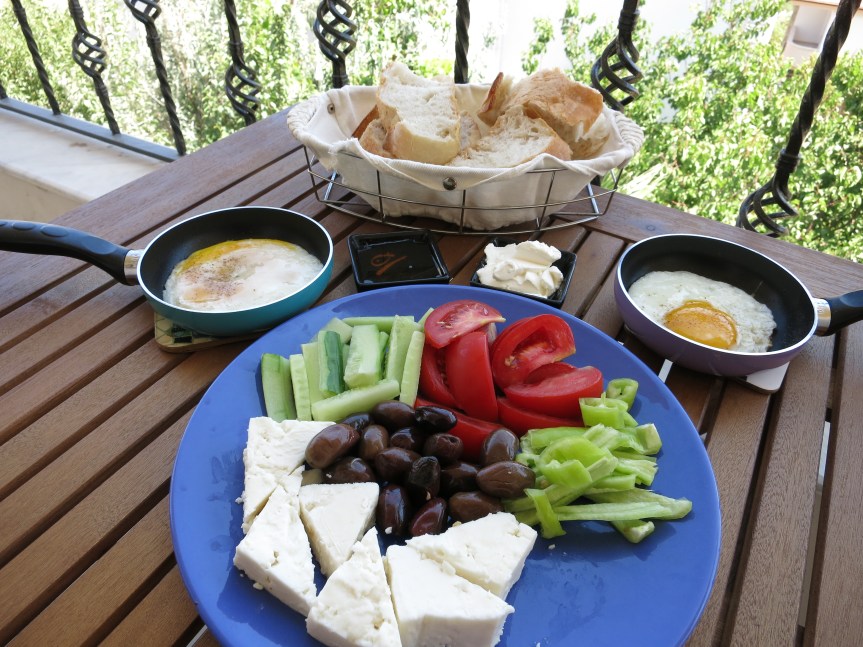
Turkey has turned the first meal of the day into an art form with ever-more elaborate spreads of cheeses, jams, honey, olives, tomatoes, cucumbers, peppers and egg dishes spilling across the table with different regions of the country bringing local additions to the mix.

IMG_0964
Turk Brekkie!

At the heart of the breakfast there is usually an egg dish – often a soft-boiled or fried egg, or a speciality dish such as menemen, a hearty scramble of eggs, onions peppers and tomatoes.

In Datça, the köy, or village, breakfast can come with lashings of local honey and gözleme, a pancake filled with  white cheese and fresh herbs. The Van Breakfast, originating in the east of the country, has conquered the rest of Turkey with its array of 20 or more dishes. It  includes otlu peynir, a herb-infused cheese, martuğa, made from flour, butter and egg, and kavut, a porridge made from cornmeal and ground barley.

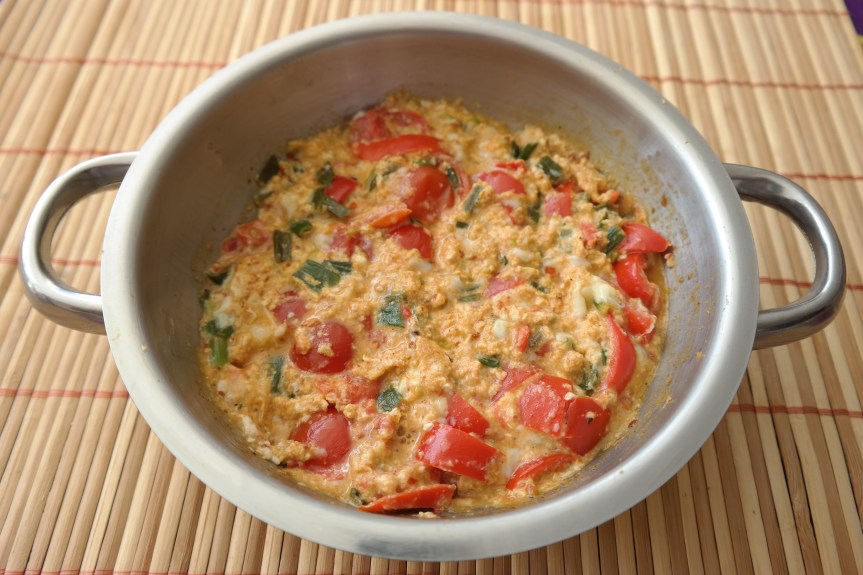
SAMSUNG CSC
Menemen

This week on Knidos Cookery Club, we’ll be cooking up menemen. I first encountered this breakfast-time treat when staying in Izmir, on the Aegean coast. Walking out of my hotel, I was met be the mouth-watering aroma of eggs bubbling away with peppers and tomatoes.  Street hawkers, hunched over single-burner camping stoves, were busily whipping up pans of scrambled delight.

Ingredients (for one hearty serving)

Two eggs

One spring onion

One small red or green pepper (if you like it hot, use a chili pepper)

One small tomato

Seasoning: pinches of salt, black pepper, cumin and chill pepper flakes

Parsley for garnishing

Olive oil for frying

Method

Heat the oil in a small frying pan. Add the diced spring onion and cook over a medium heat until starting to brown. Add the diced tomato and diced pepper and season with salt, black pepper, cumin and chill pepper flakes.

Cook until the peppers begin to soften then reduce to a low heat and crack in the eggs. Keep stirring as you would for scrambled eggs. When the egg begins to set, remove from the heat – it’ll carry on cooking in the pan. Garnish with some chopped parsley.

Serve immediately with crusty bread and a plate of white cheese, honey, olives, tomatoes, cucumbers and peppers for the full-on Turk brekkie effect.


Sundowner Time

2 June 2016

Welcome to the tenth edition of Knidos Cookery Club! This calls for a celebration and this week we’ll be looking at some snacks and starters commonly associated with Turkey’s favourite alcoholic tipple, rakı.

IMG_0383
A classic sundowner set with rakı, white cheese and cucumber

Rakı is a member of the family of anise-flavoured drinks common to many countries with coastlines on the Mediterranean  Sea – ouzo in Greece, pastis in France, sambuca in Italy, arak in Lebanon and chinchón in Spain.

When rakı is diluted with water, it turns a milky white colour leading to its Turkish nickname, aslan sütü, or lion’s milk. It’s drunk as an aperitif and is accompanied by white cheese and cucumber. In spring and early summer, it’s often served with tart, sour green plums, known as can erik.

SAMSUNG CSC
Sour plums

Rakı also accompanies a long, lazy lunch or evening meal with the drink served alongside a selection of mezeler, or appetizers that include, among many others, a spicy tomato and chili paste, acılı ezme, yogurt, grated cucumber and crushed garlic, cacık, and semizotu, purslane mixed with yogurt. These starters are usually followed by a grilled fish course and the meal is finished with slices of fresh melon.

SAMSUNG CSC
The new season’s carrots have arrived!

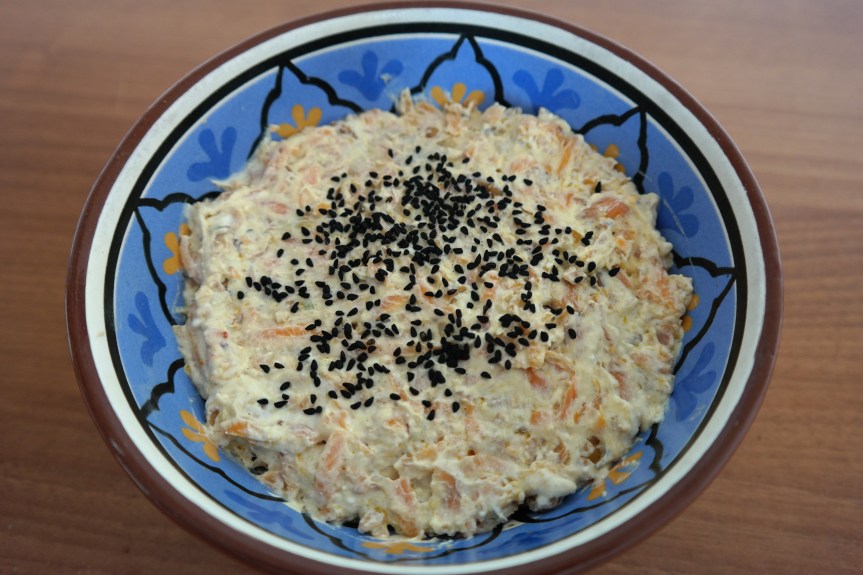
We couldn’t resist these great carrots in the market last week, and they’ve inspired this meze to go with a glass or two of lion’s milk. This week’s recipe is for cezizli havuç tarator, a combo of walnuts, carrots and yogurt.

SAMSUNG CSC
Carrot and Walnut Tarator

Ingredients (serves 3-4)

200 g baby carrots

Eight walnuts

200 ml Greek (strained) yogurt

One or two garlic cloves

Splash of olive oil

Salt, black pepper, dried oregano, chili flakes, cumin and nigella seeds

Method

Heat the olive oil in a frying pan. Clean and grate the carrots (keep the carrot tops to make this pesto) then cook the grated carrot over a low heat for ten minutes or so to help release the natural sugars in the carrots. While it’s cooking, keep stirring and add pinches of salt, black pepper, dried oregano, chili flakes and cumin.

Allow the carrots to cool then add the crushed walnuts (use a blender or a rolling pin to crush them), as much garlic as you prefer and the yogurt. Blend together well and drizzle with nigella seeds.

Serve as a dip with crackers and slices of red pepper and cucumber along with a glass of rakı, water and ice.


Swiss Chard: No Fence Sitting Allowed

26 May 2016

Swiss chard, a surprisingly divisive green leaf, is in the spotlight on Knidos Cookery Club this week.

SAMSUNG CSC
Swiss chard – friend or foe?


Swiss chard, pazı  in Turkish, is one of those love it or hate it vegetables. In a restaurant in Istanbul a few years ago, a Turkish friend was fine with the spinach order but when I suggested the pazı side dish he looked at me as if I had gone mad. He refused to countenance eating it, leaving these particular green leaves to the three foreigners he was with.

On the positive side, in Croatia last summer friends from HaMAS in the UK introduced me to blitva, a local take on this leafy green vegetable that sees it sautéed with potatoes and garlic.

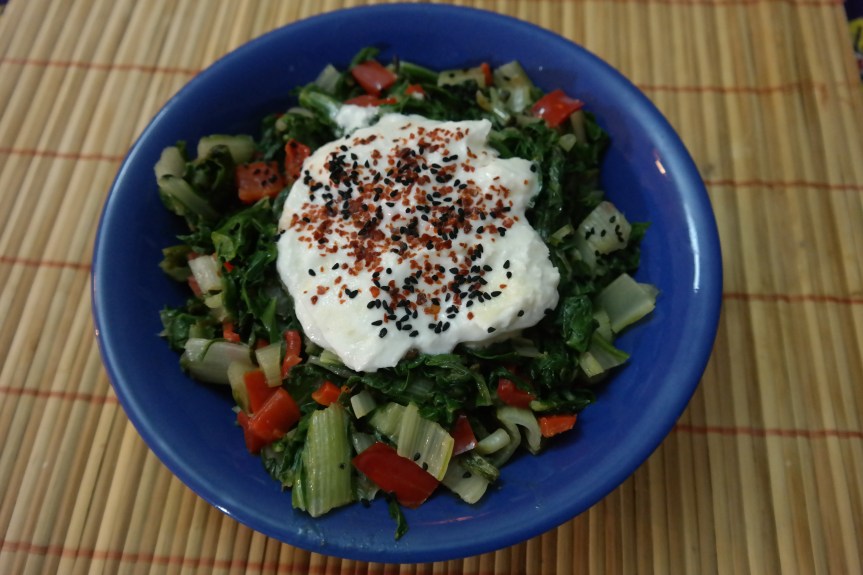
Here at Knidos Cookery Club we love it, especially when the vitamin-packed leaves are combined with red peppers, added more for colour than heat, and topped off with a healthy dollop of natural yogurt, to re-create a dish that is a mainstay in Turkey’s home-cooking lokanta restaurants.

SAMSUNG CSC
Turkish-style Swiss chard with red pepper and yogurt

Try this recipe yourself to see which side of the Swiss chard fence you fall on.

Ingredients (serves 3-4)

One bunch of Swiss chard (approx 500g)

Three spring onions

Two medium-sized red peppers

Dash of olive oil

Pinches of cumin, cinnamon, salt and black pepper

One bay leaf

Dollop of yogurt

Sprinkle of chili flakes and nigella seeds

Method

Heat the olive oil in a frying pan and when hot add the finely chopped spring onions.

After a few minutes over a medium heat, add the finely chopped red pepper and the bay leaf. Season with pinches of cumin, cinnamon, salt and black pepper.

Clean the Swiss chard thoroughly, shake dry and then roughly chop the leaves and stalks. After cooking the red peppers for five minutes, add the Swiss chard to the pan and stir continuously. You shouldn’t need to add any extra water. Continue cooking and stirring until the Swiss chard begins to soften – 8-10 minutes or so.

Serve with a dollop of yogurt and sprinkle the chili flakes and nigella seeds over this.