Moussaka Mania

8 June 2017

As the UK continues its downward plunge to become the latest contender for the mantle of Europe’s most basket case economy, we’re turning our attention to the current holder of that title, Greece, for culinary inspiration this week in the form of moussaka, a great comfort food. We’ll be needing lots of comfort in the coming months as the lucky winner of today’s UK election navigates a course through the choppy waters of Brexit.
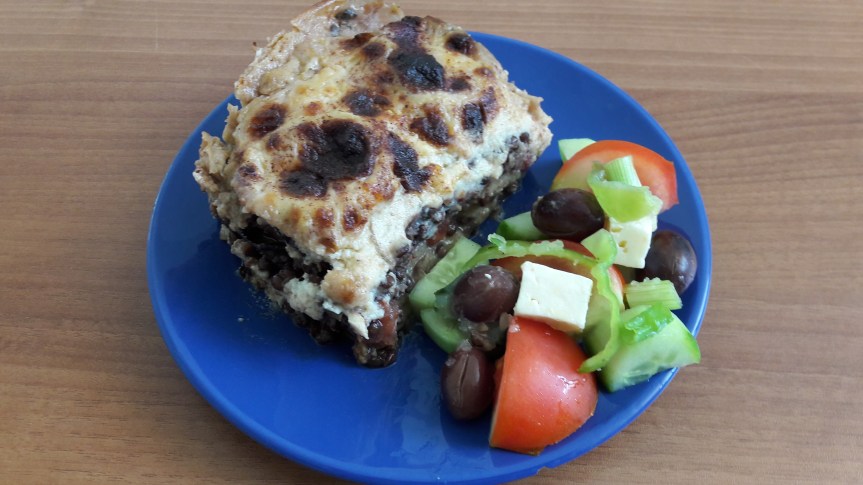
20170531_131610

Summer is here, and with Datça market overflowing with an array of fresh produce, Knidos Cookery Club is moving back to weekly posts for the foreseeable future. The aubergine is a vegetable that has had surprisingly little coverage in these pages, so it’s high time that was rectified.
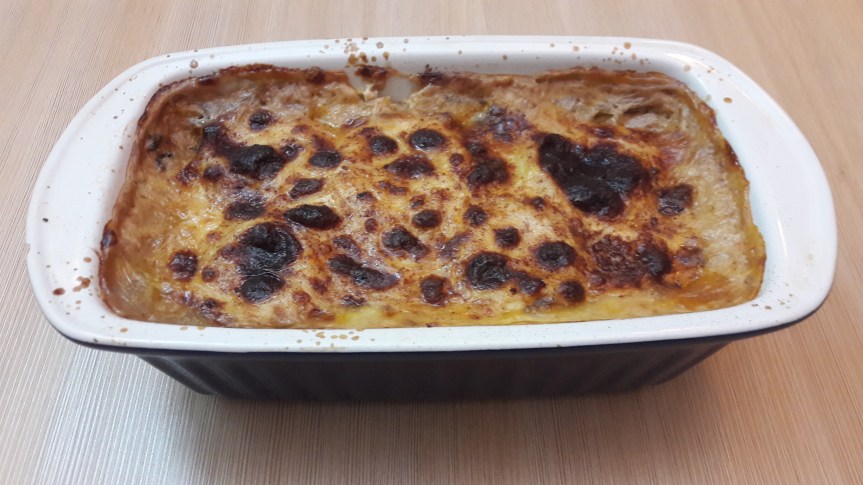
20170530_221006

Moussaka is a perennial Greek favourite that is great fresh from the oven or eaten cooled down, allowing the flavours some time to collide. It combines layers of fluffy  potato and silky aubergine covered with a tomato-rich ragù, all topped with a creamy white béchamel sauce.

We’ve used black lentils in place of minced lamb to make our veggie take on moussaka, although any lentils should work well in this dish. It pairs excellently with a classic Greek salad of tomato, cucumber, onion, green pepper, olives and white cheese.

Ingredients (for 3-4 servings)

300 g aubergines

300 g potatoes

250 g tomatoes

100 g black lentils (or any other lentil)

3 spring onions

1 garlic clove

400 ml vegetable stock

100 ml red wine

1 teaspoon of cinnamon

1 teaspoon of dried sage

1 bayleaf

Pinch of black pepper

Pinch of red chili flakes

50 ml olive oil

For the white sauce:

50 ml olive oil

50 g flour

500 ml milk

5 peppercorns

1 bayleaf

75 g cheese (feta or  any crumbly white cheese)

Method

Heat 20 ml of olive oil in a heavy-based pan, chop the spring onions and garlic clove and add to the pan. Cook for five minutes then add the washed lentils and stir. Add the stock, bring to the boil then simmer for 20 minutes or so until most of the liquid is absorbed.

Pre-heat the oven to 200 c / gas mark 6. Cut the potatoes into one cm slices and boil for five minutes in a pan of water. Drain immediately and allow to cool. While the potatoes are boiling, chop the aubergine into 1 cm slices. If you like, you can coat the aubergine slices with a little salt, leave to stand for 10 minutes and then rinse. This should make them less bitter and remove excess moisture.

Place the potato slices in an oven dish and coat with 15 ml olive oil and stir to coat thoroughly. Place the aubergine slices into a separate oven dish and pour 15 ml of olive oil over them. Put both the dishes into the oven and bake for 30-40 minutes or until the potatoes are a golden brown colour and the aubergine slices beginning to char.

Add the peeled, chopped tomatoes, 100 ml red wine, bayleaf, cinnamon, sage and pepper to the lentils and cook over a low heat for 45 minutes until the sauce has reduced by about half.

While this is cooking, make the white sauce. Heat the oil in a heavy-based pan and stir in the flour to make a roux of a runny consistency. Slowly stir in the milk and add the peppercorns and bayleaf, stirring constantly with a wooden spatula or spoon or a whisk over a low heat. When the sauce begins to thicken, add the grated cheese and continue stirring until the sauce sets.

Now it’s time to assemble the moussaka. Pour half the lentil ragù over the potatoes to coat, add a layer of aubergines and pour over the rest of the ragù. Place the remaining aubergine slices over this and then pour the white sauce over these.

Sprinkle with red chili flakes and place in the oven and bake at 180 c /gas mark 5 for an hour or so – the top should be going a nice spotted brown colour as in the photo above.

Allow to cool and serve with a classic Greek salad made from tomato, cucumber, onion, green pepper, olives and white cheese, liberally dressed with olive oil and thyme.
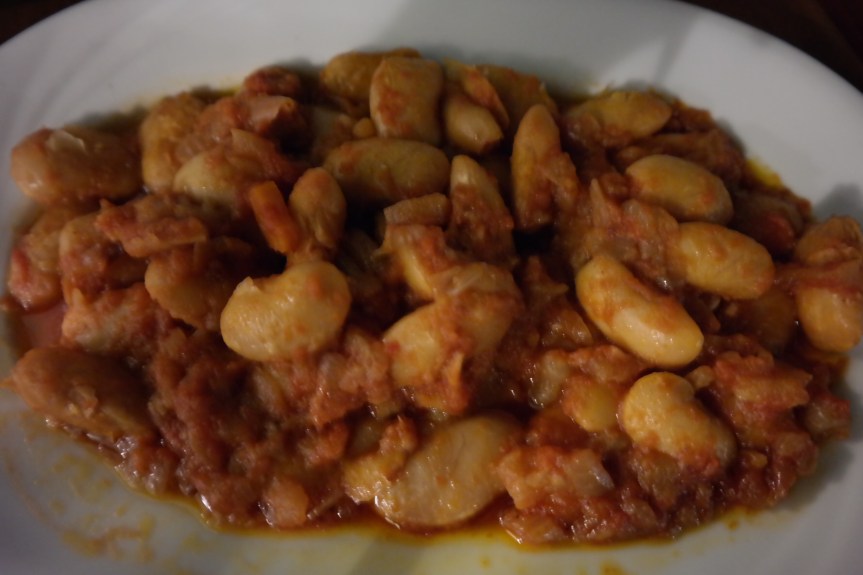
Battle of the Beans 2: Land of the Giants

SAMSUNG CSC

Giant beans served up at Aigli restaurant, Kos Town, Greece

21 July 2016

When it comes to food, Turkey and Greece have more in common than they’ll often admit. They share a love for small cups of strong coffee and sweet tooths all around the Aegean Sea love baklava,  made from chopped nuts and layers of filo pastry drenched in honey.

WP_20160720_23_55_39_Pro
Baklava and coffee a la Turca

On the savoury side, no selection of starters is complete without that famous yogurt dip made with cucumber and garlic – known as cacık in Turkish, tzatziki in Greek. A Turk’s ıspanaklı börek is a spanakopita to a Greek.

Last week’s Knidos Cookery Club looked at Turkey’s signature bean dish, kuru fasulye, using haricot beans. This week, we will attempt to make the brasher Greek version, gigantes plaki, which uses the biggest beans you can get your hands on and bakes them in a thick tomato sauce in the oven

There’s something about the humble bean that makes it a great comfort food when your body craves something plain and wholesome. After a period of indulging in Greece’s myriad takes on feta cheese: a slab placed atop a horiatiki salad, deep fried in a honey and sesame seed coating or wrapped in layers of flaky filo pastry, feta fatigue can sometimes set in.  If this happens, then there’s nothing like a bowl of giant beans served with a light green salad to bring your appetite back to life.

Butter beans, also called lima beans, work well in this dish, with their insides going soft and mushy while the exterior remains firm. Reserve some of the liquid (around 200 ml) from cooking the dried beans to use for these baked beans with an edge. A secret ingredient that gives this dish it’s distinctive taste is celery.

Ingredients (serves 5-6 generous portions)

250 g dried butter (lima) beans soaked overnight

Two medium-sized red onions

Two small stalks of celery

One or two cloves of garlic

Three medium-sized plum tomatoes

A small bunch of parsley

Pinches of salt, pepper and cumin

One teaspoon of cinnamon

One teaspoon dried thyme

50 g olive oil

Method

Boil the butter beans over a low heat for an hour or so until they are tender but not falling apart. Stick around and every five minutes or so scoop off the foam that forms while the beans are cooking. Drain the beans, reserving 200 ml of the cooking water for use later.

While the beans are cooking, prepare the sauce. Heat the olive oil in a frying pan and add most of the finely diced onion (save some slices to sprinkle over the cooked beans) and the chopped garlic. Fry until translucent and then add the finely chopped celery. Cook for five minutes or so and then add the parsley, thyme and cinnamon and season with salt, pepper and cumin.

Peel the tomatoes (dunking them in boiling water for 30 seconds and then into cold water will help loosen the skins) and chop finely and add to the other ingredients in the frying pan and cook for ten minutes.

Pour the beans into a large baking dish, cover them with the sauce and add the reserved cooking liquid. Bake in an oven pre-heated to 180 °C (gas mark 5) for one hour. The beans should still be fairly firm on the outside but mushy and soft on the inside. Leave in the oven for longer if the insides are firm other than mushy.

Allow to cool for 15 minutes or so and then serve with a green salad and crusty bread to soak up the juices.

SAMSUNG CSC
SAMSUNG CSC

T

Battle of the Beans 1: Small is Beautiful

14 July 2016

When it comes to food, Turkey and Greece have more in common than they’ll often admit. They share a love for small cups of strong coffee and sweet tooths all around the Aegean Sea love baklava,  made from chopped nuts and layers of filo pastry drenched in honey.

On the savoury side, no selection of starters is complete without that famous yogurt dip made with cucumber and garlic – known as cacık in Turkish, tzatziki in Greek. A Turk’s ıspanaklı börek is a spanakopita to a Greek.

One area where there is some clear water between the Greek and Turkish kitchen is the choice of which bean to combine with a rich tomato sauce. While the Greeks favour dried giant white beans to make the dish known as gigantes plaki, in Turkey this dish is made with the smaller haricot, or navy, bean and is called kuru fasulye. Greece also has a dish made from small white beans called fasolada, but this is more of a soup.

WP_20160703_20_38_46_Pro
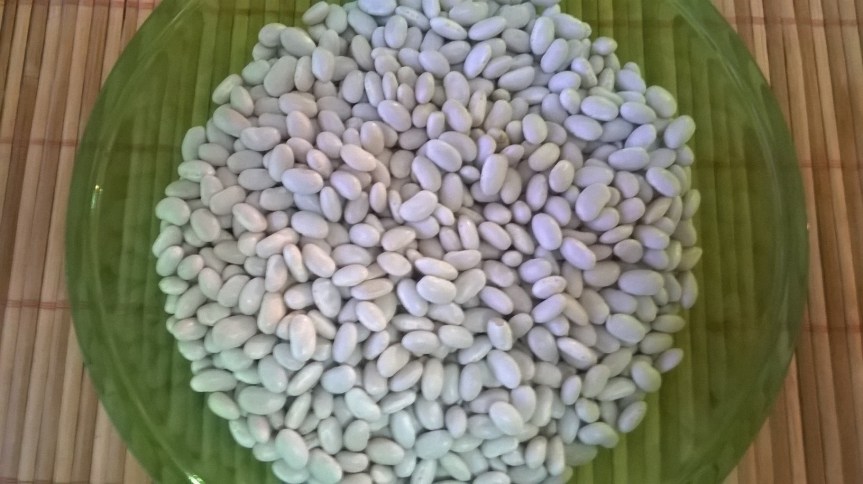
Dried white beans awaiting a soaking

This week on Knidos Cookery Club, we’ll be looking at the Turkish version. When thinking about Turkey’s national dish the döner kebab or köfte, meatballs, generally spring to mind, but in fact it is the humble kuru fasulye that takes the honour. It’s the ultimate Turkish comfort food when served up with pilav, a portion of rice cooked with orzo pasta.

IMG_0992
Kindos Cookery Club’s take on the Turkish classic kuru fasulye and pilav

The version that came out of the Knidos Cookery Club kitchen was a bit drier than some found in Turkish cafes. For a saucier version of this dish, add more liquid during the cooking stage; perhaps 100 ml more of water or stock or reserved cooking liquid from the beans.

Ingredients (serves 3-4)

250 g dried white beans (haricot or any small white beans you can find) soaked overnight

Four medium-sized plum tomatoes

One medium-sized red onion

One green pepper (the long, thin banana-shaped one)

3-4 teaspoons red pepper paste

200 ml cooking liquid reserved from the beans (use 100 ml more for a runnier sauce)

Seasoning: pinches  of salt and pepper, a teaspoon of cumin

Fresh parsley to garnish the finished dish

50 ml olive oil

100 g orzo pasta (pasta shaped like grains of rice)

300 g washed rice

Method 

Cook the beans in a pan of water. Bring to the boil, then simmer over a lower heat for up to 45 minutes or so until the beans are cooked but not going soft. Skim off the foam periodically.

Heat the 25 ml of oil in a heavy-based pan and then add the chopped onion. Cook until translucent over a medium heat. Add the diced green pepper and keep cooking for another 4-5 minutes.

Add  the tomatoes – grate them to remove the skins. Add the red pepper paste and season with salt, black pepper and cumin. Pour in the reserved cooking water from the beans and stir. Add the beans, give it a good stir and keep it bubbling away for 15 minutes or so. You want the beans to stay firm.

To make the rice, heat 25 ml olive oil in a heavy-based pan then add the orzo and stir. Cook until the orzo starts to turn a golden colour. Now add the drained, washed rice and keep stirring. When the rice is coated with oil, pour in water or stock so the rice is covered by about 1 cm of liquid. Add salt if required.

Turn the heat down and cook until all the water is absorbed. turn off the heat and allow it to stand for 10 minutes or so and cover with a clean tea towel or some kitchen roll and put the lid on.

Serve the rice and beans together, garnishing the beans with some chopped parsley. have some crusty bread like a baguette on hand to soak up the juices.


You Like Tomato, I Like Ntomato

23 June 2016

Knidos Cookery Club’s fact-finding mission to Greece continues with a look at the contribution of the tomato to local culinary culture.

It may be hard to believe, but it is only in the last two hundred years that the tomato has established itself as a key ingredient in Greek kitchens.

Kos June 2016 025
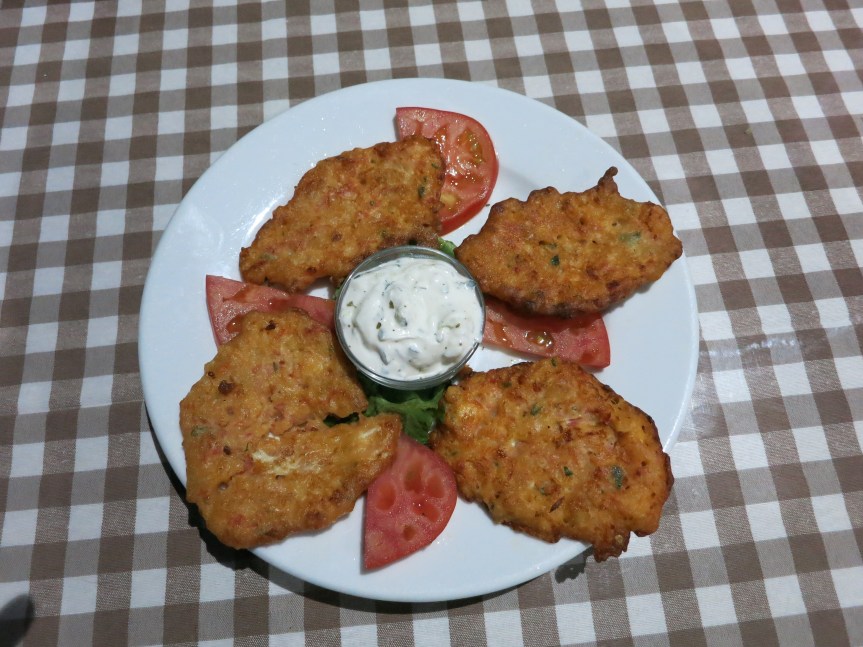
A plate of tomato fritters from Kos, Greece

It’s found in the classic horiatiki salad that pairs it with cucumber, onion, green pepper, olives and feta cheese. It plays a key role in gemista, platters of vegetables stuffed with rice.

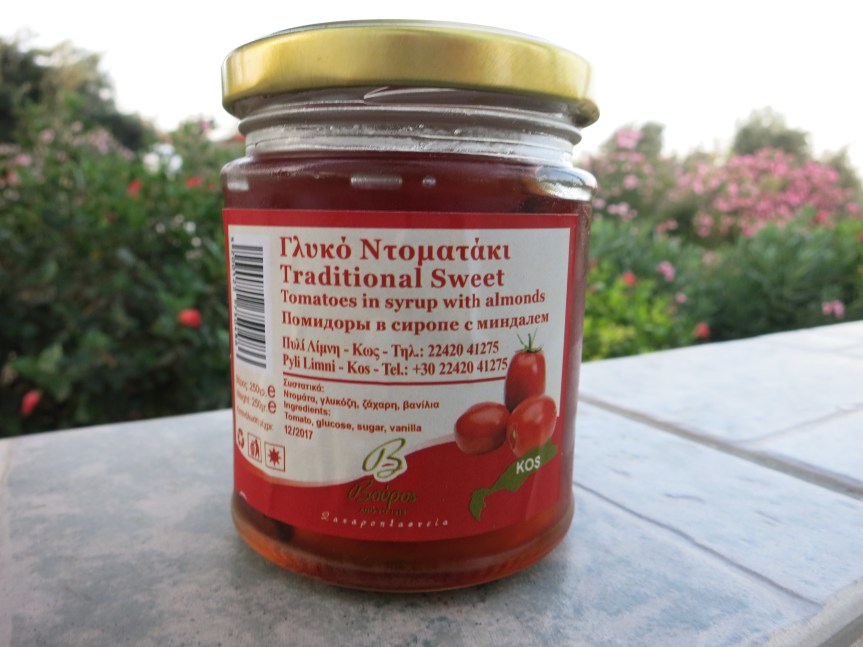
On the island of Kos the sweet local varieties of tomatoes are preserved in syrup or made into jam that makes an orange marmalade rival for a slice of toast.

Kos June 2016 041
Tomatoes preserved in syrup with almonds from Kos, Greece

In Greece the tomato is called ντοματο, pronounced with a ‘d’ sound at the beginning. Modern Greek has no single letter for the ‘d’ sound and uses the letters for ‘n’ and ‘t’ to make this sound.

This week Knidos Cookery Club is serving up tomato fritters, a close cousin of Turkey’s mücver. We’ve used plum tomatoes as they tend to be a bit less juicy than other varieties. The mix needs to find a balance between not being too dry or too wet for the fritters to hold together in the pan.

Ingredients (makes 10-12 fritters)

500 g plum tomatoes

One medium-sized red onion

Fresh herbs – small bunches of parsley, basil and mint or a teaspoon of dried parsley, basil and mint

100 g plain flour

Seasoning mix – pinches of salt and pepper, one teaspoon of cinnamon and one of cumin

Olive oil for frying

Method

Grate the tomatoes and mix with the herbs and flour until you have a mix that is neither too dry nor too wet.

Heat the oil in a frying pan and when hot add fritters made into walnut-sized shapes and flatten with a fish slice or spatula.

Cook on both sides until golden brown in colour and serve with a sauce of natural yogurt, grated cucumber and garlic.