Lobiani Sausagiani

9 March 2017

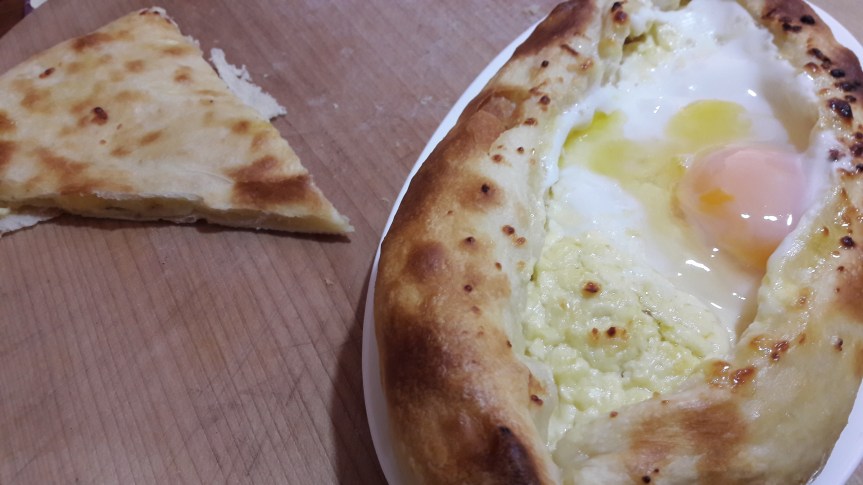
This time round on Knidos Cookery Club we’re off to Turkey’s far north-east corner and across the border into Georgia. This mountainous country shares some dishes in common with the people of Turkey’s Black Sea coast such as the bread and cheese concoction known as khachapuri in Georgia, pide in Turkey.
20170309_152546


Georgian dishes rely on both fresh and dried local ingredients. The diet is generally meat-heavy – this point was crudely pushed home last year when outraged sausage-wielding activists attacked Kiwi Café, a vegan café in Georgia’s capital Tbilisi, throwing chunks of meat and fish at diners, but there are lots of options for non-carnivores as its cuisine also features a wide range of veggie dishes.

Georgia’s location on a number of east-west trade routes heading through the Caucasus Mountains has seen different influences make their mark on its  eating culture over the years, with spices playing a key role.
20170218_135303
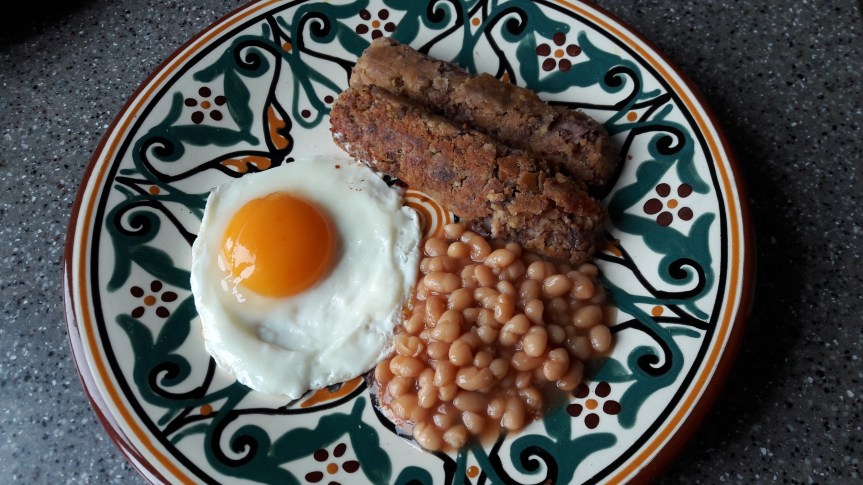
KCC’s new brunch treat –lobiani sausagiani

Dried beans, or lobio, walnuts, pomegranates and spices like coriander and blue fenugreek give a distinctive taste to the local fare. Cheese also features strongly on the Georgian table, from the versatile sulguni, an elastic, brined cheese akin to mozzarella, that can be deep fried to the fresh white imeruli cheese.

Georgia’s dried red beans are made into a dish called lobio, that, depending on the region of the country it’s prepared in, can be like a soup, a stew or re-fried beans. It is usually cooked in a clay pot and sometimes comes with a thin layer of bread as a cover on top. Mashed red beans are also cooked inside bread in a dish called lobiani.

We’ve decided to do our own take on a lobio dish, and to get our own back on those meat-wielding activists, by making a Georgian-influenced veggie sausage, to be served as part of a brunch or main meal.

Ingredients (makes 8-10 sausages)

200 g dried red beans, soaked overnight

100 g red lentils (one cup)

150 g fine bulgur wheat (1.5 cups)

50 g chopped walnuts

1 teaspoon dried coriander

1 teaspoon cumin

1 teaspoon black pepper

1 teaspoon red chili flakes

25 ml olive oil for frying the sausages

1 tablespoon plain flour

Method

Soak the beans overnight and then cook for an hour or so over a low heat until the beans are cooked and beginning to break up. Drain and reserve the cooking water , then mash the beans roughly.

Wash the lentils until the water goes clear and then place in a pan with the water from the cooked beans – add more water so the lentils are covered by 2 cm of liquid. Bring to the boil and simmer over a low heat for 20 minutes or so. The lentils should be going mushy and there should be about 1 cm of water covering the lentils – add more water if necessary.

Add the washed bulgur wheat to the cooked lentils and blend well. Allow to stand for 30 minutes or so and then add the toasted, chopped walnuts and the mashed beans. Then grind the spices together and add to the mix. Leave overnight in the fridge to allow the flavours to blend.

Sprinkle some flour on a chopping board and roll lemon-sized portions of the mix  into sausage shapes, coating evenly with flour. Fry the sausages in the oil until browned on the outside and then serve with baked beans and a fried egg for a top brunch.
Avocado + Egg = Brunch Heaven

9 February 2017

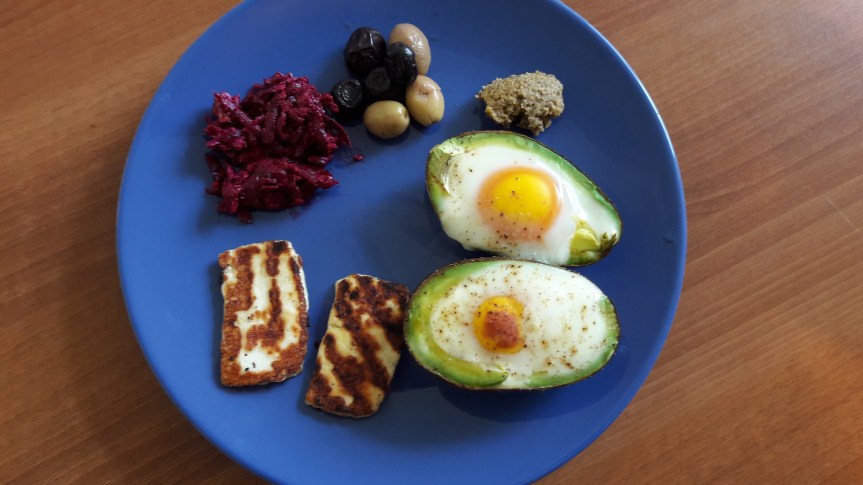
This week at Knidos Cookery Club we have a guest post that combines two of our all-time fave foods: avocado and egg, dished up with olives, beetroot with walnuts and halloumi cheese.

20170115_143020

Avocados love the mild winters of the Knidos region as the shores of the Mediterranean Sea provide ideal growing conditions for this large green fruit that’s packed with nutritious vitamins and healthy fats.

Our guest chef Jasha, who has worked in the hospitality industry in the UK, has kindly agreed to share her favourite way of combining eggs with avocado. Served up with pan-seared halloumi, olives and grated beetroot with walnut, this great dish sent us into brunch heaven!

Ingredients 

One avocado per person

Two eggs per person

250 g pack halloumi cheese cut into four slices (enough for two people)

Black and green olives

A few scoops of olive paste

One grated large beetroot (raw or cooked) mixed with 50 g crushed walnuts and two teaspoons of sour cream or natural yogurt

Black pepper and red chili flakes

Method

Slice the avocados in half and remove the stone. Be careful not to stab yourself in the hand as I once did – it’s apparently quite a common kitchen injury. Scoop out some of the flesh to leave a hollow space for the egg.

Place the avocado halves in a baking dish, round side down, and pour an egg into the scooped out shell. Grind some black pepper over each egg and bake the avocados in an oven pre-heated to to 200 c /gas mark 6 for 20 minutes or until the underside of the eggs are cooked. Finish the eggs off under a grill and then season with some red chili flakes and a grind of black pepper.

While the eggs are cooking, fry the halloumi slices in a non-stick or heavy-based frying pan until browned on both sides.

Serve the avocados immediately with the pan-seared halloumi, beetroot and walnuts, olive paste and olives and some doorsteps of fresh bread.


Double Meloned Squeaky Cheese

1 September 2016

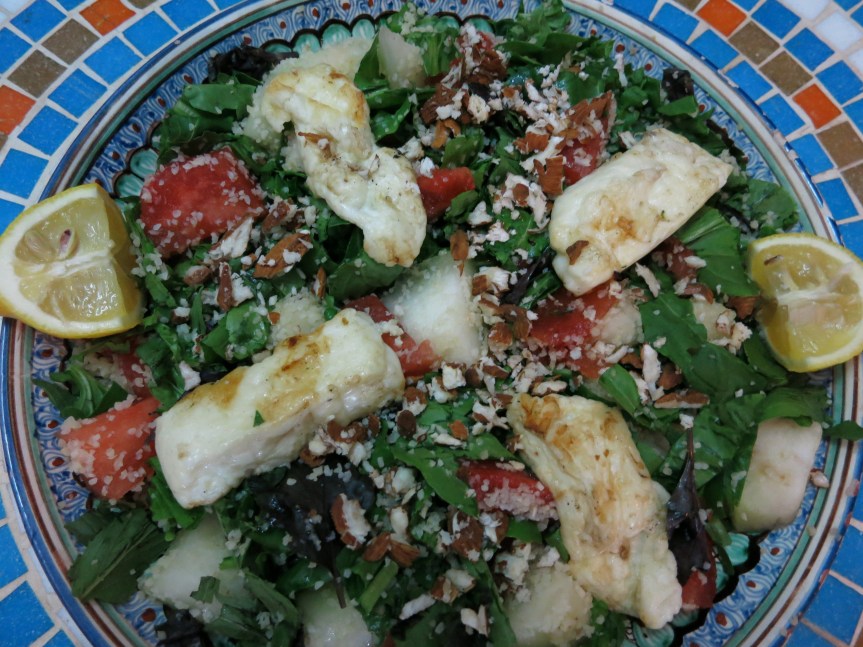
This summer has seen a rash of articles in the UK press about salads combining melon and white cheese and here at Knidos Cookery Club we love to tap into any zeitgeist that’s going – here’s our own take on this refreshing summery salad using watermelon, honeydew melon and halloumi cheese.

IMG_1324
Double Meloned Squeaky Cheese

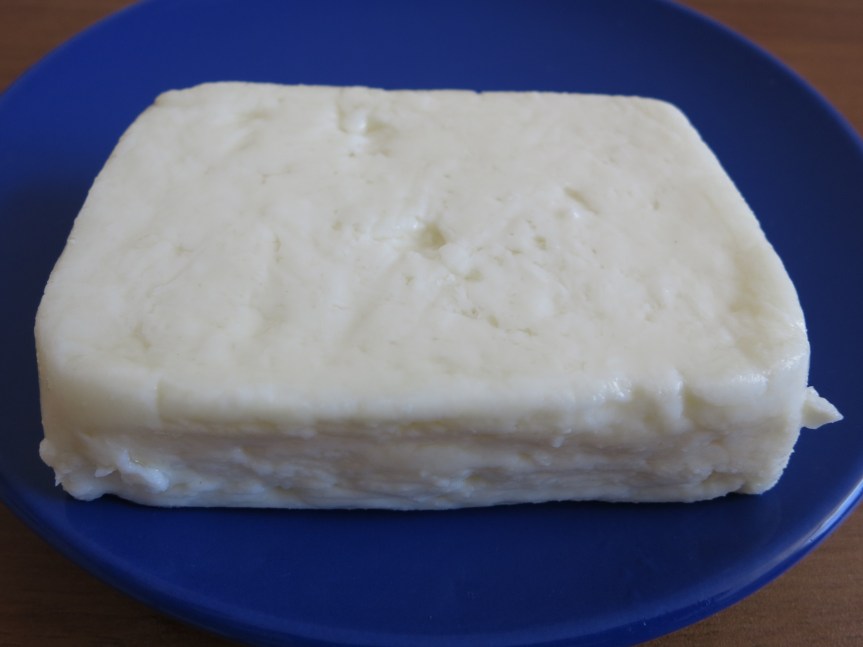
Halloumi, hellim in Turkish, is a salty white cheese with a high melting point that makes it perfect for grilling or frying. It originated in Cyprus – it’s a semi-hard cheese preserved in brine that can be stored for use in the winter months. It’s known in some quarters as ‘squeaky cheese’ because of its tendency to emit a mouse-like sound when you bite into it.

IMG_1337
A slab of halloumi – the cheese that squeaks!

It’s peak season for melons at the moment in the Knidos area so the time was ripe to attempt our own melon cheese combo. With the addition of some halloumi, that had been grilled into submission on the barbecue, and some rocket leaves, fresh mint  and basil, along with bulgur wheat and crushed almonds to add some body, the salad was a winner and set to be a fixture on the Knidos Cookery Club menu.

Ingredients (serves 3-4)

300 g watermelon cut into wedges

300 g honeydew melon cut into wedges

250 g halloumi cheese

One bunch of rocket (approx 125 g)

A handful of fresh mint and basil leaves

100 g fine bulgur wheat

50 g chopped almonds

100 ml hot water

One small lemon, juiced

A glug of olive oil

Method

Soak the bulgur wheat in 100 ml hot water until all the water is absorbed

Tear the rocket, mint and basil leaves and scatter into a large bowl and then add the bulgur wheat. Add the melon wedges and mix well. Dress the salad with lemon juice and olive oil.

Cut the halloumi into slices and grill or fry until going golden-brown on the outside. Arrange the halloumi slices on top of the melon and leaves and sprinkle chopped almonds over the salad. Serve with crusty bread.