Almond Party Time in Datça

12 February 2025

Almonds are on the agenda in KCC’s spiritual home of the Datça Peninsula this weekend as the Turkish seaside town hosts its annual Almond Blossom Festival.

The festival, which celebrates the blossoming of the peninsula’s almond trees, takes place between 13-16 February. Alongside live entertainment, with local faves Rampapa performing on Thursday and Anatolian psych rock legends Moğollar headlining on Saturday, there are cookery competitions, sports events and a speedy almond cracking contest.

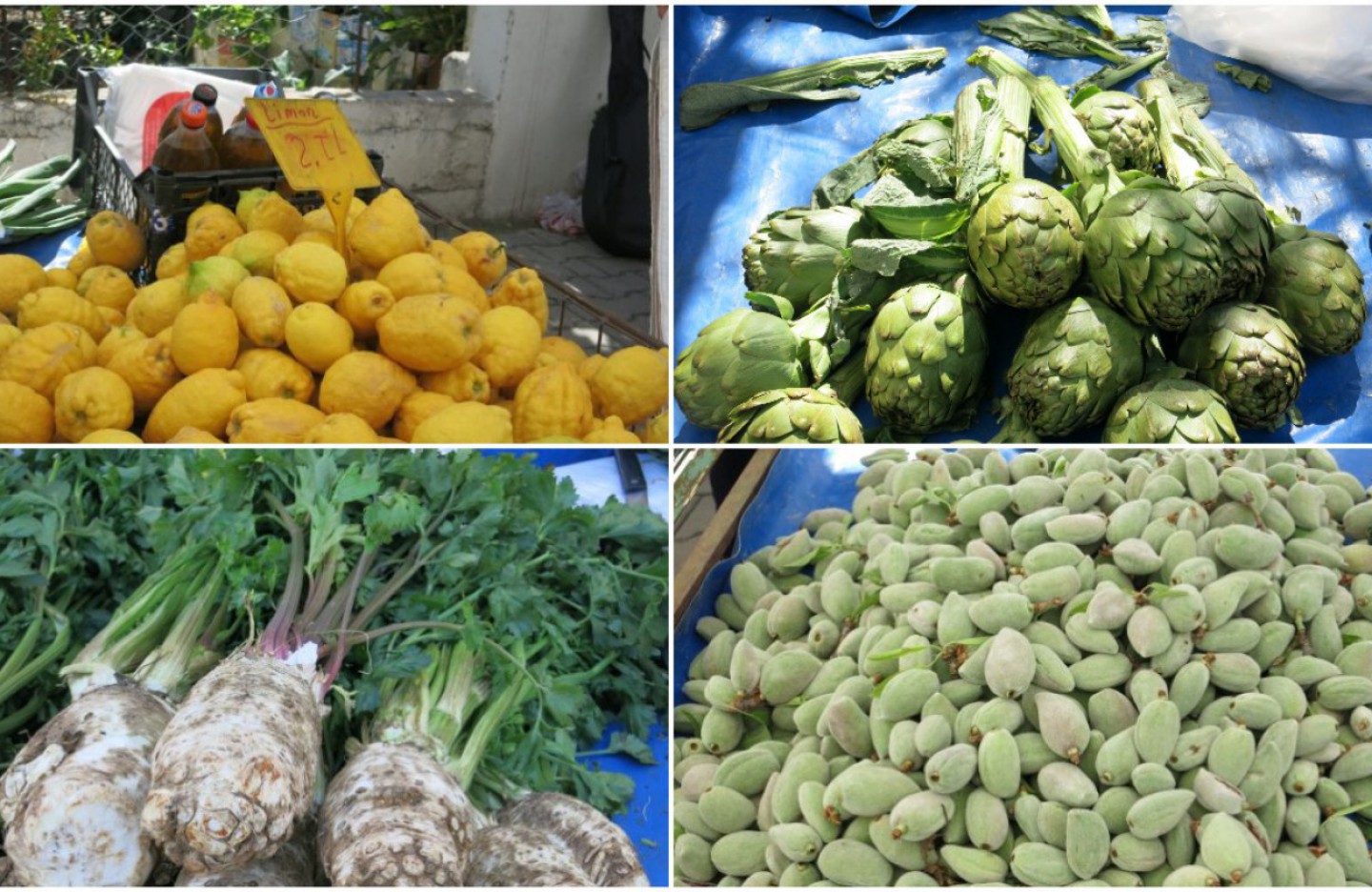
Datça’s tasty almonds, badem in Turkish, are rightly famous all over Turkey – I remember sitting on a terrace in Istanbul’s Beyoğlu district, back in the days when it still had tables on the street, when a guy came round selling ice-chilled Datça almonds.
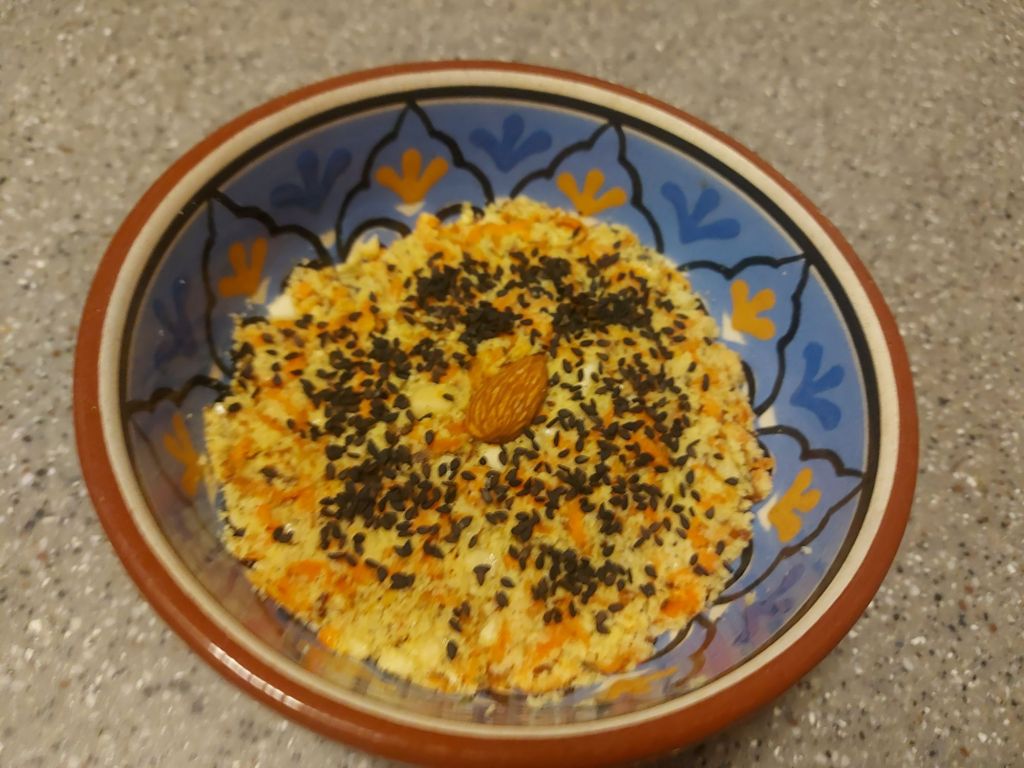
Bademli havuç tarator (carrot and almond tarator)

In Istanbul and along the Aegean coast tarator is a yogurt-infused meze made with carrots or courgettes and walnuts (recipe link here). Tarator started life in the eastern Mediterranean as a tahini-based dipping sauce for falafel. In Ottoman times it referred to a sauce made from walnuts, breadcrumbs and lemon juice (often served with kalimari), before it took on its yogurt iteration in the modern day. In Bulgaria, Tarator is the name of a yogurt-based, cold soup.

We adapted the recipe to make it vegan by replacing the yogurt with almond cream and gave it more of a Datça vibe by using almonds instead of walnuts and throwing in some local capers to give it an umami kick. The resulting dip had a thicker consistency than the yogurt version – it came out more like a savoury carrot halwa, but was still delicious.

Ingredients

  • 100 g blanched almonds
  • 50 ml cold water
  • Two teaspoons apple cider vinegar
  • 20 capers (with brine)
  • 150 g carrot
  • One or two garlic cloves (optional)
  • Pinches of herbs and spices of your choice (e.g. oregano, black pepper, salt, sumac, red chili flakes)
  • One teaspoon nigella (black cumin) seeds

Method

  • If your almonds have skins on, then pour hot water over the almonds and leave for a minute or two. Drain off the water and peel the nuts between your fingers. Set aside 20 g of the nuts. Cover the remaining almonds with cold water and leave to soak overnight.
  • Drain the almonds and put in a blender bowl. add the vinegar, capers and water and blitz to a smooth cream. Add more water if needed (10 ml at a time) to get the required creamy consistency.
  • Heat the oil in a heavy-based pan, grate the carrot and saute it in the oil for ten minutes over a medium heat. Add diced garlic (if using), the remaining almonds (crushed with a rolling pin or wooden spoon) and pinches of herbs and spices (as needed).
  • Allow the carrot mix to cool and then blend with the almond cream. Garnish with nigella seeds and some unblanched almonds. Serve as part of a meze set or as a dip.
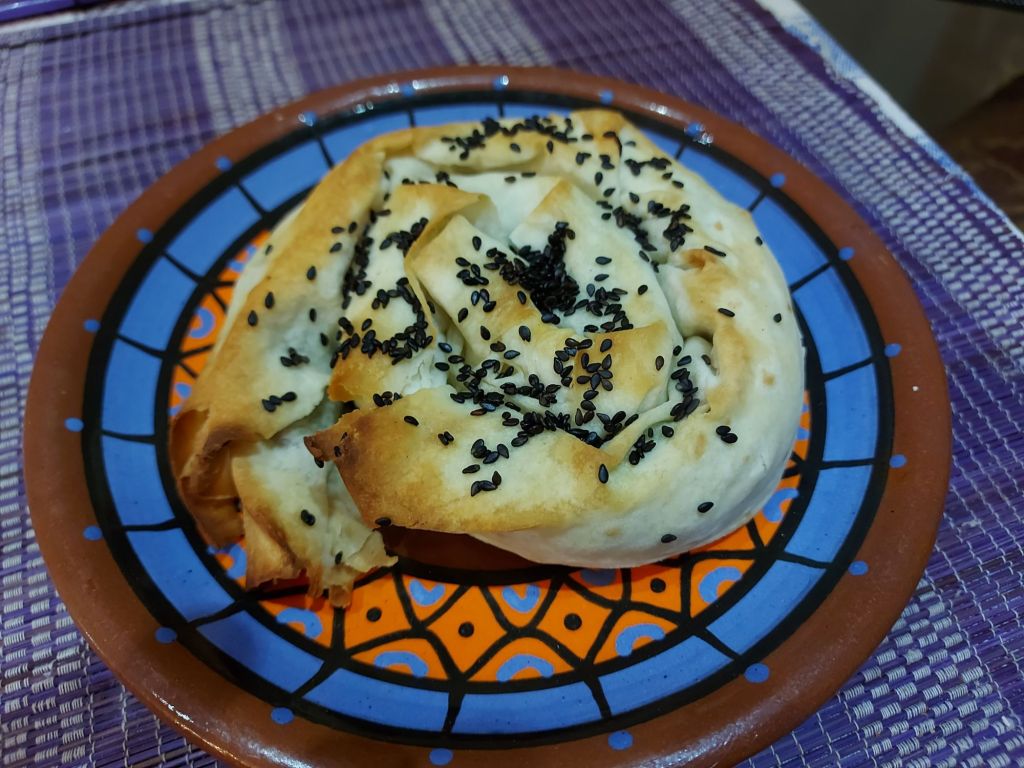
Flower Power Börek

18 June 2024

If you’ve ever been to Turkey, or eaten in a Turkish cafe, then you’ll probably be familiar with the börek, a tasty treat consisting of wafer-thin sheets of yufka (filo pastry) brushed with lashings of olive oil, stuffed with cheese or vegetables and sprinkled with black seeds.

Flower Power Börek

Börek is found in all corners of Turkey and comes in a variety of shapes – sigara, like a cigar, gül, like a rose, triangle-shaped or as a layered pie, tepsi böreği, among others.

As for the fillings, alongside the more familiar white cheese (beyaz peynirli), spinach (ıspanaklı) or potato (patatesli), it’s worth looking out for the lesser-spotted leek filled version, known as pırasalı börek in Turkish, and the elusive kabaklı, prepared with courgettes. (Veggie warning – there are meat-stuffed ones too).

Ingredients for the filling – makes 2

100 g radish leaves

100 g spinach

25 g parsley

25 g walnuts

25 g olives

25 g capers

50 ml olive oil

One teaspoon of dried rosemary, cumin seeds, sumac, nigella seeds

Four big sheets of filo pastry (approx 30cm x 50 cm)

Ingredients for yufka (Filo Pastry) – makes 4 sheets

300 g all-purpose flour

100 ml olive oil

20 ml vinegar (apple or white wine)

150 ml warm water

Method

To make the filo pastry, combine the sieved flour with the olive oil and vinegar. Slowly add the water a bit at a time and mix it all together with a wooden spoon until the dough forms into a smooth ball. Knead for 10 minutes on a lightly-floured surface to make the dough more stretchy. Separate into four tennis-ball sized pieces. Lightly coat with olive oil, cover with clingfilm and leave for an hour at room temperature.

Heat 25 ml of olive oil in a heavy-based pan over a medium heat. Add the cumin seeds and fry until starting to pop. Reduce the heat to low and add the chopped greens (radish leaves, spinach and parsley), rosemary and sumac. Stir fry until the leaves are wilting. Stir in the toasted, chopped walnuts, capers and minced black olives.

Roll out the filo sheets as thinly as you can using a rolling pin or the palm of your hand. They should be around 30 cm by 50 cm and become clear in places. Brush one sheet with olive oil and then place another on top.

Add half the filling along the shorter edge. Roll up the mixture into a long cylinder and then roll around in a spiral to make the rose shape. Brush liberally with olive oil, sprinkle nigella seeds over the börek, then bake for 20 minutes at 200 c until they turn a golden-brown colour. Serve hot or allow to cool – they taste great both ways.

Getting Back to our Roots

25 April 2024

Recently, Knidos Cookery Club was back in its spiritual home on the Datça peninsula in Turkey, getting back to its roots in the place where its culinary journey began eight years ago.

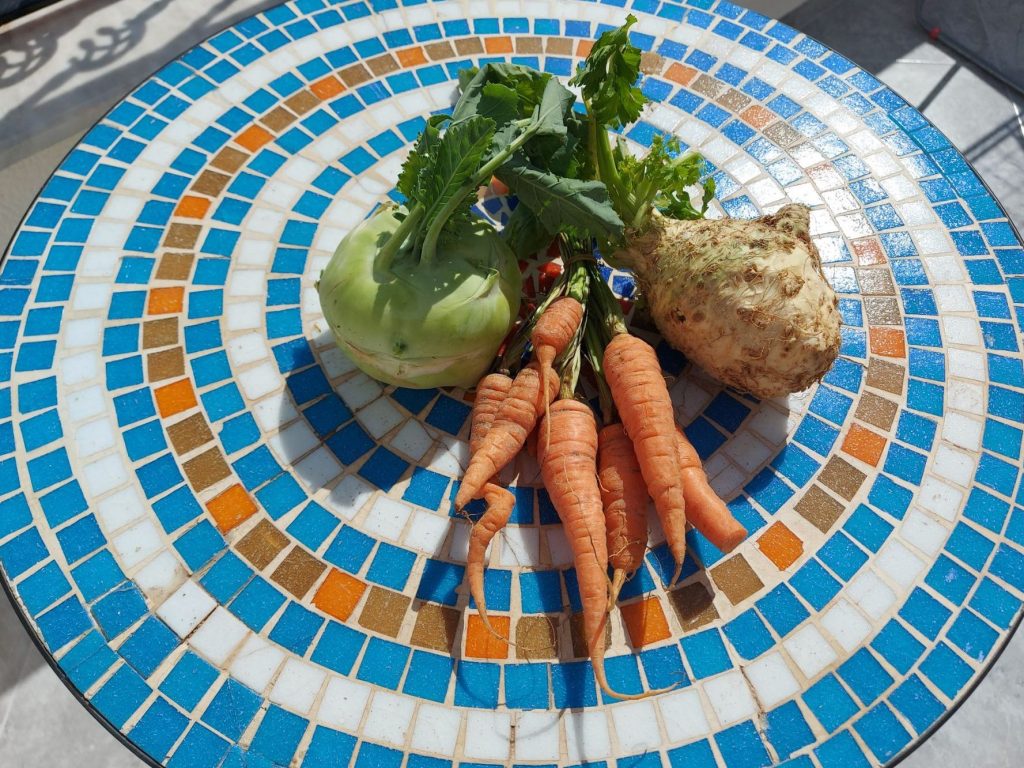
Getting back to our roots… carrots, celeriac and kohlrabi

This blog was named after the ancient Greek city of Knidos, the ruins of which are located on the tip of the peninsula. KCC started out exploring the veggie and vegan dishes eaten around this point where the Aegean Sea meets the Mediterranean Sea.

Since 2016, it has expanded its exploration to Central Asia and many other corners of the globe, seeking out new dishes to tickle your tastebuds!

Now, in addition to its WordPress blog, KCC is making its debut on Substack, where a regular newsletter will keep you up to speed with KCC’s latest culinary adventures, along with updated posts from the archive.

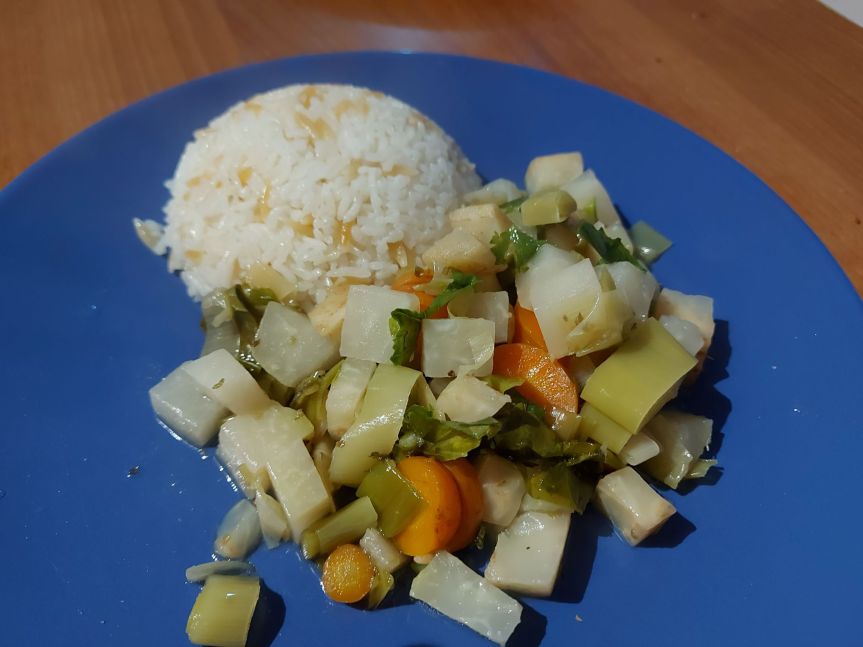
Zeytinyağlı carrot, celeriac, kohlrabi and leek with rice

After spending the winter in Kazakhstan, it was a treat to get back to Turkey with its wider choice of ingredients – it was time to move on from the winter staples, such as pumpkin and potatoes, and dig up some root vegetables that are less seen in Central Asia.

The local market turned up trumps with celeriac, kohlrabi and leeks on sale, perfect for making a zeytinyağlı (with olive oil) dish, so-called as these dishes are prepared with lashings of olive oil.

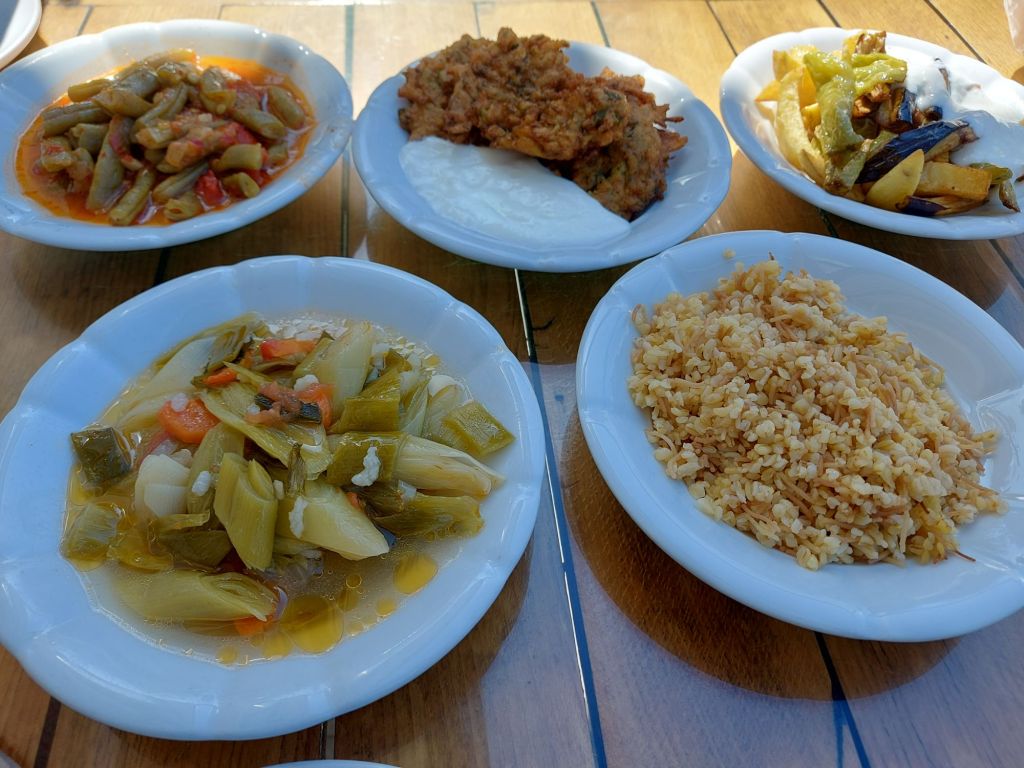
Standards include green beans (taze fasulye), artichoke (enginar) and leek (pırası). They are a staple of ev yemekleri (home-cooked food) restaurants, lokanta in Turkish, cheap and cheerful canteen-style eateries.

A selection of zeytinyağlı dishes – green beans, leeks and aubergines, green peppers and potatoes – from Datça’s Korsar/Erkin’nin yeri restaurant, located by the harbour

The last few years have seen the price of the key ingredient, olive oil, soar. This is due to numerous factors, including unexpectedly cold and wet conditions at the start of the growing season and drought and forest fires in the summer, that have led to poor harvests in the main olive-producing regions.

Global olive oil production has dropped by a third in just two years, which in turn has led to higher prices for consumers. However, we think it’s still worth shelling out that bit more for a bottle of extra virgin olive oil, as its fruity, peppery flavour adds so much to a cornucopia of delicious dishes, such as this carrot, celeriac, kohlrabi and leek zeytinyağlı  one:

Ingredients (makes 3-4 servings)

  • One medium-sized kohlrabi (approx 200 g)
  • One medium-sized celeriac (approx 200 g)
  • One bunch of baby carrots (approx 200 g)
  • One leek (approx 200 g)
  • One small lemon
  • 75 ml extra virgin olive oil
  • 100 ml vegetable stock
  • Two teaspoons dried oregano
  • One teaspoon sumac

Method

  • Wash the leek well and then cut it into 2 cm slices. Top and tail the carrots, kohlrabi and celeriac, put the leaves and stems to one side, and then peel off the hard outer skin of the kohlrabi and celeriac and chop both into 1 cm cubes. Slice the washed carrots into 2 mm rounds. Roughly chop the leaves and stems from the carrots, kohlrabi and celeriac.
  • Heat 50 ml of olive oil in a heavy-based pan over a low heat and then add the leeks. Stir fry for five minutes and then add the carrots, kohlrabi and celeriac and cook for another five minutes, stirring occasionally. Add the chopped leaves and stems and cook for another five minutes, continuing to stir every now and then.
  • Add the vegetable stock, the juice of the lemon and oregano and cook over a low heat for 15 minutes until all the vegetables are soft but still holding their shape. Stir in 25 ml of olive oil, garnish with sumac and serve with rice and some crusty bread to mop up the juices.