Adventures with Artichokes

5 May 2016

This week Knidos Cookery Club is attempting to tackle one of the most daunting vegetables out there – the globe artichoke. This enormous edible thistle with its armadillo-like outer leaves has always intrigued me – you never quite know what might be lurking inside the beast.

Known as enginar in Turkish, it is widely cultivated in the Aegean and Mediterranean regions. It is a measure of the regard that this vegetable is held in that it has its own international festival in Urla near Izmir, Turkey (this year’s has just gone – it was held from 28 April – 1 May).
IMG_0468
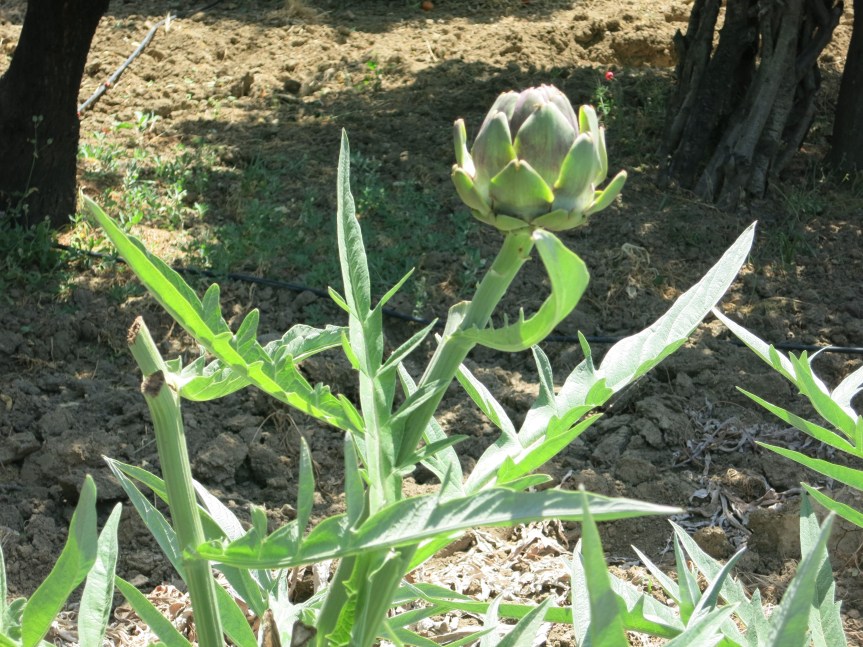
An artichoke plant in Turkey

On 1 May, Knidos Cookery Club donned its walking boots and joined the annual walk from Datça on the Mediterranean Sea to the shore of the Aegean Sea, north of the village of Kızlan. On the way a number of artichokes were spotted growing in people’s gardens.

On returning home, my aim was to try and serve up something close to a dish that is a staple of many home-cooking restaurants in Turkey – an artichoke bottom filled to the brim with mixed vegetables or, sometimes, broad beans, but after peeling away the outer leaves and the choke my specimen’s bottoms were found to be a bit lacking in the size department.

IMG_0428

The planned dish of broad beans, bakla in Turkish, overflowing from an abundant base had to be modified at the last moment and instead I settled on a salad of diced artichoke and broad beans in a lemony sauce, garnished with strips of avocado.

Broad beans appear around the same time as artichokes in the market in early spring and the two team together well, especially with the addition of a lemon or two. For an even greener salad, I picked up some ripe avocadoes in the market and topped the finished dish with a few slices of alligator pear.

The tough outer leaves can be eaten as well. After steaming for 30 minutes or so, the bottoms of the leaves reveal some tasty artichoke flesh that you can pull through you teeth to get at the goodness. Dipping them in melted butter with a dash of garlic makes them even more delicious.

Ingredients

Two medium sized globe artichokes

250 g fresh broad beans

Two spring onions

The juice of one lemon

One ripe avocado

Olive oil

Herbs and spices

Method

Wash the artichoke and cut away the stem. Steam it in a large pan for 30 minutes or so until the outer leaves are tender.

Peel the leaves away from the main body and save to eat as a starter, dipped in olive oil or melted butter.

Now remove the fibrous choke that surrounds the fleshy, edible part of our oversized thistle. You should be left with a concave disc of artichoke.

Place the artichoke in lemon juice to stop it discolouring.

Heat the olive oil in a pan and add the diced spring onion.

After a few minutes stir in the peeled broad beans and chunks of squeezed lemon and cover with a mix of water and the rest of your lemon juice and keep at a rolling boil for 30 minutes. Boil off as much liquid as you can to leave a runny, lemony sauce.

Chop up the artichoke and mix with the broad beans in the lemony sauce. Add fresh herbs such as mint and parsley and season lightly with salt and pepper. Garnish with thin strips of avocado and serve with a tomato and onion salad to contrast the vivid reds with the verdant greens of the artichoke medley.
King Celeriac Meets the Olive Oil Uptown

7 April 2016

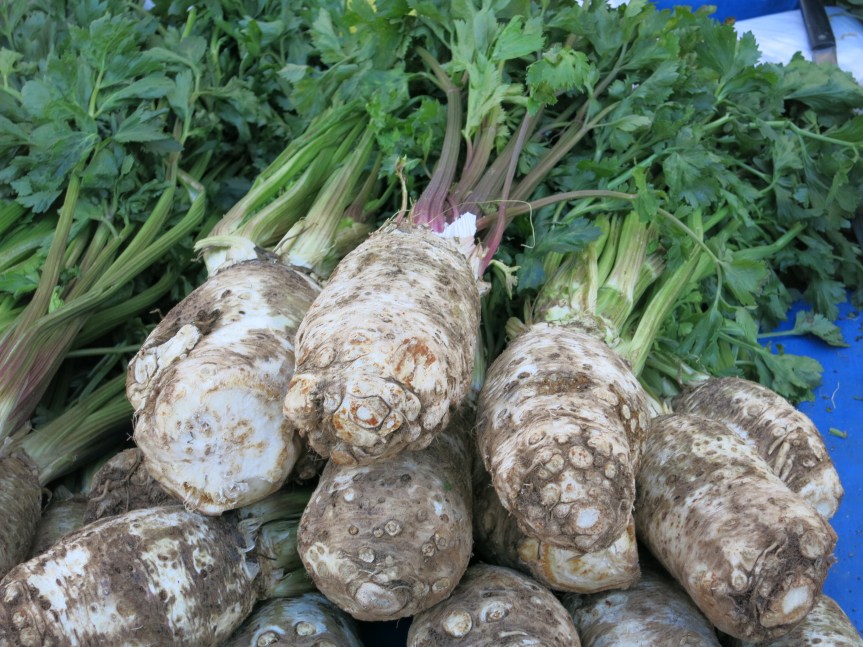
This week Knidos Cookery Club turns its attentions to celeriac – a knobbly root vegetable of the same family as celery. Celeriac bulbs impart an earthy, nutty flavour with a strident undernote of celery.

IMG_0079

Celeriac, kereviz in Turkish, is found all around the Mediterranean and grows in the cooler months of autumn and winter. It can be used raw and grated into a salad, roasted as a main course, boiled as a side dish, served as mash or in a tasty soup.

In Turkey it’s often served up as a cold side-dish in the zeytinyağlı style, which means it is braised in a generous portion of olive oil, a key ingredient of Turkish cooking.

Zeytinyağlı dishes can be made with any seasonal vegetables that are to hand – from green beans to leeks, and from artichokes to courgettes.

In this week’s recipe, based on Elizabeth Taviloğlu’s, we’ll show you how to get from this …

IMG_0181

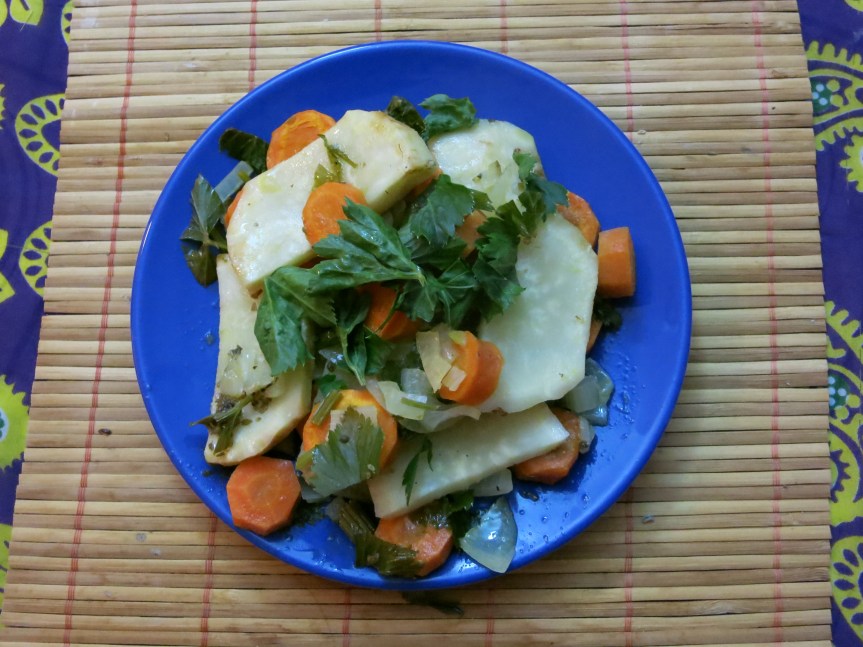
… to this

IMG_0202

in a few easy steps using lemon and orange juice, and plenty of olive oil.

Ingredients

One celeriac bulb, peeled and cleaned, retain the stalks and leaves

Two medium carrots

One medium onion

Juice of half a lemon

Juice of two medium-sized oranges

125 ml good quality olive oil (extra virgin if you have it)

100 ml water

Method

Top and tail the celeriac then peel off all the dirt-covered hard outer skin to expose a white bulb. Wash the bulb to remove any lingering soil. Keep the stalks and leaves for later use.

Cut the celeriac in half and then into 0.5 cm slices. Place the slices in a heavy-based saucepan and cover with lemon and orange juice – this is to stop it discolouring.

Next cut the carrot into thin slices, and chop the onion and stalks from the celeriac roughly. Place the carrots, stalks and onion on top of the celeriac.

Pour 100 ml olive oil and 100 ml of water into the pan and bring to a boil.

After the mix boils, reduce the heat and simmer until the vegetables are tender – 20-30 minutes or so.

Allow to cool and then arrange on a plate and sprinkle with more chopped celeriac stalks and leaves. Add a generous drizzle of olive oil and serve.

A Taste of Spring

31 March 2016

Welcome to Knidos Cookery Club, a new blog that will explore the culinary culture around the point where the Aegean Sea meets the Mediterranean Sea in south-west Turkey. The blog is inspired by the ancient port city of Knidos, the ruins of which can be seen on the tip of the Turkey’s Datça peninsula, and the amazing array of locally-sourced ingredients used in the region’s kitchens.

Every Friday evening the small town of Datça springs into life with farmers from all over the peninsula driving in by pick-up, tractor or even on horseback to sell their produce at the weekly market that stays in town until Saturday evening.

IMG_0087
Datça market in full swing on Saturday

Spring is in the air and vegetables like asparagus and artichokes are making an appearance alongside the staple root vegetables of the winter months.

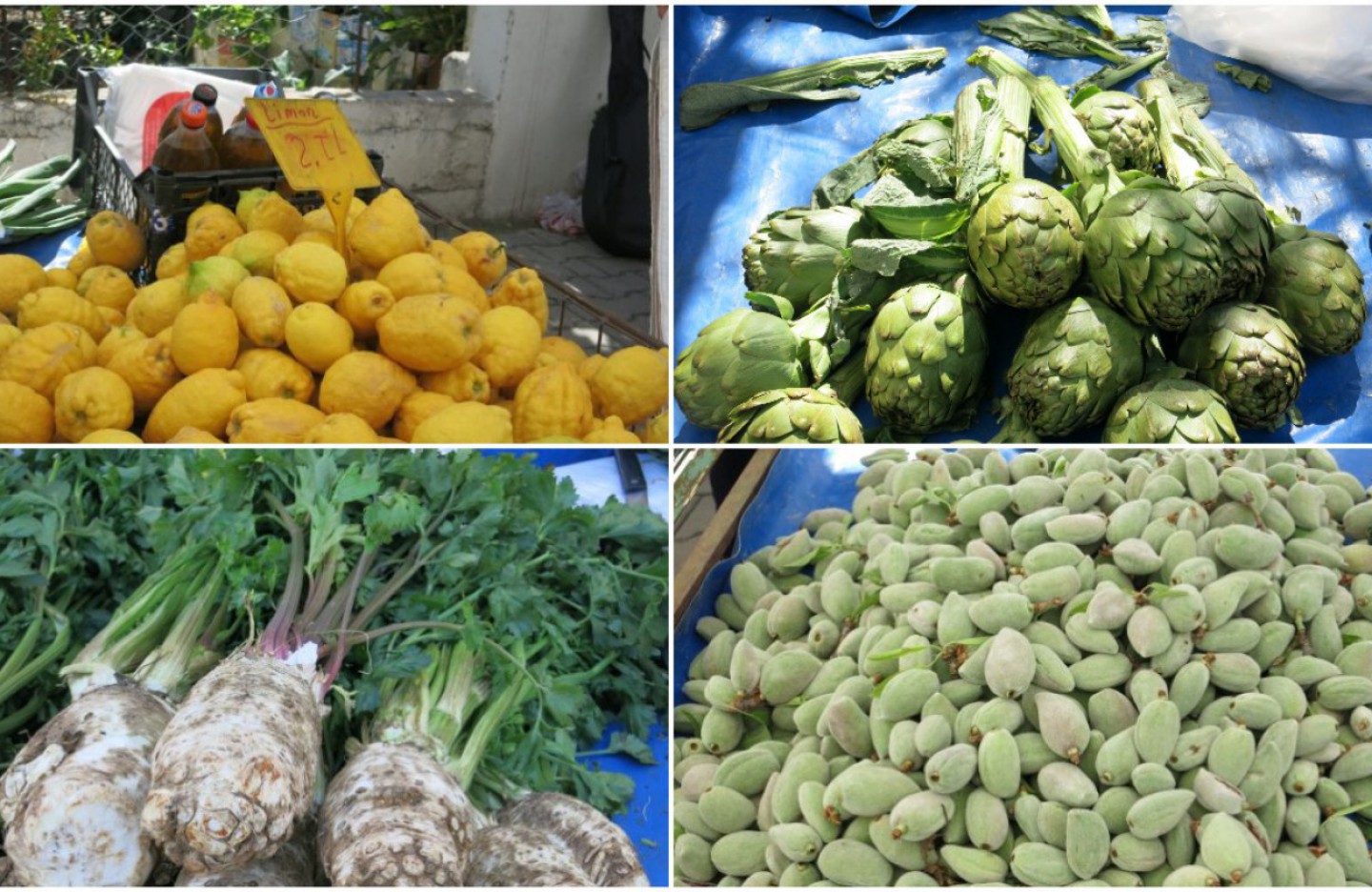
Stalls are piled high with the last of the season’s citrus fruits – luscious lemons and juicy oranges; alongside enormous leeks, bulbous celeriac roots and the year’s first green almonds.

Some purple-tinged asparagus tips caught my eye, and the idea for the culinary club’s first recipe began to take shape – a risotto based around these flavour-packed spears of goodness.

IMG_0123
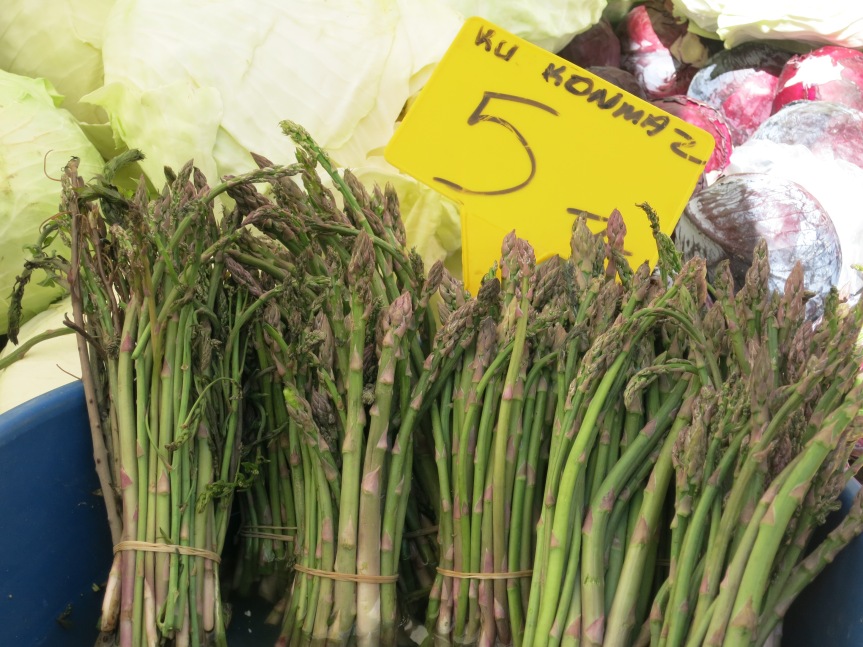
Asparagus on sale in the market

Asparagus, known in Turkish as kuşkonmaz, or ‘birds don’t land on it’, grows all around the Mediterranean region in springtime, with the first tips  ready for harvest shortly after the ground temperature hits 10°C.

To give the risotto a Turkish twist, I’ve used bulgur wheat, a parboiled grain which is a favourite in Turkey, in place of the usual Arborio rice.

IMG_0177
The finished product

Ingredients: (3-4 servings)

Bunch of asparagus spears

One medium onion

A smattering of garlic

One cup (100 g approx) of bulgur wheat (coarse not fine ground)

A generous sprinkle of fresh or dried herbs (oregano, mint, parsley, thyme)

Salt and pepper to taste

One 175 ml glass of white wine

750 ml vegetable stock

Two generous splashes of olive oil

Optional: Add fresh Parmesan or your preferred cheese to the finished risotto.

Method:

Arrange the asparagus spears on a baking tray and drizzle with olive oil. Oven bake at 180 °C (gas mark 5) for 30 minutes or so until tender.

While the asparagus is cooking, start the risotto. Fry the diced onion and garlic in olive oil until translucent, then add mixed herbs and season with salt and pepper if needed.

Add the bulgur wheat and stir to coat the grains. Pour the glass of wine into the mix and keep stirring until all the liquid has been absorbed.

Introduce a ladleful of stock at a time and keep stirring until it’s all soaked up. Continue until the risotto reaches the creamy consistency you prefer.

Chop the roasted asparagus into 2cm lengths and stir into the risotto.

Take the risotto off the heat and allow to stand for five minutes or so and then mix in cheese and herbs to taste and serve with a green salad.